Posted on Leave a comment

AI Market Share & Growth Forecast 2025-2030

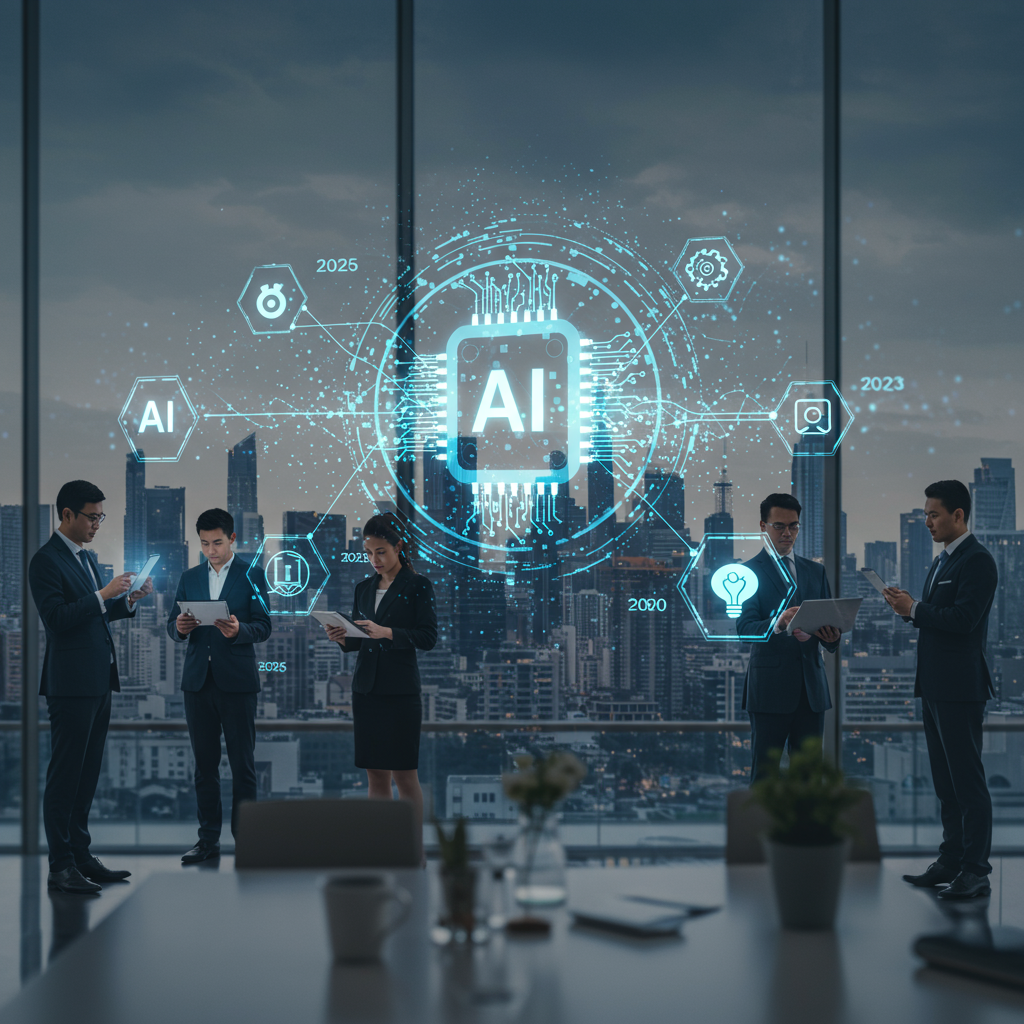
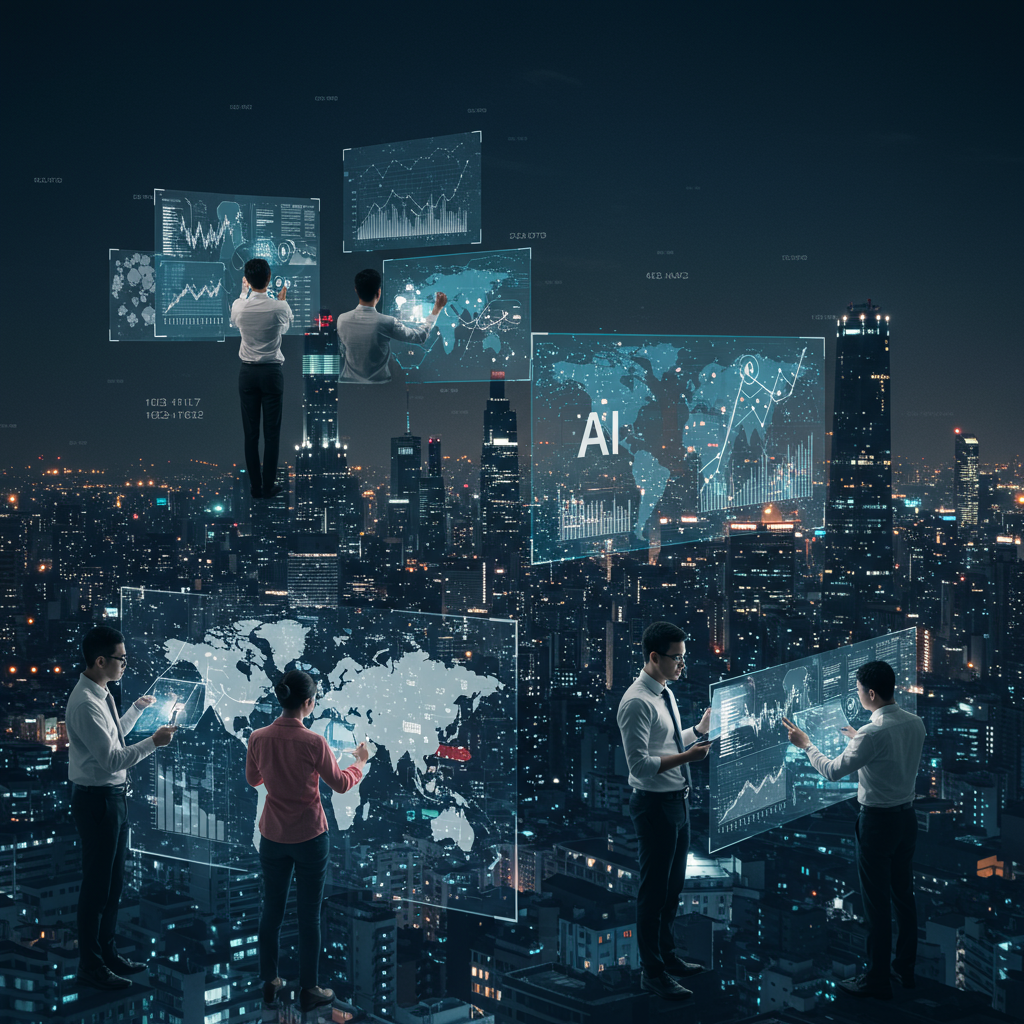
Futuristic cityscape with digital AI elements and diverse people interacting with AI technology representing AI market growth and advancement from 2025 to 2030

Introduction

The global AI market is entering a transformative era, with forecasts pointing to unprecedented growth between 2025 and 2030. Businesses seeking to leverage AI-driven transformations must understand the evolving landscape, key players, and technological trends shaping the future. This comprehensive analysis explores AI market share, industry growth forecasts, regional trends, and the sectors poised for rapid AI adoption, providing actionable insights for strategic planning.

Overview of the Global AI Market Size and Growth Projections

The global AI market is experiencing exponential expansion, with valuation estimates for 2024 ranging from $200 billion to $250 billion, according to leading research firms. Projections indicate that by 2030, the market could surpass $1.5 trillion, reflecting a compound annual growth rate (CAGR) of 35-40%. This remarkable growth is driven by advances in computing power, widespread cloud adoption, and the integration of AI into enterprise operations. Furthermore, the increasing availability of AI-as-a-Service (AIaaS) platforms has democratised access, enabling organisations of all sizes to deploy sophisticated AI solutions.

A futuristic cityscape with AI technology integration, showcasing advanced computing, cloud infrastructure, and AI-driven devices representing global AI market growth and innovation

Market segmentation reveals that AI software accounts for the largest share, followed by AI hardware and AI services. Notably, the enterprise AI segment is forecasted to grow at a CAGR of over 40%, as businesses increasingly invest in automation, predictive analytics, and intelligent decision-making tools. Consequently, the future of AI technology is closely tied to advancements in machine learning, generative AI, and real-time analytics.

Key Players Shaping the AI Market Landscape

Several tech giants are dominating the AI market share from 2025 to 2030. Google leads in AI research and development, particularly in natural language processing and generative AI. Microsoft and Amazon Web Services (AWS) are at the forefront of cloud AI services, providing scalable platforms for enterprise AI adoption. IBM continues to innovate in AI-powered business solutions, while Meta and Apple are investing heavily in AI-driven user experiences and personalisation.

Meanwhile, NVIDIA is revolutionising AI hardware acceleration with its advanced GPUs, essential for training large-scale machine learning models. Salesforce is integrating AI agents into CRM and workflow automation, and Chinese leaders Baidu and Alibaba are expanding AI capabilities across cloud, e-commerce, and smart city initiatives. These companies’ strategic investments and relentless innovation are reshaping competitive dynamics and driving the future of AI market analysis.

Major AI Market Segments and Technological Trends

The AI market is segmented into software, machine learning technologies, AI inference, AI agents, and enterprise AI. Each segment plays a crucial role in the industry’s expansion:

  • AI Software: Encompasses machine learning platforms, natural language processing, and computer vision. This segment leads in market share and innovation.
  • Machine Learning Technologies: Power predictive analytics, autonomous systems, and generative AI trends, enabling smarter business processes.
  • AI Inference: Focuses on deploying trained models for real-time decision-making, crucial for applications in finance, healthcare, and retail.
  • AI Agents: Automate workflows and customer interactions, with adoption accelerating across industries. For a deeper dive into the impact of AI agents, see The AI Agents Revolution Transforming Business by 2035.
  • Enterprise AI: Integrates AI into core business functions, driving efficiency and competitive advantage.

Technological trends such as generative AI, real-time analytics, autonomous AI agents, and hardware advancements like next-generation GPUs are rapidly shaping AI adoption. Furthermore, the convergence of cloud AI services and edge computing is enabling faster, more scalable AI deployments. As a result, businesses are increasingly relying on AI to transform operations and enhance customer engagement.

Regional AI Market Trends and Investment Patterns

Regional variations play a significant role in AI market growth from 2025 to 2030. North America remains the largest market, driven by robust investment, a mature technology ecosystem, and government initiatives supporting AI research. Europe is catching up, emphasising ethical AI and regulatory frameworks, while Asia-Pacific is experiencing the fastest growth, fuelled by rapid digital transformation in China, Japan, and South Korea.

Regional investment patterns reveal that governments and private sectors are prioritising infrastructure development, talent cultivation, and AI innovation hubs. For example, China’s national AI strategy aims to become the global leader by 2030, while the European Union is investing in cross-border AI research collaborations. These regional differences influence global AI market strategies, requiring companies to tailor their offerings and partnerships accordingly.

Sectors Poised for Rapid AI Adoption and Transformation

By 2030, several industry sectors are set to experience rapid AI adoption and transformation. Automotive is leading with autonomous vehicles and AI-powered manufacturing. Healthcare is leveraging AI for diagnostics, personalised medicine, and operational efficiency. Retail is using AI for customer experience, inventory management, and predictive analytics. Finance is deploying AI for fraud detection, risk management, and algorithmic trading. Manufacturing is integrating AI for process automation and quality control.

A diverse group of professionals from various industries using AI technologies like machine learning, autonomous AI agents, and generative AI in sectors such as healthcare, automotive, finance, and retail

These sectors are not only improving efficiency but also unlocking new business models and revenue streams. For actionable insights on how AI-driven automation is transforming SEO and marketing, visit How Agents24x7 Revolutionises SEO with AI. However, as AI adoption accelerates, organisations must address challenges related to data privacy, ethical AI, and workforce reskilling.

Conclusion

The AI market is set for extraordinary growth through 2030, propelled by advances in software, machine learning, and cloud infrastructure. Leading tech companies and regional investments will continue to shape this dynamic landscape, while diverse sectors embrace AI to transform operations and customer engagement. Businesses that proactively invest in AI technologies and adapt to emerging trends will be best positioned to capitalise on the future of AI technology.

  • Primary Keyword: AI market share
  • Secondary Keywords: AI industry growth forecast, leading AI companies, AI adoption sectors, regional AI trends, AI investments 2025, AI market analysis, future of AI technology, machine learning market growth, enterprise AI adoption, generative AI trends, AI hardware advancements, cloud AI services, AI agents market, AI market size 2030
Posted on Leave a comment

Understanding AI Hardware & Its Environmental Impact

Modern data centre with servers and GPUs illuminated by blue and green lights, with a globe and green leaves symbolising eco-friendly AI technology and sustainability

Understanding AI Hardware & Its Environmental Impact

Artificial intelligence (AI) is transforming industries at an unprecedented pace, but the hardware powering this revolution – AI servers, GPUs, and sprawling data centres – comes with a significant environmental impact. As businesses increasingly rely on AI-driven applications, it is crucial to understand the ecological footprint of AI hardware and adopt sustainable practices to mitigate its effects. This article delves into the energy consumption, carbon emissions, resource extraction, water usage, and e-waste challenges associated with AI hardware, while offering actionable strategies for greener, more responsible AI deployment.

The Role of AI Hardware in Modern Technology

At the heart of every AI system lies a complex network of hardware components, including servers, graphics processing units (GPUs), and data centres. These elements work synergistically to process vast amounts of data, train machine learning models, and deliver real-time AI-powered services. Servers act as the backbone, managing data storage and computational tasks, while GPUs accelerate the processing of complex algorithms, making them indispensable for deep learning and advanced analytics. Data centres, housing thousands of these devices, provide the infrastructure necessary for AI scalability and performance. Consequently, the efficiency and capability of AI hardware directly influence the speed, accuracy, and scalability of AI applications, making hardware performance a critical factor in technological advancement.

A modern data centre with rows of servers and GPUs, illuminated with blue and green lights, symbolising AI hardware powering technology

Energy Consumption and Carbon Footprint of AI Hardware

AI hardware, particularly data centres and GPUs, is notorious for its immense energy demands. According to recent studies, global data centre electricity consumption has surged to over 200 terawatt-hours annually, accounting for nearly 1% of worldwide electricity use. Furthermore, the reliance on fossil fuels for electricity generation means that every AI query, model training session, or data processing task contributes to carbon emissions. For example, training a single large AI model can emit as much carbon as five cars over their entire lifetimes. As AI adoption accelerates, the environmental consequences of this energy use become increasingly severe, highlighting the urgent need for sustainable AI technologies and green data centres.

Environmental Challenges from Hardware Manufacturing and Resource Extraction

Beyond operational energy use, the environmental impact of AI hardware begins with the extraction of rare earth metals such as lithium, cobalt, and nickel. These materials are essential for manufacturing semiconductors and GPUs, yet their extraction is energy-intensive and often linked to pollution, deforestation, and habitat destruction. Semiconductor fabrication, for instance, requires vast amounts of water and chemicals, resulting in significant carbon emissions and environmental degradation. Consequently, the entire lifecycle of AI hardware – from resource extraction to manufacturing – contributes to the overall environmental burden, making it imperative for businesses to consider the full scope of AI’s ecological footprint.

Water Usage and Biodiversity Impacts of Data Centres

Data centres not only consume vast amounts of electricity but also require significant water resources for cooling. In regions already facing water scarcity, the diversion of water for data centre operations can exacerbate local shortages and disrupt ecosystems. For example, large-scale AI infrastructure projects have been linked to habitat loss, pollution, and declines in local biodiversity. As demand for AI hardware grows, so too does the strain on water resources and surrounding environments, underscoring the importance of eco-friendly AI deployment and responsible site selection for new data centres.

A large industrial data centre cooling system with water pipes and cooling towers, surrounded by greenery, highlighting environmental impact and water usage

Electronic Waste and Sustainability Concerns in AI Hardware

The rapid pace of AI innovation drives frequent hardware upgrades and replacements, resulting in a growing mountain of electronic waste (e-waste). Globally, e-waste recycling rates remain below 20%, with much of it ending up in landfills or being improperly disposed of. This not only wastes valuable resources but also poses serious risks of soil and water contamination from hazardous materials. As AI hardware becomes obsolete more quickly, the e-waste problem intensifies, making responsible waste management and recycling essential components of sustainable AI practices.

Strategies for Greener AI Hardware Deployment

Fortunately, businesses can take practical steps to reduce the environmental impact of AI hardware. Firstly, adopting renewable energy sources for data centre operations can significantly cut carbon emissions. Secondly, improving energy efficiency through advanced cooling technologies and hardware optimisation helps lower electricity use. Thirdly, optimising data centre operations – such as using AI for predictive maintenance and workload management – can further enhance sustainability. Finally, implementing robust e-waste recycling programmes ensures that obsolete hardware is responsibly processed and valuable materials are recovered. Industry leaders like Google and Microsoft are already pursuing carbon-neutral goals and investing in sustainable AI technologies, setting a benchmark for others to follow.

  • Switch to renewable energy providers for AI servers and data centres
  • Invest in energy-efficient hardware and cooling systems
  • Optimise AI workloads to minimise unnecessary computation
  • Establish partnerships with certified e-waste recyclers
  • Monitor and report on environmental performance regularly

Conclusion

AI hardware is undeniably vital for technological progress, yet it brings with it significant environmental challenges. From energy consumption and carbon emissions to resource extraction, water usage, and e-waste, the ecological footprint of AI is substantial. However, by adopting sustainable practices and investing in greener technologies, businesses can reduce the environmental impact of AI hardware and contribute to a more responsible, eco-friendly future.

Posted on Leave a comment

How to Build AI Agents Without Coding

Diverse business people collaborating with futuristic AI digital interfaces and virtual agents in a modern office, symbolising no-code AI automation for SMEs.

Introduction

Discover how non-technical business users can effortlessly create AI agents using no-code platforms. This guide explores easy-to-use tools and workflows tailored for SMEs to automate tasks and boost efficiency without coding knowledge. As AI agent builders become more accessible, small businesses can now harness the power of automation to drive growth and streamline operations.

Understanding AI Agents and Their Benefits for Small Businesses

AI agents are digital tools designed to perform tasks automatically, often mimicking human actions or decision-making. For small and medium-sized enterprises (SMEs), these agents can automate repetitive business tasks, saving time and reducing errors. Furthermore, AI agents can improve customer engagement by providing instant responses and personalised experiences. Common examples include chatbots that handle customer queries, workflow automations for internal processes, and virtual assistants that manage appointments or emails. Consequently, SMEs can focus on strategic growth rather than routine administration.

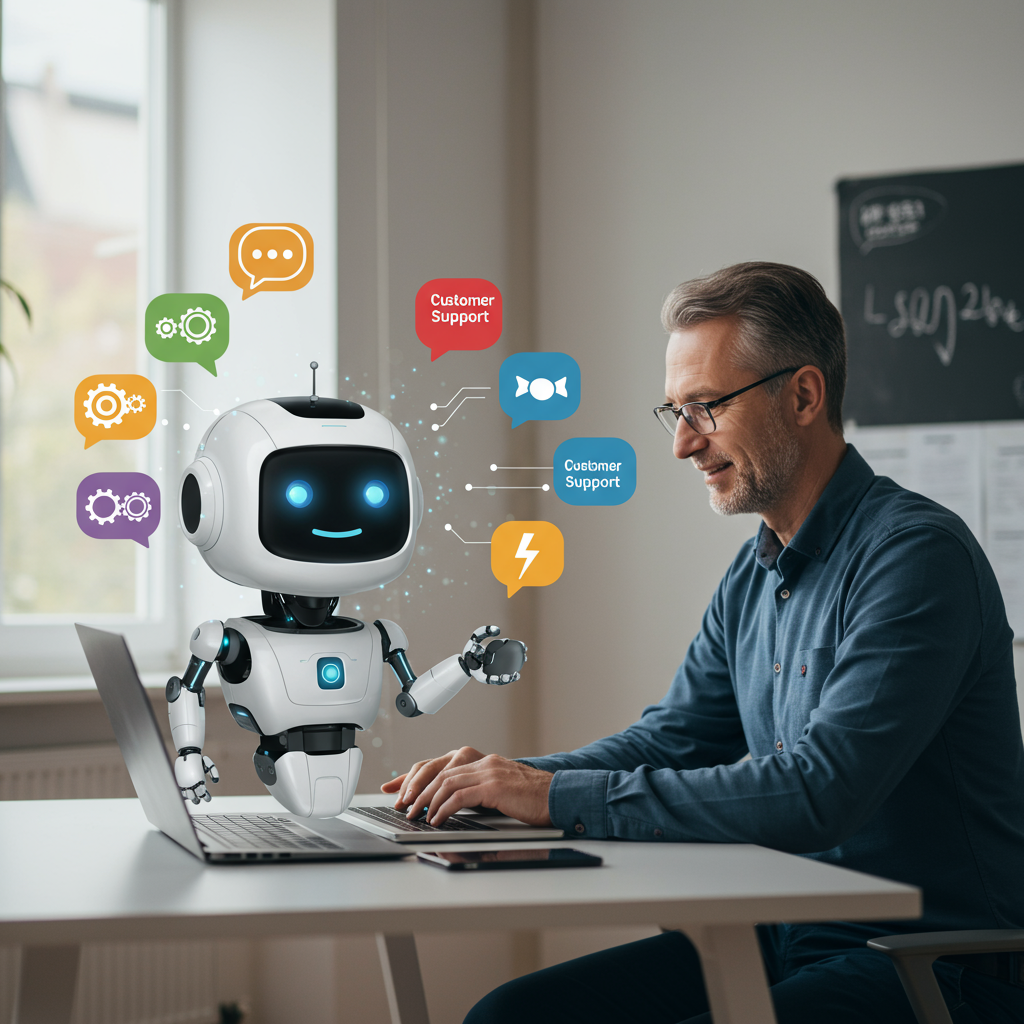
A friendly AI chatbot assisting a small business owner in an office setting, with icons representing automation, customer support, and efficiency around them

For a deeper dive into how AI agents are shaping the future of business, read The AI Agents Revolution Transforming Business by 2035, which explores long-term impacts and innovations.

Choosing the Right No-Code AI Agent Builder Platform

Selecting the best no-code AI agent builder is crucial for non-technical users and SMEs. Key criteria include ease of use, seamless integration capabilities with existing business tools (such as CRM, email, and calendars), multi-step automation, robust security, and responsive customer support. Additionally, platforms should offer intuitive drag-and-drop interfaces and clear documentation. Popular options like Lyzr, Lindy, Tars, Microsoft Copilot Studio, and LiveChatAI each have unique strengths. For example, Lyzr excels in workflow automation, while Tars is ideal for conversational AI chatbots. Lindy and Copilot Studio offer deep integrations with Microsoft ecosystems, and LiveChatAI focuses on real-time customer support. Therefore, SMEs should match platform features to their specific needs, ensuring scalability and ease of adoption.

Step-by-Step Guide to Building Your First AI Agent Without Coding

Building an AI agent without coding is now straightforward, thanks to no-code platforms. Begin by defining the agent’s purpose – for instance, automating customer support or sales workflows. Next, use the platform’s visual interface to configure the agent. Most platforms provide drag-and-drop tools, allowing users to set triggers, actions, and responses without writing a single line of code. Furthermore, it’s essential to test the agent thoroughly, iterating based on feedback to ensure accuracy and reliability. Finally, deploy the agent and monitor its performance, making adjustments as needed. Practical tips for non-technical users include starting with simple automations, leveraging platform tutorials, and collaborating with team members for feedback. By following these steps, SMEs can quickly realise the benefits of AI automation.

A small business team using a no-code AI agent builder platform on laptops and tablets, with visual elements showing drag-and-drop interfaces and workflow automation

Practical Examples of AI Agents for SMEs to Automate Tasks

AI agents can transform daily operations for small businesses by automating tasks such as lead generation, customer service, appointment scheduling, and internal workflow management. For example, a chatbot can qualify leads on a website, while an AI-powered scheduler can book meetings and send reminders automatically. In another scenario, workflow automation tools streamline invoice processing or employee onboarding, reducing manual effort and minimising errors. Case studies demonstrate that SMEs adopting no-code AI agents report measurable improvements in efficiency and productivity. Notably, no-code platforms empower business users to implement these solutions independently, without relying on IT departments or external developers. For more inspiration on leveraging AI for business growth, explore How Agents24x7 Revolutionises SEO with AI, which highlights real-world automation success stories.

Understanding AI Agent Platform Subscription Costs and Value

When evaluating AI agent builder platforms, it’s important to understand the typical pricing models. Most platforms offer subscription tiers, pay-as-you-go options, and enterprise plans. Lower tiers generally include basic features and limited support, while higher tiers unlock advanced integrations, analytics, and priority customer service. SMEs should assess which features are essential for their business and calculate the potential return on investment (ROI) from time savings and increased automation. Furthermore, consider the scalability of the plan as your business grows. Tips for choosing the best plan include starting with a free trial, reading user reviews, and consulting with platform representatives to clarify support and upgrade options. By carefully weighing costs and benefits, SMEs can select a subscription that maximises value and supports long-term automation goals.

Conclusion

Building AI agents without coding is now accessible for non-technical business users, thanks to no-code platforms. By choosing the right tools and following practical steps, SMEs can automate key tasks, improve efficiency, and drive growth. Investing in AI agent platforms offers valuable returns by simplifying complex workflows and empowering business teams to focus on what matters most. As the landscape evolves, staying informed and proactive will ensure your business remains competitive and future-ready.

Posted on Leave a comment

The AI Agents Revolution Transforming Business by 2035

Futuristic business environment with diverse professionals interacting with AI agents through holographic interfaces and digital data streams, symbolising the AI revolution transforming work and business by 2035.

The AI agents revolution is rapidly transforming the landscape of business and work. By 2035, organisations across the globe will witness a seismic shift as AI agents automate complex workflows, enable real-time decision-making, and redefine the very nature of workforce dynamics. This article delves into the breakthroughs, challenges, and unprecedented opportunities that will shape the future of business operations and workforces in the coming decade.

The Rise of AI Agents and Their Role in Business Transformation

Over the past decade, AI agents have evolved from simple automation tools into sophisticated, autonomous systems capable of learning, adapting, and making decisions. Unlike traditional AI solutions, which are often rule-based and limited in scope, AI agents possess the ability to interact with environments, collaborate with humans, and continuously improve their performance. This evolution is driving a market boom, with the AI agents market projected to exceed $216 billion by 2035.

Consequently, AI agents are becoming integral to business processes, automating intricate workflows and providing real-time insights that empower leaders to make faster, more informed decisions. Industries such as finance, healthcare, retail, and manufacturing are at the forefront of this transformation, leveraging AI agents to optimise supply chains, personalise customer experiences, and detect fraud. Early adoption is proving to be a strategic imperative, as businesses that embrace AI agents gain a significant competitive advantage in an increasingly digital economy.

A futuristic business environment showing AI agents interacting with humans, automating workflows, and making real-time decisions in a high-tech office setting

How AI Agents Are Revolutionising Work Processes and Workforce Dynamics

As AI agents in business become more prevalent, the nature of work itself is undergoing a profound transformation. AI agents are automating not only repetitive tasks but also complex, multi-step workflows that once required human intervention. This shift is giving rise to hybrid human-AI teams, where AI agents handle continuous, error-free operations, while employees focus on creative, strategic, and interpersonal tasks.

Furthermore, AI agents are scaling workforce capabilities, enabling businesses to operate around the clock and respond instantly to market changes. Performance metrics are evolving, with productivity improvements and new skill requirements emerging as key trends. However, this revolution also presents challenges, as organisations must balance the benefits of automation with the need for workforce adaptation, reskilling, and collaboration. The integration of AI agents is not just about efficiency; it’s about reimagining how humans and machines work together to achieve greater outcomes.

Hybrid human-AI team collaborating in a modern workspace, with AI agents assisting employees by automating tasks and enhancing productivity, showcasing teamwork and technology integration

Breakthrough Technologies Driving the AI Agents Revolution

The rapid advancement of AI automation trends is fuelled by a convergence of breakthrough technologies. Advanced machine learning algorithms enable AI agents to learn from vast datasets, while natural language processing allows them to understand and interact with humans in increasingly sophisticated ways. Multi-agent collaboration frameworks empower teams of AI agents to solve complex problems collectively, and real-time data analytics provide the agility needed for instant decision-making.

These technologies are already delivering tangible benefits. For example, in finance, AI agents offer predictive insights for investment strategies and fraud detection. In healthcare, they streamline diagnostics and personalise patient care. Retailers use AI agents to optimise inventory and deliver hyper-personalised experiences, while manufacturers rely on them for predictive maintenance and supply chain optimisation. As these breakthroughs continue, the potential applications of AI agents will only expand, driving further innovation across sectors.

Challenges and Ethical Considerations in Deploying AI Agents

Despite their promise, deploying AI agents comes with significant challenges. Data privacy and security risks are paramount, as AI agents often require access to sensitive information. Algorithmic bias and transparency issues can undermine trust, while the autonomy of AI decision-making raises ethical questions about accountability and control. Furthermore, the impact on employment remains a concern, as automation may displace certain roles even as it creates new opportunities.

To address these challenges, businesses must adopt responsible AI deployment practices. This includes establishing robust governance frameworks, implementing continuous monitoring, and engaging stakeholders throughout the process. By prioritising transparency, fairness, and inclusivity, organisations can mitigate risks and build trust in AI agents. For a deeper look at how AI-driven automation is reshaping digital strategies, see How Agents24x7 Revolutionises SEO with AI, which explores the role of AI agents in automating SEO workflows for scalable success.

Opportunities for Businesses to Leverage AI Agents for Competitive Advantage

The AI agents revolution presents a wealth of opportunities for forward-thinking businesses. Operational efficiency gains, cost reductions, and enhanced customer engagement are just the beginning. AI agents enable the creation of new business models and revenue streams by unlocking data-driven insights and automating end-to-end processes. This, in turn, fosters innovation in products and services, allowing organisations to stay ahead of the curve.

To fully capitalise on these opportunities, businesses must invest in AI talent development, foster technology partnerships, and cultivate a culture of continuous learning. Strategic planning and agile adaptation are essential, as the pace of change accelerates. For practical guidance on leveraging AI automation for business growth, explore Agents24x7’s AI-driven SEO automation, which demonstrates how AI agents can drive real results in digital marketing and beyond.

Preparing for the Future of AI Agents in Business by 2035

Looking ahead, the role of AI agents in business will only continue to expand. By 2035, AI agents will be a core component of the digital workforce, seamlessly integrating with human teams to deliver unprecedented value. Key trends such as hyper-personalisation, autonomous decision-making, and continuous learning will shape the future of work, requiring organisations to remain agile and forward-thinking.

Decision-makers must embrace strategic planning, invest in upskilling, and prioritise ethical, human-centric approaches to AI adoption. Balancing innovation with responsibility will be crucial to ensuring sustainable success in the evolving digital landscape. As the AI agents revolution unfolds, those who adapt and lead will unlock new levels of efficiency, creativity, and competitive advantage.

Conclusion: Embracing the AI Agents Revolution for Sustainable Growth

By 2035, the AI agents revolution will have fundamentally reshaped business operations and workforces, driving efficiency, innovation, and new value creation. Organisations that strategically embrace AI agents will unlock significant competitive advantages, while those that address challenges responsibly will ensure ethical, sustainable growth in the digital era. The future belongs to those who are ready to harness the power of AI agents and lead the way in the next wave of business transformation.

Posted on Leave a comment

How Agents24x7 Revolutionises SEO with AI

Futuristic digital workspace with AI agents managing SEO tasks, abstract data visualisations, and automation icons representing AI-driven SEO automation and workflow management.

Discover how Agents24x7 transforms SEO strategies by deploying AI agents that automate keyword research, content optimisation, and workflow management, offering scalable and efficient SEO solutions without technical complexity.

Understanding AI-Driven SEO Automation

In today’s digital landscape, AI-driven SEO automation is rapidly changing how businesses approach search engine optimisation. By harnessing the power of artificial intelligence and machine learning, companies can automate once-labour-intensive SEO tasks. This includes everything from keyword research to content optimisation and workflow management. The core components of this revolution include sophisticated AI agents, advanced data analysis, and dynamic algorithm adaptation. As a result, SEO workflow automation tools like Agents24x7 deliver unprecedented efficiency, accuracy, and scalability. Furthermore, these innovations mean businesses can focus on growth without being bogged down by technical SEO complexities.

A futuristic office environment where AI agents are analysing data and automating SEO tasks on multiple computer screens, showcasing keyword research, content optimisation, and workflow automation in a high-tech setting.

Consequently, the benefits are clear: AI agents for SEO tirelessly analyse vast datasets, adapt to ever-changing search algorithms, and automate repetitive processes. However, the true shock factor lies in how seamlessly these systems now operate – delivering results that were once thought impossible without a dedicated team of experts.

How Agents24x7 Uses AI Agents to Automate SEO Workflows

Agents24x7 stands at the forefront of this automation revolution, deploying AI agents that handle every aspect of SEO. The platform’s automated keyword research uncovers high-impact opportunities in seconds, while competitor analysis tools provide actionable insights with minimal input. Additionally, content optimisation is powered by AI content optimisation tools that ensure every page is perfectly tuned for both users and search engines. Technical SEO audits, once a daunting task, are now performed automatically, identifying and resolving issues before they impact rankings.

What truly sets Agents24x7 apart is its ability to learn and adapt. The platform’s AI agents continuously monitor search engine algorithm updates, adjusting strategies in real time. This ensures that SEO efforts remain effective, even as the digital landscape evolves. Moreover, the no-code SEO automation platform means anyone can harness this power – no technical expertise required.

Practical Benefits of Agents24x7 for Businesses

For businesses, the practical advantages of Agents24x7’s AI-driven SEO automation are transformative. Time and cost savings are immediate, as manual tasks are replaced by intelligent automation. Improved accuracy in SEO decisions leads to better rankings and more traffic, while scalability allows for effortless management of multiple campaigns or large websites. Furthermore, workflow automation for SEO teams frees up valuable time, enabling them to focus on strategy and creativity rather than repetitive tasks.

Even non-technical users can leverage Agents24x7 with ease. The intuitive interface and seamless WordPress plugin integration mean onboarding is quick and painless. In fact, many users are shocked at how effortlessly the platform delivers real SEO results – generating content so natural, it’s indistinguishable from that of a human-AI team. For a step-by-step guide, check out the Agents24x7 YouTube tutorial.

Scalable SEO Solutions for SMEs and Large Enterprises

Whether you’re a small business or a large enterprise, Agents24x7 offers scalable SEO solutions for SMEs and organisations of any size. The platform’s robust infrastructure handles vast volumes of data and manages multiple websites simultaneously, supporting programmatic SEO and extensive content strategies. Consequently, businesses can expand their digital footprint without worrying about technical limitations or resource constraints. Additionally, the platform’s flexibility ensures that both growing startups and established brands can achieve their SEO goals with minimal effort.

A diverse team of business professionals using a no-code SEO automation platform on laptops and tablets, with visual elements representing scalable SEO solutions for SMEs and large enterprises, including graphs and website analytics on screens.

Furthermore, by automating complex SEO workflows, Agents24x7 empowers teams to focus on high-level strategy and creative innovation – rather than getting lost in the weeds of technical SEO. The shock factor? It actually works, and it works at scale.

Integrating Agents24x7 with Existing SEO Tools and Strategies

Integration is key to a comprehensive SEO approach. Agents24x7 is designed to work seamlessly with your existing SEO tools and workflows. By connecting automated insights with manual SEO efforts, businesses can create powerful internal linking strategies and maximise the impact of their campaigns. Additionally, the platform’s compatibility with authoritative SEO resources and external tools ensures that every aspect of your SEO strategy is covered. For those looking to deepen their expertise, resources like Moz and SEMrush complement Agents24x7’s capabilities, providing a holistic solution for digital marketing success.

Future Trends in AI SEO Automation and Agents24x7’s Role

The future of SEO is undeniably AI-driven. Emerging trends such as no-code automation, real-time data processing, and personalised SEO strategies are set to redefine digital marketing. Agents24x7 is leading the way, continuously innovating to deliver smarter, more efficient solutions. As AI agents become more sophisticated, businesses can expect even greater automation, deeper insights, and more personalised experiences for their audiences. Consequently, those who adopt platforms like Agents24x7 today will be well-positioned to dominate tomorrow’s search landscape.

Start Your Effortless SEO Journey with Agents24x7

In summary, Agents24x7 SEO solution revolutionises SEO by automating complex tasks with AI agents, delivering scalable, efficient, and accurate results. Its user-friendly platform empowers businesses to enhance SEO performance while reducing costs and technical barriers. The shock factor is real – this is the only platform that delivers effortless, real SEO results with minimal work. Don’t wait – install the Agents24x7 plugin today and start your journey towards effortless, AI-driven SEO automation.