Posted on Leave a comment

5 AI Breakthroughs SMBs Need in 2025

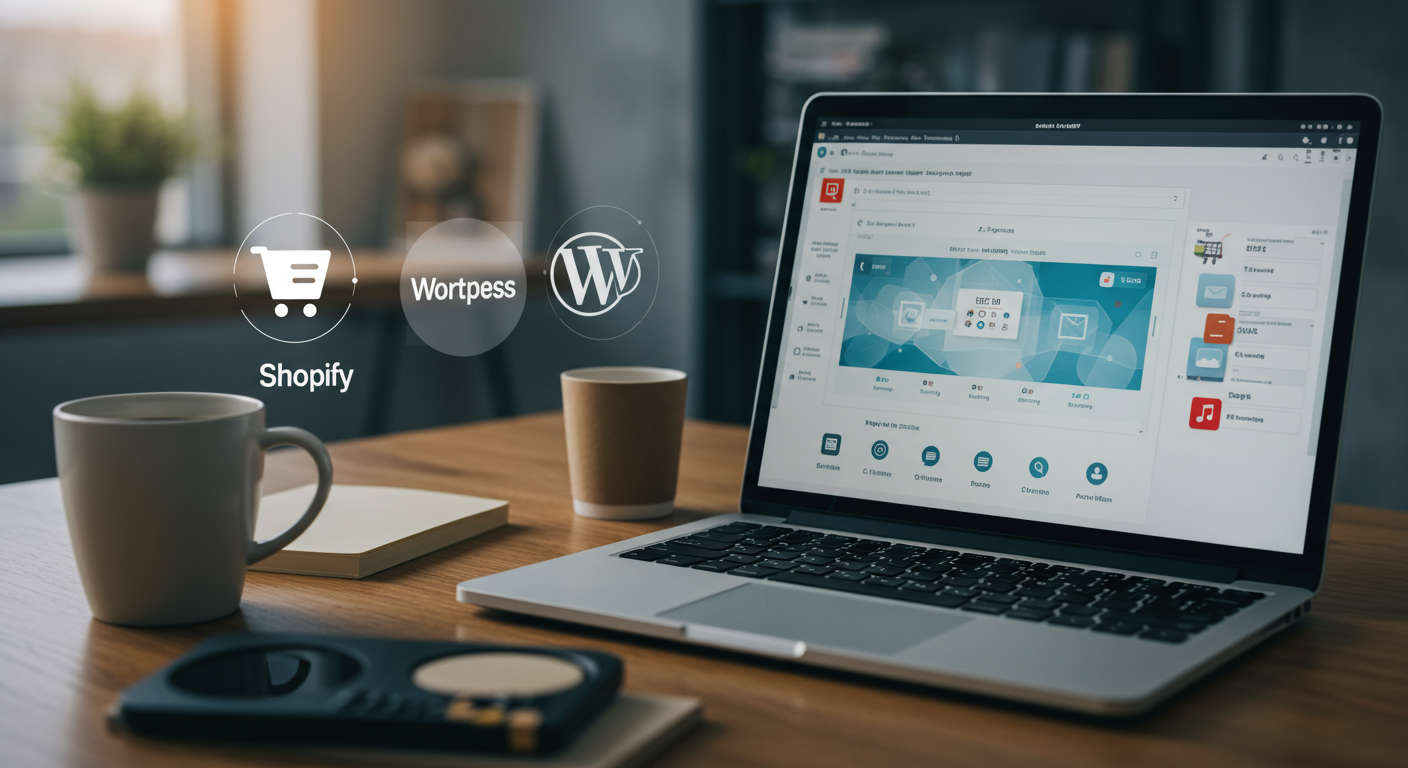
Futuristic small business environment showcasing AI breakthroughs with virtual agents, real-time voice AI, and multimodal processing on Shopify and WordPress platforms.

The AI landscape transformed dramatically in 2025, fundamentally reshaping how small businesses operate, compete, and grow. From GPT-4o’s revolutionary multimodal capabilities to autonomous agents working 24/7, these five AI breakthroughs directly impact SMBs managing Shopify stores and WordPress sites. Furthermore, the cost barriers that once protected enterprise advantages have crumbled. Consequently, small businesses now access the same cutting-edge AI technology as Fortune 500 companies, enabling them to punch above their weight without massive budgets or dedicated technical teams.

Multimodal Magic: Why GPT-4o Changed Everything for Small Business

GPT-4o represents a seismic shift in AI capabilities, processing text, images, and audio simultaneously with unprecedented efficiency. Moreover, it delivers twice the speed of GPT-4 Turbo at half the cost, transforming the economics of AI for SMBs. This multimodal breakthrough enables small business owners to automate complex tasks that previously required hiring specialized staff or expensive agencies. Additionally, the real-time audio interactions allow businesses to respond to customers instantly across multiple formats and languages.

For ecommerce merchants, multimodal AI capabilities revolutionise how businesses handle customer service, product research, and content creation. Small shop owners can now upload product images, and AI instantly generates compelling descriptions, tags, and SEO-optimised content simultaneously. Furthermore, multilingual support means a single tool serves customers globally without language barriers. Consequently, a one-person operation can deliver enterprise-level efficiency, managing customer interactions at scale through text, voice, and visual channels combined.

A small business owner using a computer and smartphone displaying multiple types of media: text, images, and audio icons manifesting AI multimodal capabilities in a modern office.

The practical applications extend across Shopify and WordPress stores everywhere. Product teams can upload competitor images and receive instant competitive analysis. Marketing teams can analyse visual trends across social media and automatically generate matching content. Support teams handle customer inquiries through voice, text, or image simultaneously, dramatically reducing response times. Beyond operational efficiency, AI breakthrough capabilities in 2025 enable businesses to create personalised customer experiences that drive conversion rates and customer loyalty upward.

Real-Time Voice Agents Transforming Customer Service

Real-time AI voice processing represents perhaps the most transformative breakthrough for customer service in 2025. Today’s sophisticated voice agents combine speech-to-text (STT) systems, large language models for conversational understanding, and text-to-speech (TTS) synthesis into seamless interactions that feel genuinely human. Additionally, these systems operate with minimal latency, meaning customers experience immediate responses rather than frustrating delays. Furthermore, the emotional and contextual understanding embedded in these agents creates customer experiences that rival expensive human support teams.

A futuristic customer service scene with an AI voice assistant communicating with diverse customers via smartphones and computers, featuring voice waveforms and digital network connections.

The competitive advantage for SMBs is staggering. Real-time voice AI enables small businesses to deploy sophisticated customer support agents without hiring expensive teams or outsourcing to expensive call centres. Consequently, a retail shop owner can answer customer questions 24/7 through voice interactions while focusing on core business operations. Moreover, research shows that small businesses deploying AI agents report 68-91% productivity gains, with voice support handling routine inquiries instantly whilst escalating complex issues to humans when necessary. The multilingual capabilities ensure global customer reach without language barriers.

Voice agents integrate seamlessly with both Shopify and WordPress ecosystems, enabling small business owners to transform customer engagement immediately. Furthermore, these agents learn from each interaction, continuously improving their responses and contextual understanding. Consequently, over time, voice support quality actually improves rather than degrading. The breakthrough here extends beyond cost savings – it fundamentally changes how SMBs compete, offering premium customer experiences that drive loyalty and repeat purchases. When customers receive instant, intelligent responses to questions any time of day, they perceive the business as larger and more professional than reality.

Generative Visual Search Reimagining Product Discovery

In 2025, ecommerce competition intensified dramatically, making product discovery a critical battleground. Generative AI visual search has become essential for any online business wanting to survive against giants like Amazon and ASOS. Rather than requiring customers to type search terms, visual search ecommerce allows shoppers to upload photos using their smartphone cameras and discover matching products instantly. Moreover, conversational refinement enables customers to ask follow-up questions like “show me this dress in blue” or “find something similar but cheaper,” creating intuitive discovery experiences.

The technology behind this breakthrough combines hybrid retrieval systems merging image, text, and behavioural data with conversational AI understanding customer intent. Additionally, the backend automation handles product tagging and catalogue management autonomously, reducing manual work for store owners. Furthermore, businesses deploying visual search report extraordinary improvements: 20-25% increases in average order value, 30% reduction in cart abandonment, and discovery rates jumping significantly. For Shopify merchants specifically, visual search transforms inspiration into immediate purchase intent, converting casual browsers into paying customers.

This breakthrough particularly benefits small retailers competing with enterprise operations. Rather than investing in expensive search technology development, SMBs access sophisticated visual search through affordable plugins and integrations. Consequently, a small fashion boutique competes on product discovery quality with national chains. Moreover, the reduced search friction means customers find exactly what they want faster, improving satisfaction metrics and repeat purchase rates. The 2025 visual search revolution democratises ecommerce technology, enabling small businesses to match the discovery experiences previously exclusive to mega-retailers.

Autonomous AI Agents: The 24/7 Virtual Employee Advantage

Perhaps the most transformative 2025 breakthrough for SMBs involves autonomous AI agents operating as genuine virtual employees. Unlike traditional automation requiring constant monitoring and manual triggers, autonomous AI agents make independent decisions and execute complex business tasks 24/7 without human intervention. These agents handle diverse workflows: marketing automation, SEO content creation, customer segmentation, email campaigns, lead organisation, invoicing, and social media management – literally 100+ daily tasks for small businesses running lean operations.

The statistical impact proves remarkable: small businesses deploying autonomous agents achieve approximately 61% efficiency improvements, with certain tasks completing 126% faster than manual processes. Furthermore, businesses with just 1-4 employees achieve enterprise-level operational efficiency previously requiring significantly larger teams. Consequently, a solopreneur running a Shopify store can accomplish what once required hiring multiple staff members. The breakthrough here involves genuine autonomy – agents learn business context, understand goals, and execute decisions independently rather than following rigid pre-programmed rules.

Consider Agents24x7 as a practical example: this platform functions as a genuine virtual employee for just £20/month, capable of executing 100+ tasks daily. Moreover, it integrates directly with WordPress and Shopify through dedicated plugins, enabling immediate adoption without technical complexity. Furthermore, the Agents24x7 Shopify app enables merchants to automate store operations immediately, whilst the Agents24x7 WordPress plugin serves content creators and bloggers similarly. The platform learns business context, researches competitors, finds keywords, writes SEO blog posts, and manages customer segments – all autonomously. For SMBs seeking to scale revenue without proportional cost increases, autonomous agents represent the ultimate breakthrough technology. You can explore practical applications like automating AI product descriptions for Shopify and WooCommerce or running AI email marketing campaigns autonomously.

Democratised AI Access Leveling the Playing Field for SMBs

The 2025 watershed moment sees advanced AI capabilities previously exclusive to large enterprises becoming accessible and genuinely affordable for small businesses. This democratisation breakthrough fundamentally changes competitive dynamics. Additionally, the cost structure shifted dramatically – platforms offering enterprise-grade AI for small business growth now cost £20 monthly rather than thousands. Furthermore, no-code onboarding means businesses without technical teams implement sophisticated automation immediately.

The statistics surrounding this democratisation prove compelling: 91% of SMBs report AI boosts revenue, 86% see improved profit margins, and 68% of small businesses now use AI regularly – up 42% from the previous year. Moreover, purpose-built tools designed for specific verticals (dental offices, retail shops, startups, accountants) eliminate expensive custom development. Consequently, a small business no longer needs massive budgets or dedicated AI specialists to compete effectively. The democratisation wave continues accelerating, with WordPress and Shopify plugins lowering adoption barriers further through familiar, intuitive interfaces.

This breakthrough connects directly to all previous four breakthroughs: multimodal AI, voice agents, visual search, and autonomous agents all become practically available to SMBs specifically because of democratised access. Furthermore, affordable pricing like £20 monthly for Agents24x7 makes sophisticated automation accessible to solo entrepreneurs and small teams everywhere. Consequently, competitive advantage shifts from budget and team size toward implementation speed and strategic deployment. Small businesses adopting these breakthroughs gain capabilities matching enterprise operations, enabling them to automate operations, enhance customer experiences, and scale revenue without proportional cost increases. Explore practical Shopify automation use cases demonstrating this democratisation in action.

Seizing Your Competitive Advantage in 2025

The five AI breakthroughs of 2025 – multimodal GPT-4o, real-time voice agents, generative visual search, autonomous agents, and democratised access – fundamentally reshape competitive advantage for small businesses. Furthermore, the window to adopt these breakthroughs before competitors is closing rapidly. Consequently, early adopters will dominate their markets whilst laggards face increasing competitive pressure. The future belongs to small businesses embracing these innovations, transforming how they operate, serve customers, and grow.

Small business owners can start implementing these breakthroughs immediately through affordable platforms and plugins designed specifically for their needs. Moreover, whether managing a Shopify ecommerce store, running a WordPress blog, or operating any online business, accessible tools now exist to leverage each breakthrough. Additionally, starting with one breakthrough – perhaps autonomous agents or visual search – builds momentum toward comprehensive AI transformation. The time for SMBs to embrace latest AI trends for ecommerce and broader business operations is now, before competitors establish insurmountable advantages. Your business deserves enterprise-grade AI capabilities, regardless of budget constraints.

Posted on Leave a comment

AI Email Marketing for Shopify & WordPress

Modern ecommerce workspace showing laptop with email marketing dashboard, Shopify and WordPress logos, representing AI-driven seamless email marketing automation for SMBs and startups

Why AI Email Marketing Has Become Essential for SMB Growth

Email marketing remains one of the highest-ROI channels for ecommerce businesses, yet most small businesses struggle with manual campaign creation. Furthermore, 63% of marketers now use AI for email marketing, with 91% of SMBs reporting revenue boosts within the first six months. Consequently, the competitive landscape has shifted dramatically – businesses lacking autonomous email campaigns fall behind rivals who operate 24/7 without human intervention.

Manual email workflows drain precious time and resources, preventing teams from scaling operations effectively. However, the challenges go deeper than time management: inconsistent sending schedules lead to forgotten customers, poor personalisation frustrates subscribers, and low engagement rates erode brand trust. Moreover, abandoned carts represent lost revenue that many SMBs leave on the table simply because they lack the bandwidth to send timely recovery campaigns.

AI addresses these pain points by enabling 24/7 autonomous email campaigns that maintain consistency and relevance without human oversight. Additionally, customers now expect personalised communication as standard, yet most SMBs lack dedicated marketing staff to deliver this. Consequently, email automation for startups has become essential infrastructure rather than a luxury feature. This technology democratises professional-grade campaigns for resource-constrained teams.

Small business owner using AI email marketing on laptop with Shopify and WordPress icons, modern home office setup, warm lighting

How No-Code AI Agents Transform Email Campaign Creation

The power of no-code AI email automation lies in its simplicity – no technical expertise or developer involvement required. Furthermore, AI agents learn your business by analysing customer data, then autonomously generate personalised subject lines, craft compelling email copy, and schedule sends at optimal times. Consequently, platforms like Agents24x7 eliminate the bottleneck of manual task switching between content writing, segmentation, scheduling, and analytics.

Specific capabilities these agents bring include dynamic personalisation based on customer behaviour, automated A/B testing of subject lines, optimal send time prediction for each recipient, and intelligent product recommendation engines. Moreover, no-code email marketing platforms eliminate the complexity that plagues traditional tools where creating a single campaign requires navigating frustrating workflows. Additionally, this approach produces 100+ email marketing tasks daily without human intervention – a scale impossible for small teams.

Consider the quantifiable time savings: teams typically spend 10+ hours weekly on email management tasks. However, autonomous AI agents compress this into passive monitoring. Consequently, business owners redirect their attention toward revenue-generating activities rather than administrative overhead. This represents genuine scalability – the ability to send thousands of personalised emails monthly at the same £20/month cost, making affordable email automation accessible to every SMB regardless of budget constraints.

Shopify Integration Making Email Automation Frictionless

Agents24x7’s Shopify app streamlines email marketing directly from the Shopify dashboard without external tools or manual data transfers. Furthermore, native integration provides real-time customer data synchronisation, automatic product catalogue updates, abandoned cart detection, and comprehensive order history analysis. Consequently, Shopify email marketing AI operates seamlessly within the platform Shopify merchants use daily.

The technical advantages translate to practical business benefits: welcome series automatically greet new customers, cart abandonment recovery campaigns trigger instantly when customers leave, post-purchase follow-ups request reviews and encourage repeat purchases, and win-back campaigns re-engage inactive customers. Moreover, this integration eliminates manual data exports and CRM syncing, reducing implementation time from weeks to mere hours. Additionally, Shopify merchants leverage their store’s built-in customer insights to fuel AI-driven personalisation at scale.

Real-world examples demonstrate the power of this integration: seasonal promotions send automatically during peak shopping periods, customer loyalty sequences nurture repeat purchasers, and product launch announcements reach the most relevant customers based on browsing history. Furthermore, all functionality operates autonomously 24/7 within the familiar Shopify environment. Consequently, merchants gain enterprise-grade email capabilities without enterprise-level complexity or cost. This represents true Shopify automation that multiplies marketing impact without multiplying workload.

WordPress Implementation and Newsletter Automation at Scale

Bloggers, content creators, and service-based SMBs benefit equally from Agents24x7’s WordPress plugin, which enables direct email automation from your WordPress site. Furthermore, the plugin provides subscriber list management, sophisticated segmentation based on content consumption patterns, automated drip campaigns triggered by user behaviour, and newsletter scheduling across multiple send times for global audiences. Consequently, WordPress newsletter automation reaches thousands of subscribers with consistent, personalised communication.

WordPress site owners leverage the plugin to nurture readers into customers through automated sequences triggered by page visits, form submissions, or content downloads. Moreover, integration with WordPress standard features like contact forms, user roles, and custom post types enables sophisticated automation without coding. Additionally, specific workflows include weekly digest emails featuring new blog posts, abandoned webinar follow-ups, course enrollment confirmations, and lead nurture sequences.

Consider successful use cases: SaaS companies nurture free trial users through automated onboarding sequences, agencies automate client communications and reduce manual outreach overhead, and publishers build subscriber engagement through curated content digests sent automatically. Furthermore, the WordPress automation plugin simplifies subscriber growth through embedded signup forms and powerful list segmentation. Consequently, even non-technical WordPress users access sophisticated email automation for startups without hiring developers or marketing specialists.

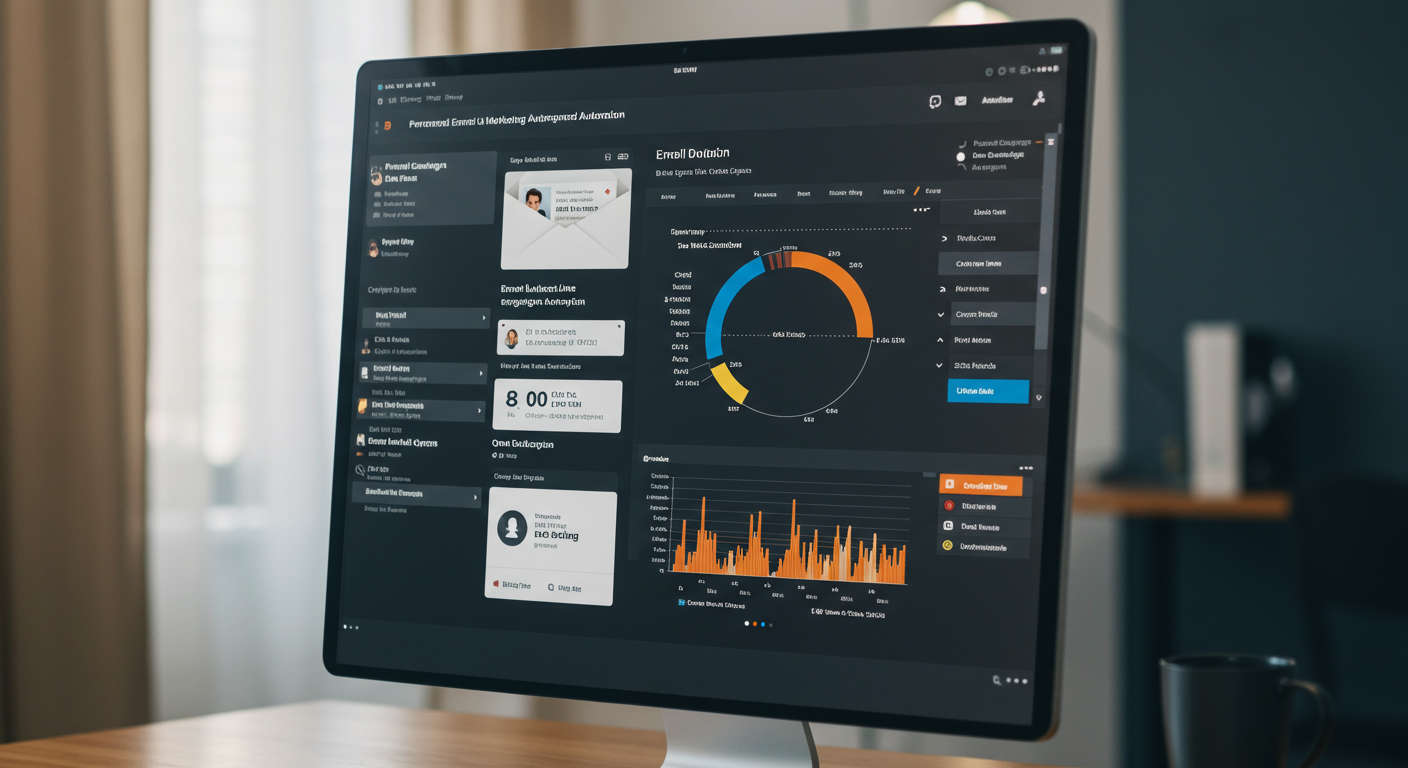
AI-powered email marketing automation dashboard showing personalised campaigns, email subject line optimisation, and customer engagement analytics, vibrant interface on computer screen

Autonomous Personalisation and AI-Generated Subject Lines Driving Opens and Clicks

AI-driven personalisation dramatically increases email engagement metrics through intelligent subject line generation and content customisation. Furthermore, machine learning models trained on thousands of high-performing campaigns analyse customer behaviour data – purchase history, browsing patterns, engagement history, and seasonal trends – to customise email content dynamically. Consequently, statistics show 13% increase in click-through rates and up to 10% boost in open rates through AI-optimised subject lines.

The AI continuously learns what resonates with different customer segments and refines recommendations based on performance data. Moreover, specific personalisation tactics include dynamic product recommendations based on browsing history, customised pricing offers based on customer lifetime value, subject lines referencing past interactions, and optimal send time selection for each individual recipient. Additionally, this level of AI hyper-personalisation is impossible at scale for human teams but becomes routine for autonomous agents processing 100+ emails daily.

Performance gaps between generic and personalised campaigns tell a compelling story: standard broadcast emails achieve 2-3% open rates, whilst AI-personalised campaigns reach 5-8% or higher. Furthermore, this sophisticated personalisation operates automatically without marketer intervention. Consequently, sophisticated email marketing automation removes the knowledge gap separating well-resourced enterprises from SMBs, democratising capabilities previously available only to companies with dedicated teams.

Cost Efficiency and Scalability at £20 Per Month

The economic advantages of Agents24x7’s £20/month pricing model are substantial compared to traditional email platforms and agency services. Furthermore, traditional platforms charge £50-200/month plus setup fees, whereas autonomous AI agents deliver equivalent or superior results at a fraction of the cost. Consequently, affordable email automation becomes genuinely accessible for startups and resource-constrained SMBs testing new marketing channels.

Fixed pricing eliminates scaling costs – sending 1,000 emails or 100,000 emails monthly costs identically, unlike per-contact models that penalise growth. Moreover, return on investment calculations reveal compelling numbers: even 2-3% improvement in email engagement translates to substantial revenue gains. For example, a Shopify store recovering £500-1,000 monthly in abandoned cart revenue alone justifies the subscription multiple times over. Additionally, WordPress publishers monetise subscriber lists more effectively through targeted campaigns, improving overall business profitability.

The low entry price removes barriers for startups experimenting without significant capital outlay. Furthermore, scalability advantages mean growing businesses add customer volume without proportional cost increases – a fundamental problem plaguing traditional per-contact pricing models. Consequently, SMBs redirect budget savings from expensive email platforms and freelancer costs toward product development or customer acquisition. Additionally, time value considerations reveal SMBs save 10+ hours weekly, translating to avoided hiring costs or opportunity cost of owner time redirected toward revenue-generating activities. This represents genuine email marketing ROI automation that strengthens business economics.

Building Customer Relationships Through Consistent 24/7 Engagement

Autonomous AI email agents ensure consistent customer communication every single day without burnout or human oversight. Furthermore, consistent messaging builds psychological impact on customer loyalty and lifetime value. Consequently, statistics show 49% of small businesses using email automation report improved lead nurturing and customer engagement within six months of implementation.

The AI maintains engagement momentum by sending triggered emails based on customer actions, scheduled newsletters on consistent cadences, and re-engagement campaigns automatically. Moreover, consistency builds brand familiarity and trust over time through repeated touchpoints – a key advantage over sporadic manual campaigns. Additionally, customers expecting daily communication from major brands now expect similar treatment from SMBs, but resource constraints make this impossible without AI agent virtual employee automation.

Customer journey mapping enables the AI to track individual progress through awareness, consideration, and purchase stages, sending appropriately-timed emails at each phase. Furthermore, welcome sequences send automatically to every new customer, educational drip campaigns nurture leads over weeks, and post-purchase engagement keeps customers informed. Consequently, this always-on approach means no customer falls through cracks during holidays or staff absences. For further insights on how to scale your automation effectively, explore AI Email Marketing Automation: SMB No-Code Guide, which provides comprehensive strategies for maximising your campaigns.

Implementation and Getting Started with Agents24x7

SMBs ready to deploy Agents24x7 email automation should follow a structured implementation approach. For Shopify merchants, installation begins at the Shopify App Store, connecting store data, creating email templates, setting up automation triggers, and launching campaigns within 1-2 hours. Furthermore, WordPress site owners install the plugin from the repository, connect subscriber lists, configure templates, set up triggers, and activate campaigns similarly quickly. Consequently, technical barriers virtually disappear for non-technical SMB owners.

The onboarding process involves Agents24x7 learning your business through analysing customer data, products, and brand voice. Moreover, best practices recommend starting with high-impact automations like abandoned cart recovery or welcome series before expanding to additional sequences. Additionally, monitoring campaign performance through built-in analytics dashboards tracks open rates, click rates, conversions, and revenue directly attributed to email efforts. For additional insights, review 5 No-Code Shopify Automation Use Cases to see practical workflows.

Segmentation best practices help the AI target right messages to right audiences based on customer lifecycle stage. Furthermore, proper setup of conversion tracking links email revenue to platform performance. Consequently, businesses gain complete visibility into which campaigns drive results. Additionally, troubleshooting common issues ensures proper email deliverability, mobile optimisation, and testing before full deployment. Despite powerful AI capabilities, getting started requires no coding, no complex configuration, and no marketing expertise – just business understanding and customer data.

The Path Forward for SMB Email Marketing

No-code AI email marketing through platforms like Agents24x7 democratises enterprise-grade marketing automation for SMBs and startups competing in 2024. Furthermore, at £20/month, autonomous agents deliver 24/7 personalised campaigns integrated seamlessly with Shopify and WordPress, enabling consistent customer engagement without dedicated marketing teams. Consequently, the combination of AI-driven personalisation, cost efficiency, and ease of implementation makes sophisticated email automation accessible to every business regardless of budget or technical expertise. The future of SMB email marketing is autonomous, intelligent, and remarkably affordable.

Posted on Leave a comment

Automate Seasonal Ecommerce Content with AI

AI-powered ecommerce workspace with Shopify and WordPress dashboards showing holiday campaign automation and festive shopping themes

Why Seasonal Content Matters for Ecommerce Revenue

Holiday ecommerce sales reached £380 billion globally in 2024, yet most small businesses and startups struggle with manual content creation processes. Furthermore, seasonal-themed content boosts organic traffic by up to 40% as consumers actively search for gift guides, holiday promotions, and festive shopping ideas. Consequently, brands that fail to automate seasonal marketing miss critical revenue opportunities during peak trading periods.

Limited-time seasonal offers drive urgency-driven purchases, increasing conversions by 43%, while early planning starting before November is now essential – 80% of shoppers begin holiday purchases earlier to avoid stockouts. Moreover, AI-influenced purchases account for £229 billion of global online sales in 2024, demonstrating the competitive advantage of AI-driven content strategies. SMBs need automated solutions rather than manual processes that slow down market responsiveness.

How AI Agents Transform Seasonal Campaign Automation

AI agents operate 24/7 without human intervention, handling 100+ autonomous tasks daily – from competitor research to scheduled publishing across multiple platforms. These intelligent systems analyse customer behaviour data to deliver hyper-personalised campaigns, segmenting audiences based on purchase history and engagement patterns. Furthermore, autonomous content creation automates critical seasonal tasks including keyword identification for seasonal search trends, blog post generation tailored to festive themes, and real-time campaign optimisation based on performance metrics.

Marketing automation delivers an average ROI of £5.44 for every £1 invested, making AI-powered seasonal ecommerce content a financially sound strategy for lean teams. Additionally, AI agents learn your business model, research seasonal trends, and automatically draft SEO-optimised content aligned with your brand voice. These capabilities include generating product carousels, holiday email sequences, landing page copy, and platform-specific social media posts – all tailored to different audience segments. Consequently, SMB teams focus on strategy rather than repetitive content creation, freeing resources for customer engagement and business growth.

An AI agent working autonomously on a computer screen managing ecommerce seasonal marketing tasks such as content scheduling, keyword research, and campaign optimisation, futuristic and professional style

Setting Up Agents24x7 on Shopify for Holiday Campaigns

Integrating AI holiday content planning for Shopify begins with installing the Agents24x7 app from the Shopify App Store. Furthermore, you’ll configure the AI agent with business-specific information – product categories, brand tone, seasonal campaigns (Valentine’s, Easter, Christmas, Black Friday), and target audience demographics. The platform then connects to your Shopify product database, enabling AI to generate content referencing specific products and promotions relevant to each seasonal period.

Campaign configuration involves setting publishing frequency (daily, weekly, or custom schedules), selecting content types (blog posts, email sequences, social media captions), and defining seasonal themes aligned with your retail calendar. Moreover, integrations with WordPress enable cross-platform publishing, while email marketing tool connections automate email campaign distribution. The no-code nature of Agents24x7 requires no technical expertise – all configuration happens through intuitive dashboards. Consequently, SMB owners can activate seasonal campaigns before peak periods, allowing AI time to optimise content calendars based on early performance data.

Automating Seasonal Content on WordPress with AI Agents

WordPress serves as a content hub for SMBs running automated seasonal blog posts and hosting product-focused guides. Installing the Agents24x7 WordPress plugin involves accessing the plugin directory, searching for Agents24x7, and activating it through your dashboard. Furthermore, the plugin pulls product data, inventory updates, and promotional information from Shopify to automatically inform content generation strategies.

Configuration of AI content parameters includes defining seasonal content pillars (holiday gift guides, festive blog posts, seasonal buying guides) and setting posting schedules aligned with your retail calendar. Additionally, Agents24x7 handles multi-seasonal workflows – creating separate content calendars for Valentine’s, Easter, summer sales, back-to-school, Christmas, and year-round promotional events. The AI generates SEO-optimised blog posts with proper heading structures, keyword density targeting seasonal search terms, and featured images that drive engagement. Consequently, consistent daily publishing improves domain authority and search visibility for seasonal keywords.

A busy ecommerce store during holiday season with festive decorations, products displayed, and customers shopping online on different devices, vibrant and dynamic atmosphere

Designing Seasonal Content Calendars That Drive Conversions

A strategic seasonal content calendar automation maps key shopping periods, promotional events, and content themes to daily publishing schedules. Early planning 3-4 months before peak periods allows AI training and optimisation time. Major seasonal opportunities include Valentine’s Day (February), Mother’s and Father’s Days (spring), Easter promotions, summer sales, back-to-school (August-September), Halloween (October), and Christmas (December) – each requiring tailored content strategies and AI-driven holiday campaign scheduling.

Gift guides increase organic traffic 40% during holidays, while limited-time promotional posts drive urgency-driven conversions. Furthermore, content should address seasonal customer journey stages: awareness content for early-season searches, consideration content addressing product comparisons, and conversion content focusing on urgency. Content interlinking strategies connect gift guides to relevant product pages and build topical clusters around seasonal keywords. Moreover, daily automated publishing improves search algorithm rankings and keeps your brand prominent during competitive seasonal periods. Consequently, velocity and consistency in publishing directly correlate to revenue growth during peak trading windows.

For deeper insights on managing publishing schedules across multiple channels, explore our guide on AI content scheduling tools for startups, which details how automated systems maintain consistency whilst eliminating manual scheduling burden.

Achieving Cost-Effective Consistency at Scale

No-code seasonal marketing automation via Agents24x7 operates at just £20 monthly, dramatically more affordable than hiring freelance writers or agencies. Traditional seasonal strategies require managing content calendars manually and scheduling posts individually – processes that drain team resources and create bottlenecks. However, AI-powered automation handles 100+ autonomous tasks daily, creating 30+ optimised pieces monthly per channel, freeing teams to focus on strategy and growth.

The scale advantage compounds revenue benefits: daily automated publishing improves search engine rankings, increases organic visibility, and maintains brand presence during critical shopping periods. Additionally, the £5.44 ROI per £1 invested demonstrates that this £20 monthly investment drives substantially higher revenue returns through increased conversions and customer engagement. Elimination of human error in scheduling reduces missed publishing opportunities during peak revenue periods. Furthermore, automated content allows SMBs to test multiple content strategies simultaneously, identifying top performers and optimising future campaigns. This approach enables lean teams to compete with larger retailers that traditionally dominated seasonal markets through superior marketing budgets and resources.

Learn more about scaling email campaigns affordably in our article on AI email marketing automation for SMBs, which demonstrates how £20/month solutions deliver £36–£42 ROI per £1 spent across email, blog, and social channels.

Measuring Success and Optimising Seasonal Campaigns

Tracking seasonal ecommerce content performance requires monitoring key metrics: traffic growth during promotional periods, conversion rate improvements from seasonal content versus baseline performance, average order value increases from cross-sell opportunities, and revenue attribution to specific content pieces. Furthermore, automated email campaigns show 42.1% open rates and 5.4% click-through rates, demonstrating measurable ROI from autonomous seasonal marketing agents.

Agents24x7 provides built-in analytics dashboards showing which content drives traffic, engagement, conversions, and revenue. A/B testing during seasonal peaks compares headline variations, call-to-action formats, and content structures to identify highest-performing approaches. Moreover, seasonal cohort analysis examines customer acquisition costs, lifetime value, and repeat purchase rates for customers acquired through seasonal versus non-seasonal content. Real-time monitoring allows AI to adjust content strategy based on emerging trends and market response. Consequently, measurement enables continuous improvement, allowing SMBs to progressively increase seasonal revenue and ROI year-over-year through data-informed optimisation and iterative refinement of content strategies.

Transform Seasonal Revenue with AI Automation

Seasonal ecommerce content automation through AI agents fundamentally transforms how SMBs plan, execute, and profit from high-traffic periods. At £20 monthly, Agents24x7 delivers £5.44 return per £1 invested, handling 100+ daily tasks from keyword research to autonomous publishing across Shopify and WordPress. For businesses targeting competitive seasonal markets, AI-powered seasonal promotions – not manual processes – drive higher conversions and sustainable revenue growth.

Get started today by installing Agents24x7 from the Shopify App Store or the WordPress plugin directory. Your competitors are automating seasonal content now; don’t let manual processes hold your business back during peak revenue opportunities.

Posted on Leave a comment

AI On-Page SEO: Automate Meta & Schema

Modern digital marketing concept with AI automating SEO meta tags and schema markup on a laptop screen in a bright tech office environment.

Why Meta Tags and Schema Markup Matter for Modern SEO

On-page SEO success fundamentally depends on optimised meta tags and structured data implementation. Furthermore, meta titles, descriptions, and JSON-LD schema markup directly influence how search engines understand your content and how users decide whether to click your results. Additionally, these elements shape your website’s visibility in search results, click-through rates, and overall organic performance.

Meta titles serve as the primary headline users see in search engine results, making them crucial for both ranking signals and user psychology. Consequently, well-crafted titles incorporating target keywords significantly improve click-through behaviour. Moreover, meta descriptions provide the opportunity to sell your content before users visit, with compelling copy directly impacting CTR and organic traffic volume.

Schema markup – particularly JSON-LD structured data – enables rich snippets that transform plain blue links into enhanced SERP features. Therefore, pages with proper schema implementation display star ratings, product prices, event dates, or answer previews, drawing substantially more user attention. However, without quality structured data, your content remains invisible to these enhanced opportunities, missing the 25-30% CTR improvements that rich snippets consistently deliver.

The common mistakes businesses make when neglecting on-page optimisation prove costly. Firstly, keyword stuffing in meta tags triggers ranking penalties. Secondly, duplicate meta descriptions across hundreds of pages waste ranking potential. Additionally, incomplete schema fields prevent rich result eligibility, leaving CTR improvements on the table. Ultimately, these oversights mean even high-quality content remains undiscovered by potential customers.

A busy office environment showing team members working on SEO and digital marketing strategies using computers and data analytics screens

How AI Automation Transforms Meta Tag Generation

Artificial intelligence revolutionises meta tag creation by analysing page content, target keywords, and search intent to automatically generate compelling titles and descriptions. Furthermore, AI-powered meta tag generators employ advanced natural language processing to understand semantic relationships between terms. Consequently, they optimise keyword density, maintain strict character limits (50-60 for titles, 150-160 for descriptions), and score semantic relevance automatically.

Behind the scenes, AI algorithms learn from top-ranking competitors, identifying patterns in successful meta tags including emotional triggers, power words, and call-to-action phrases that drive higher click-through rates. Therefore, AI systems continuously adapt their suggestions based on search performance data and evolving trends. Moreover, this machine learning capability means your AI on-page SEO automation improves over time without manual intervention.

Real-world performance metrics demonstrate remarkable improvements when AI-generated meta tags replace manual or neglected versions. Additionally, automation maintains consistency across hundreds or thousands of pages simultaneously, preventing duplicate descriptions and ensuring uniform brand voice. Consequently, SMBs can optimise entire websites in hours instead of weeks, freeing up resources for strategic initiatives.

The bulk editing capabilities prove especially valuable for e-commerce sites and content-heavy websites. Furthermore, AI automation continuously adapts suggestions based on A/B testing results, search performance data, and seasonal changes. Therefore, your meta tags stay fresh and relevant without requiring constant human attention, enabling true 24/7 optimisation cycles.

Understanding JSON-LD Schema Markup and Rich Snippets

JSON-LD represents the modern standard for schema markup implementation, distinguished from older formats like Microdata and RDFa by its simplicity and Google’s preference for JSON-LD deployment. Furthermore, JSON-LD code blocks integrate directly into page headers without affecting visible content, making implementation clean and non-invasive. Consequently, Google prioritises JSON-LD for rich snippet eligibility and enhanced SERP features.

Different business categories require specific schema types to unlock maximum visibility benefits. For instance, Product schema includes price, availability, ratings, and reviews – essential for e-commerce visibility. Additionally, Article schema captures author information, publication dates, and featured images for content marketing. Moreover, LocalBusiness schema displays address, phone, and opening hours for service providers. FAQ and How-To schemas further enhance position zero opportunities and featured snippet placement.

The visual enhancements enabled by quality schema markup directly impact user behaviour and CTR performance. Therefore, star ratings, product prices, event dates, cooking times, and answer previews transform plain search results into compelling SERP cards. Consequently, these rich snippets increase visibility above standard blue links and draw significant user attention, with documented 25-30% CTR increases across industries.

Proper schema implementation positions businesses for emerging search features including Google Discover placement and voice search compatibility. Furthermore, structured data validation through Google’s testing tools identifies missing required fields and formatting errors that prevent rich result eligibility. Additionally, maintaining accurate schema markup ensures compliance with Google’s latest guidelines, avoiding ranking penalties and maximising feature adoption.

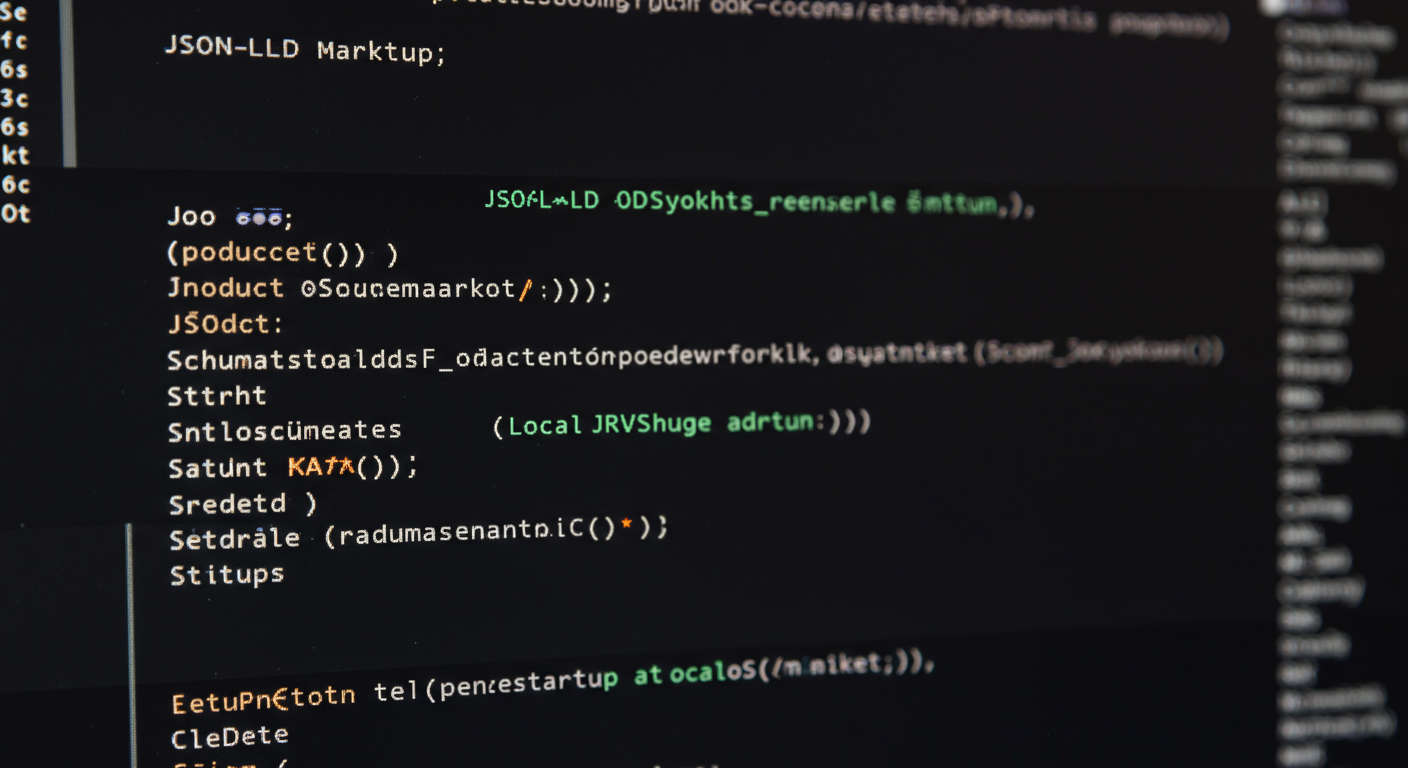
Close-up of a computer screen displaying JSON-LD schema markup code with elements like product, rating, and local business details relevant to on-page SEO

The Role of AI in Automated Schema Markup Implementation

Artificial intelligence automatically generates accurate JSON-LD schema markup by analysing page content, identifying entity types, and extracting relevant data fields. Furthermore, machine learning processes enable AI systems to recognise product pages, blog articles, local business information, and FAQ content without manual classification. Consequently, AI automation ensures all required fields are populated correctly, reducing rich result eligibility failures.

The scalability advantage of AI-driven schema generation proves invaluable for enterprise websites with thousands of pages. Therefore, what would cost thousands of pounds in manual implementation becomes automated and continuous. Moreover, AI systems continuously monitor for schema compliance with Google’s latest guidelines, automatically updating markup when specifications change without administrator intervention.

Automated validation catches and corrects common schema errors before deployment, preventing ranking penalties and ensuring rich snippet eligibility. Furthermore, AI handles dynamic content, product variations, and frequently updated information by automatically refreshing schema markup. Additionally, this continuous optimisation means your structured data remains current and compliant, maintaining competitive visibility in crowded search results.

Setting Up AI-Powered On-Page SEO Automation for Shopify

Implementing AI on-page SEO automation on Shopify stores requires no coding knowledge, making it accessible to SMBs and startups. Furthermore, users can access the Shopify app marketplace and locate SEO automation apps with AI meta tag generation capabilities. Consequently, installation proceeds through a no-code interface, granting necessary permissions without developer involvement.

The initial configuration stage involves connecting your app to your Shopify store and setting preferences for meta tag generation style, keyword targeting, and character limits. Therefore, you can maintain brand consistency whilst benefiting from AI optimisation. Moreover, bulk optimisation features automatically generate or improve meta titles and descriptions for all existing products simultaneously, saving weeks of manual work.

Schema markup setup for Shopify includes automatic product schema generation pulling prices, images, availability, and ratings directly from your store. Additionally, page schema for collections and landing pages, plus organisation schema for store-wide information, requires minimal configuration. Furthermore, monitoring dashboards track optimisation progress, allowing you to review AI-generated suggestions before publishing changes. Consequently, you maintain quality control whilst automating the heavy lifting of on-page optimisation.

For comprehensive guidance on implementation, explore our detailed step-by-step Shopify setup guide for daily SEO posts, which covers integration best practices and maximising your automation investment.

Integrating AI On-Page SEO Automation into WordPress Sites

WordPress users benefit from plugin deployment offering unique advantages for bloggers and content creators. Furthermore, installation through the WordPress plugin directory requires only searching, installing, and activating directly from the admin dashboard. Consequently, no code modifications or developer involvement necessary, making AI on-page SEO automation accessible to non-technical users.

The WordPress configuration interface allows setting post types, category and tag management, and keyword targeting preferences. Therefore, automation scans published posts and pages for optimisation opportunities, generating improved meta titles and descriptions. Moreover, one-click approval enables implementation of AI suggestions, streamlining the optimisation process significantly.

WordPress-specific schema markup includes Article schema for blog posts capturing author, publication date, featured image, and content category. Additionally, WooCommerce integration enables product schema for e-commerce WordPress sites. Furthermore, automation respects existing manually-set meta tags and schema whilst filling gaps and improving underperforming pages. Consequently, you maintain control whilst benefiting from intelligent automation 24/7.

To maximise your WordPress SEO automation strategy, discover why Agents24x7 represents a must-have WordPress plugin for SMBs, providing comprehensive on-page optimisation alongside other essential SEO automation features.

Tracking Performance and Measuring ROI from Automated On-Page SEO

Measuring the tangible impact of AI-powered meta tag and schema markup automation requires establishing baseline metrics before implementation. Furthermore, key performance indicators to monitor include average click-through rate improvements (industry benchmarks show 25-30% increases from rich snippets), organic impressions growth, ranking position changes, and organic traffic volume. Consequently, you can accurately quantify automation benefits.

Google Search Console data provides impressions, CTR, and average position information essential for ROI calculation. Therefore, Google Analytics organic traffic reports reveal conversion impacts connected to improved SERP visibility. Moreover, native dashboards within AI automation apps offer real-time performance tracking, simplifying analysis significantly. Additionally, A/B testing capabilities allow running side-by-side tests of different meta tag variations to identify highest-performing messaging styles.

The long-term cumulative benefits of consistent daily optimisation across hundreds of pages deliver compounding organic traffic growth over months. Furthermore, cost-benefit analysis comparing £20/month automation solutions against hiring SEO specialists demonstrates clear financial advantages. Consequently, SMBs can achieve professional-grade on-page SEO results without substantial budget commitments, making automation an obvious business investment.

Best Practices for Maintaining Quality and Compliance

Ensuring AI-generated meta tags and schema markup maintain quality standards requires establishing approval workflows before full automation deployment. Furthermore, reviewing AI-generated content catches potential errors, brand voice inconsistencies, or keyword over-optimisation. Consequently, critical pages receive human oversight whilst routine pages benefit from autonomous optimisation.

Google’s guidelines for meta descriptions emphasise relevance and prohibit misleading content. Therefore, maintaining accuracy and authenticity prevents manual actions and ranking penalties. Moreover, monitoring for duplicate meta descriptions across your site prevents technical SEO issues. Additionally, updating automation settings when business offerings change, seasons shift, or promotions launch ensures meta tags remain current and relevant.

The dangers of keyword stuffing in AI-generated meta tags prove significant, potentially triggering manual actions. Furthermore, maintaining balance between automation efficiency and human expertise ensures AI augments rather than replaces strategic decision-making. Consequently, establishing clear guidelines and periodic audits maximises automation benefits whilst maintaining compliance and content quality.

Maximising Organic Visibility Beyond Meta Tags and Schema

On-page SEO automation serves as a foundation for broader organic visibility strategies integrating with comprehensive SEO approaches. Furthermore, optimised meta tags and schema markup work synergistically with content structure, keyword optimisation, header tags, image alt text, and internal linking. Consequently, AI on-page SEO automation enables websites to capture long-tail keyword opportunities and answer-based search queries through rich snippet implementation.

Rich snippets generated from quality schema markup improve position zero opportunities, featured snippet eligibility, and Google Discover placement dramatically. Therefore, businesses can compete more effectively in crowded niches where every CTR improvement directly impacts customer acquisition. Moreover, automated on-page optimisation frees up internal resources previously spent on manual meta tag work, redirecting efforts toward content creation, link building, and strategic initiatives.

Emerging search formats like Google Discover and voice search increasingly rely on quality structured data, making schema automation investment future-proofing for organic visibility. Furthermore, AI-powered automation represents foundational infrastructure for modern SEO success. Consequently, SMBs and startups implementing these systems now position themselves ahead of competitors still managing meta tags manually.

Whether deploying AI on-page SEO automation through Shopify or WordPress, the investment at just £20/month with Agents24x7 Shopify app or the Agents24x7 WordPress plugin delivers measurable, sustainable results. Therefore, SMBs and startups can achieve professional-grade SEO at accessible price points, enabling consistent daily optimisation producing 100+ tasks autonomously.

AI-powered automation for meta tags and schema markup represents transformative evolution in how businesses approach on-page SEO, enabling professional-grade results with minimal effort. By leveraging autonomous AI optimisation, your website benefits from consistent 24/7 improvements, measurable click-through rate enhancements, and sustained competitive visibility in search results.

Posted on Leave a comment

AI Competitor Price Monitoring for Shopify

Modern e-commerce concept with AI technology analysing competitor prices, Shopify store interface on laptop, and dynamic pricing strategy graphs

Why Competitor Price Monitoring Matters for Your E-Commerce Business

In competitive e-commerce markets, staying ahead of pricing changes is crucial for SMBs and startups. Manual price tracking creates significant operational bottlenecks, wasting valuable time and resources. Furthermore, without real-time visibility, businesses miss critical revenue opportunities, leading to lost market share as customers defect to lower-priced competitors. Consequently, intelligent automation transforms how e-commerce businesses manage pricing strategies.
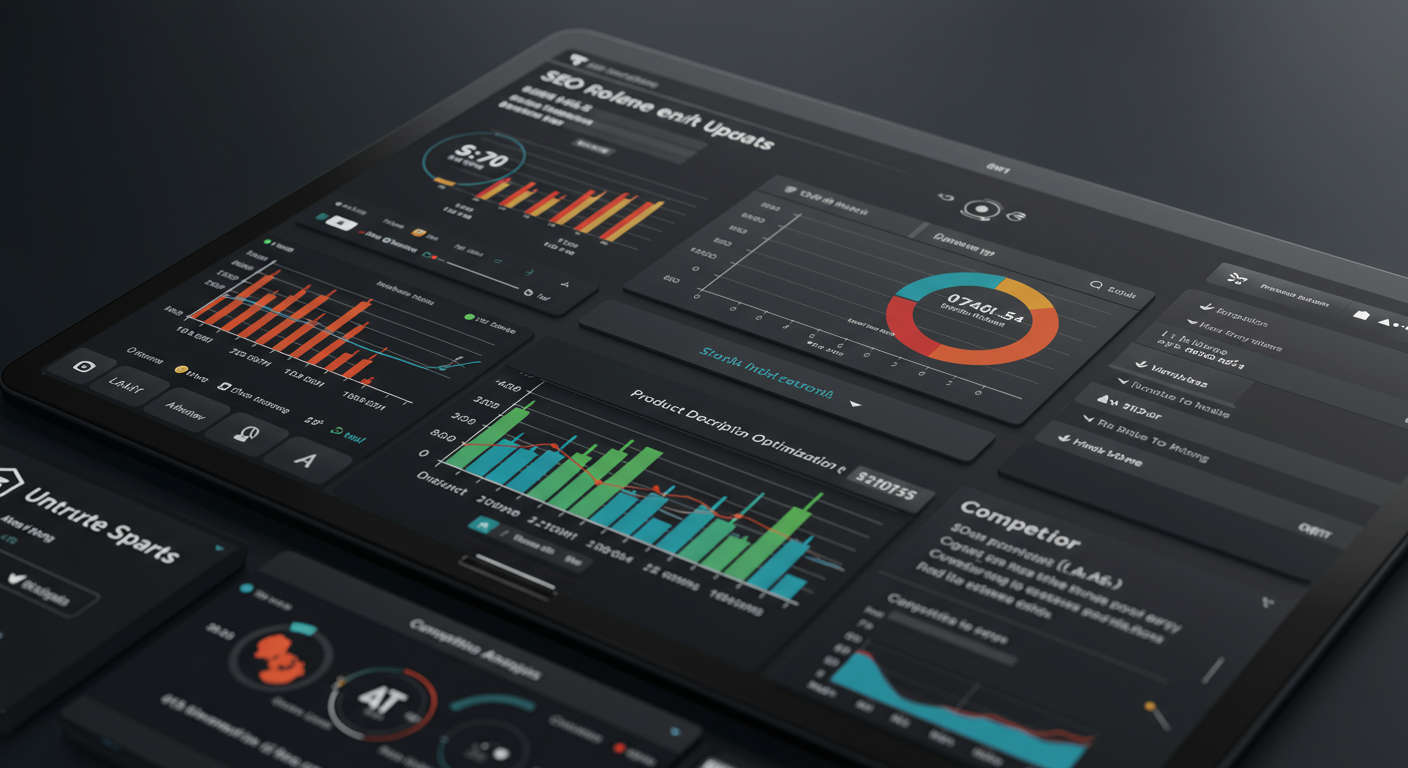
Real-world data reveals that e-commerce businesses implementing automated price monitoring experience 15-25% revenue lifts during peak periods, whilst those relying on manual tracking fall behind. Price wars erode margins rapidly when businesses cannot respond quickly to competitor changes, threatening profitability and long-term sustainability. Additionally, SMBs waste 20+ hours per week on manual pricing tasks – time that could focus on strategic growth initiatives. When you implement AI competitor price monitoring solutions, you reclaim these hours whilst maintaining competitive positioning in volatile markets.

The cost of ignoring competitor pricing extends beyond lost sales. Poor visibility creates inventory management challenges, reduces competitiveness, and forces reactive decision-making rather than strategic pricing. By contrast, intelligent automation removes this burden entirely. Merchants using AI-powered competitor price monitoring enjoy faster response times, fewer manual errors, and consistent pricing discipline across expanding product catalogues.

Understanding Dynamic Pricing Strategies and Their Real Impact

Dynamic pricing represents a competitive necessity in 2024-2025, fundamentally different from static, manual approaches. AI-powered solutions automate five primary dynamic pricing strategies that SMBs use to maximise revenue. Market-demand pricing delivers 15-25% revenue uplifts by adjusting prices based on real-time demand signals. Furthermore, competitor-based pricing protects market share by maintaining strategic price relationships with rivals.

Inventory-driven pricing improves cash flow by clearing dead stock at optimal prices, consequently accelerating inventory turnover. Time-based pricing boosts conversions by 10-20% through strategic promotional windows, whilst segment-based pricing increases repeat purchases by 15% in targeted customer groups. By processing real-time data on competitor moves, demand fluctuations, inventory levels, and customer behaviour, AI agents execute these strategies automatically without human intervention.

The financial impact proves compelling: dynamic pricing can improve profit margins by up to 10% through real-time adjustments whilst increasing turnover by up to 3%. Additionally, intelligent repricing maintains competitiveness without starting destructive price wars. Pricing psychology matters considerably – customers perceive dynamic pricing as fair when based on market conditions, not as opportunistic exploitation. Real SMBs using dynamic pricing maintain margins whilst growing sales volume, creating sustainable competitive advantages.

How AI Virtual Employees Automate Competitor Price Monitoring 24/7

AI virtual employees operate as autonomous agents that monitor competitor prices continuously without human intervention. These intelligent systems track pricing across competitors in real time, capturing price changes, stock availability, and promotional offers across Shopify stores and other e-commerce platforms. Consequently, businesses never miss pricing shifts, regardless of time zones or working hours.

These AI agents execute 100+ tasks daily, including competitor price scraping, price comparison analysis, dynamic pricing calculations, and automated price adjustments. Furthermore, instant alerts arrive the moment competitors change prices, enabling rapid response before market share erodes. The operational efficiency gains prove substantial: SMBs save hundreds of hours monthly on manual competitor tracking, reduce human error in pricing decisions, and maintain consistent pricing discipline across entire product catalogues.

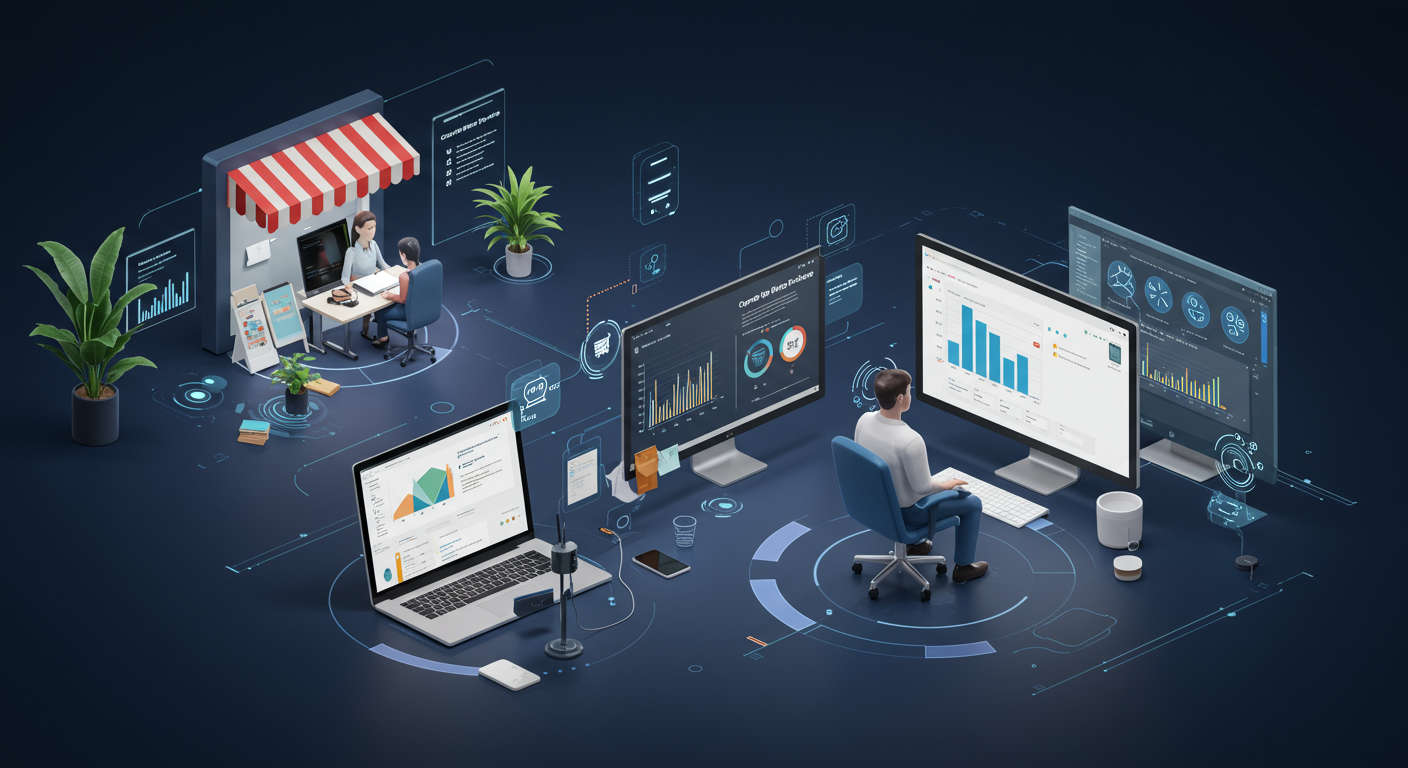
AI virtual employee monitoring competitor prices across multiple Shopify and WordPress e-commerce stores, showcasing dynamic pricing automation and real-time analytics.

AI agents learn business objectives, competitor landscapes, and pricing thresholds to make intelligent decisions aligned with company goals. Additionally, 24/7 autonomous monitoring delivers consistent results whilst freeing human teams for strategy and customer experience. The reliability and accuracy prove exceptional – AI monitoring maintains consistency whilst removing fatigue and distraction from human decision-making processes.

No-Code Price Monitoring for Shopify and WordPress Integration

No-code AI solutions remove technical barriers to implementing competitor price monitoring, making advanced automation accessible to SMBs and startups without developer resources. Intuitive dashboards and point-and-click interfaces eliminate programming requirements entirely. Furthermore, pre-built integrations with Shopify and WordPress connect directly to your store, automatically identifying products and extracting competitor URLs without manual coding.

The setup process proves straightforward: define which competitors to monitor, select price tracking frequency, establish pricing rules, and activate automated repricing. No-code platforms like Agents24x7’s Shopify app deliver exceptional agility compared to traditional enterprise software. Consequently, businesses launch monitoring in hours rather than months, modify pricing rules instantly, and scale across growing product catalogues without technical overhead.

This approach reduces dependency on expensive developers or IT teams, enabling business teams to own and adjust pricing strategies independently. No-code platforms democratise access to enterprise-grade pricing automation, allowing SMBs to compete with larger retailers on pricing agility. For example, consider how our related article on no-code AI competitor analysis for SMBs demonstrates practical implementation without technical backgrounds. Additionally, merchants can experiment with pricing strategies confidently, knowing they can modify or pause monitoring instantly.

No-code AI price monitoring dashboard with easy integration to Shopify and WordPress, featuring intuitive UI and graphs for competitor prices, used by small business owners.

Real-Time Alerts and Instant Notifications Drive Competitive Response

Real-time alert systems transform pricing responsiveness by enabling businesses to react instantly to competitor moves. AI agents detect competitor price changes within minutes or hours rather than days, triggering instant notifications via email, SMS, or in-app alerts. Speed matters critically because competitor prices can change multiple times daily; without instant alerts, retailers respond too late, losing sales and margin protection.

Notification systems integrate with dashboards displaying competitor pricing trends, historical price movements, and recommended repricing actions. Furthermore, alert prioritisation filters noise by highlighting significant price changes (beyond merchant-set thresholds) whilst ignoring minor fluctuations, preventing alert fatigue. Consequently, merchants focus attention on meaningful pricing shifts requiring strategic response rather than distraction by irrelevant fluctuations.

Internal workflows automatically escalate alerts to appropriate teams (pricing, operations, management) based on predefined rules and urgency levels. Additionally, customers benefit from transparency – price drop alerts notify customers of reduced prices, increasing engagement and conversions. The psychology of price competition matters considerably: instant alerts prevent panic decisions, allowing merchants to maintain pricing discipline and protect margins rather than making impulsive deep discounts that destroy profitability.

Protecting Your Margins While Staying Competitive

Strategic guidance on balancing competitiveness with profitability proves essential for sustainable growth. Many SMBs fall into price wars, accepting unsustainable discounts that erode margins and threaten business viability. Margin protection tactics include setting minimum and maximum price thresholds within AI monitoring systems to prevent repricing below cost or maintaining unnecessarily high margins.

Define profitability floors below which prices will not drop, and monitor margin impact dashboards in real time. AI algorithms calculate optimal price points that maximise revenue and profit simultaneously, avoiding race-to-the-bottom scenarios. Furthermore, AI recommends strategic price matching only when profitable, protecting long-term business health. Advanced strategies include tiered pricing with volume discounts that protect margins on large orders, promotional pricing limited to specific time windows, and competitive parity pricing where businesses match competitors on bestsellers whilst maintaining higher margins on differentiated products.

Inventory-driven pricing raises prices on scarce items and discounts overstock to protect cash flow whilst optimising turnover. Margin analytics dashboards help merchants visualise pricing impact on profitability, forecast margin changes from proposed adjustments, and maintain accountability for pricing decisions. Consider how our related article on Shopify AI automation setup and use cases explores margin protection strategies in detail. Additionally, case studies show SMBs that implemented margin protection lost short-term sales volume but dramatically improved profitability and long-term sustainability.

Integration With Shopify and WordPress Platforms

Technical and practical guidance on integrating AI competitor price monitoring with Shopify and WordPress e-commerce platforms proves invaluable. For Shopify stores, apps like Agents24x7 connect via Shopify API, accessing product catalogues, pricing data, and inventory information securely. The synchronisation flow channels monitored competitor prices into Shopify’s pricing engine, triggering automatic product price updates via API calls that reflect across storefronts, sales channels, and inventory systems in real time.

WordPress integration uses plugins like Agents24x7’s WordPress plugin that connect to WooCommerce data, enabling price tracking, competitor monitoring, and automated repricing within WordPress environments. Native platform integration delivers seamless data flow without manual updates, elimination of data silos, and automated audit trails for compliance and analysis. Furthermore, workflow automation triggers predefined actions such as automatic repricing, internal notifications, or customer alerts without manual intervention.

Configuration options include price check frequency (hourly, daily, or custom intervals), competitor selection per product, repricing rules per category, and bulk operations across product ranges. Data accuracy and reconciliation ensure monitored prices match actual storefront prices, validate competitor data for accuracy, and maintain historical pricing records. Security and compliance receive equal attention through encrypted API connections, secure competitor URL storage, and adherence to terms of service.

Autonomous Task Automation Beyond Price Monitoring

Competitor price monitoring operates within a broader ecosystem of autonomous tasks AI virtual employees perform daily. Agents24x7 executes 100+ daily tasks including SEO content creation, competitor research, keyword analysis, product description writing, email marketing automation, inventory forecasting, and customer inquiry handling. Consequently, the interconnected value becomes apparent: competitor price data feeds into competitor intelligence reports, dynamic pricing decisions inform content strategy.

The time-saving impact proves substantial: SMBs reclaim 20+ hours weekly from automation, accumulating to 1000+ hours annually available for strategic initiatives. Furthermore, automation creates consistency in pricing, content, and customer service simultaneously, building brand trust and customer loyalty. AI learning mechanisms allow agents to improve over time by observing outcomes of pricing decisions, customer responses, and market changes, adapting strategies autonomously.

At just £20/month, Agents24x7 delivers enterprise-grade automation accessible to resource-constrained SMBs, democratising access to capabilities previously available only to large retailers. Statistics show typical time savings of 20+ hours per week per SMB, with ROI of 300-1000% within 2-3 months. Additionally, the psychological benefit proves significant: entrepreneurs sleep better knowing critical business functions run autonomously 24/7 without personal attention.

Implementing Competitor Price Monitoring at Just £20 Per Month

Enterprise-grade AI competitor price monitoring becomes accessible to SMBs and startups with limited budgets. Traditional competitor tracking tools cost £49-£189+ monthly with per-SKU or per-competitor charges; Agents24x7 delivers comprehensive automation for £20/month, dramatically lowering the barrier to entry. This price point includes unlimited competitor monitoring, real-time price tracking, automated alerts, repricing capabilities, and integration with Shopify and WordPress.

The business case for SMBs proves compelling: a £20 monthly investment delivering even 1-2 hours of weekly time savings (worth £200-400 for outsourced labour) yields 10-20x ROI immediately, with additional returns from margin protection and revenue uplifts. Furthermore, transparency eliminates hidden fees or surprise charges – the monthly subscription includes no setup costs and no per-product pricing structures that inflate bills as catalogues grow. Consequently, SMBs can experiment with competitor monitoring confidently without major capital commitments, scaling as value demonstrates.

The total cost of ownership advantage proves substantial: no developer hiring, no custom integration fees, and no ongoing technical maintenance. Annual savings versus traditional monitoring tools exceed £600 easily. Additionally, democratisation enables previously resource-constrained SMBs to compete on pricing intelligence with well-funded retailers. This affordability removes financial risk from implementation, encouraging adoption and driving competitive advantage for early adopters.

Final Thoughts

AI competitor price monitoring through platforms like Agents24x7 transforms e-commerce pricing from a reactive burden into an automated, strategic advantage. By combining 24/7 autonomous monitoring, real-time alerts, margin protection, and seamless Shopify and WordPress integration at just £20/month, SMBs and startups now access enterprise-grade pricing intelligence previously reserved for large enterprises. Implementation today positions your store for competitive success tomorrow, protecting margins whilst maximising revenue in increasingly dynamic e-commerce markets.

Posted on Leave a comment

How to Set Up Agents24x7 on Shopify Daily

Modern Shopify e-commerce store interface with AI automation and SEO optimisation symbols on a laptop screen

Your Shopify store can generate 100+ SEO blog posts daily without manual effort. Agents24x7 is an AI virtual employee that transforms content creation from a time-consuming task into an automated operation. Furthermore, this platform eliminates the need for technical knowledge or coding experience. Consequently, small businesses and startups can compete with larger competitors through consistent, high-quality blog publishing.

Understanding Agents24x7 as Your Shopify AI Agent

Agents24x7 works as your dedicated AI agent virtual employee, handling over 100 autonomous tasks daily on autopilot. Moreover, this platform specialises in researching competitors, identifying high-performing keywords, writing SEO-optimised content, and publishing directly to your Shopify blog 24/7. Therefore, your store publishes fresh, search-engine-friendly articles every single day without requiring your involvement.

The value proposition is straightforward: at just £20 per month, you gain enterprise-grade automation previously accessible only to large agencies. Additionally, the platform learns your business, analyses competitor strategies, and discovers untapped keyword opportunities automatically. The system operates continuously, meaning your blog stays active and search-engine-competitive even when you sleep or focus on other business activities.

For SMBs and startups, this represents a transformative shift. Rather than hiring expensive content writers or spending hours creating posts, Agents24x7 handles the entire workflow from research to publishing. Consequently, you free up valuable time and resources. Furthermore, the consistency of daily posting directly improves search rankings and organic traffic over time.

A modern e-commerce Shopify store dashboard on a computer screen showing AI-powered content automation for SEO blog posts, with charts, content previews, and keyword analysis, vibrant and professional style

Prerequisites and Account Setup Before Installation

Before installing Agents24x7 on your Shopify store, ensure you have the necessary access and requirements in place. First, you must be a Shopify store owner with admin access to the Apps and Sales Channels section. Moreover, your store needs to be active and in good standing with Shopify. Furthermore, you’ll need access to your store’s Settings to configure the app integration.

The excellent news is that no technical knowledge is required for this process. Consequently, even non-technical business owners can complete the setup within minutes. Additionally, you should consider what topics, products, and keywords your AI agent should focus on before starting. This preliminary planning ensures the configuration process runs smoothly and the AI generates highly relevant content immediately.

Verify that your Shopify admin permissions allow app installations. Furthermore, confirm your billing method is current, as the £20 monthly subscription begins after installation. Therefore, have your payment information ready to avoid any setup delays.

Installing Agents24x7 from the Shopify App Store

Installing Agents24x7 takes just 2-5 minutes with a straightforward, no-download process. First, log into your Shopify admin dashboard and locate the Apps and Sales Channels section from the left sidebar menu. Furthermore, click on “Apps and Sales Channels” to access the app marketplace. Consequently, the app store interface opens, ready for you to search for Agents24x7.

Search for “Agents24x7” using the search bar prominently displayed at the top of the app store. Moreover, the official Agents24x7 app listing appears with detailed information, customer ratings, and reviews. Additionally, you’ll see the pricing displayed clearly: £20 per month for unlimited blog posts and 100+ daily tasks. Therefore, click the blue “Install” button to proceed.

Shopify then displays an authorisation screen requesting permission for the app to access essential store data. Furthermore, these permissions include your products, blog articles, order information, and customer data. Consequently, the app requires this access to analyse your business, understand your products, and publish content effectively. Importantly, all permissions serve the purpose of creating relevant, targeted SEO content tailored to your specific store.

After reviewing the permissions and clicking “Install,” the setup redirects you to the Agents24x7 dashboard. Moreover, this marks the successful installation of your AI agent virtual employee.

Configuring Your AI Agent for Optimal SEO Performance

The configuration phase determines how effectively your AI agent generates SEO-optimised content. Furthermore, the Agents24x7 dashboard provides an intuitive interface for setting up your agent’s parameters. Consequently, you’ll define your blog’s focus, target keywords, and content preferences without writing a single line of code.

Start by specifying your blog’s primary topic and industry focus. Moreover, identify the products or services you want featured in published posts. Additionally, input your target audience demographics and buyer personas. Therefore, the AI understands precisely what content resonates with your market.

Next, configure keyword research settings where the AI identifies high-performing, niche-specific, long-tail keywords with low competition and strong commercial intent. Furthermore, specify your preferred posting frequency – whether daily, multiple times daily, or custom schedules. Consequently, the system automatically generates and publishes posts according to your preferences, ensuring consistent blog activity.

Set up product linking to ensure generated posts automatically connect to relevant Shopify products. Moreover, configure SEO metadata including title tags, meta descriptions, and heading structures that Google favours. Additionally, define content length preferences and article structure templates. Therefore, every published post follows your exact specifications for maximum search engine visibility.

A person setting up an AI virtual employee on Shopify using a simple no-code app interface, illustrating ease of installation and configuration, with a professional and friendly atmosphere

Training Your AI Agent with Business and Competitor Data

Agents24x7 becomes significantly more effective when trained with detailed business information and competitor insights. Furthermore, this training phase enables the AI to create truly targeted, differentiated content. Consequently, your blog posts capture search opportunities your competitors miss.

Provide comprehensive business information including your company description, unique selling points, target market segments, and core values. Moreover, upload or input competitor information so the AI can analyse competitor content strategies, identify content gaps, and understand market positioning. Furthermore, this analysis reveals keywords competitors rank for and keyword gaps representing untapped opportunities.

The more detailed your business training data, the better and more targeted the AI’s output becomes. Additionally, the platform discovers industry trends, identifies high-intent search queries, and generates content addressing exact customer pain points. Consequently, your blog positions your Shopify store as a thought leader in your niche.

For comprehensive daily content automation, consider reading our detailed guide on how to automate daily SEO blog publishing with AI, which covers advanced training techniques for maximum results.

Launching Your First Automated SEO Blog Posts

Once configuration and training are complete, you’re ready to launch automated publishing. Furthermore, Agents24x7 allows you to review AI-generated blog post previews before they go live if you prefer manual approval. Consequently, you maintain quality control whilst benefiting from automation.

Access the blog publishing dashboard to set your publishing schedule. Moreover, choose between immediate publishing, scheduled publishing at specific times, or queuing multiple posts for staggered release. Additionally, the dashboard displays posts in draft, scheduled, or published status, giving you complete visibility and control.

Verify that published posts appear correctly on your Shopify store blog with proper formatting and internal links to products functioning properly. Furthermore, check that SEO metadata displays correctly in search previews. Consequently, monitor initial performance by tracking whether posts appear in search results and analysing organic traffic through Shopify analytics.

If posts don’t perfectly align with your expectations initially, adjust your configuration settings and retraining data. Moreover, the system learns and improves continuously. Therefore, your blog’s performance typically improves significantly within the first month of consistent daily publishing.

Monitoring and Optimising Your Automated Content Strategy

Ongoing management ensures your automated SEO strategy continues delivering results. Furthermore, monitor key metrics including organic traffic, search impressions, click-through rates, and conversions from blog traffic. Consequently, these metrics reveal what resonates with your audience and what requires adjustment.

Use performance data to refine your AI agent’s keyword targeting and content topics. Moreover, identify high-performing posts and instruct the AI to create similar content exploring related angles. Additionally, shift away from underperforming keywords towards more successful search terms. Therefore, your content strategy continuously evolves based on real data.

Review generated content periodically to ensure brand consistency and quality standards remain high. Furthermore, periodically feed new content gaps or unexploited keyword opportunities back into your AI agent’s knowledge base. Consequently, the system adapts and improves at understanding your business requirements.

For advanced internal linking strategies that maximise SEO impact from your automated blog posts, explore our guide on AI internal link building for Shopify, which shows how to structure your blog for maximum search authority.

Additionally, learn about the Shopify AI plugin that delivers blog posts on autopilot, featuring AI-generated images and advanced scheduling for seamless content distribution.

Troubleshooting Common Issues and Support Resources

Most Agents24x7 installations proceed smoothly, though occasional challenges may arise. Furthermore, common issues include app installation errors, permission conflicts, or blog posts not appearing on your store. Consequently, most problems have straightforward solutions.

If you encounter installation issues, try clearing your browser cache and cookies before attempting installation again. Moreover, verify that your admin account has appropriate permissions in Shopify’s user management settings. Additionally, ensure your store meets all technical requirements and isn’t in developer mode.

If generated content quality seems unsatisfactory, revisit your business training data and keyword configurations. Furthermore, provide more detailed competitor information and business context. Consequently, the AI generates significantly better content with more comprehensive training input.

For ongoing support, access the help documentation, contact customer support directly, and join community forums where other Shopify merchants share solutions and strategies. Moreover, the Agents24x7 knowledge base contains video tutorials covering advanced features and optimisation techniques. Therefore, you never face challenges without readily available assistance.

Additionally, you can access the Agents24x7 Shopify app directly to stay updated with the latest features and improvements, ensuring your AI agent operates at peak efficiency.

Scaling Your AI-Powered Content Strategy

Once your initial setup runs smoothly, you can scale your content production significantly. Furthermore, configure your AI agent to generate and publish 100+ tasks daily, maximizing your content reach and search engine coverage. Consequently, this scale of publishing is impossible to achieve through manual effort but trivial with Agents24x7.

The £20 monthly investment becomes dramatically more valuable as you scale. Moreover, you’re essentially paying pennies per blog post while competing with agencies charging hundreds per article. Additionally, the consistency of daily publishing compounds your SEO benefits over months and years.

Many SMBs and startups discover that their Shopify stores rank for thousands of keywords within months of launching Agents24x7. Furthermore, organic traffic often increases by 200-500% within the first year of consistent automated publishing. Consequently, this single automation generates significant revenue growth for minimal investment.

Ready to revolutionise your Shopify store’s content strategy? Install Agents24x7 today and start publishing 100+ SEO-optimised blog posts daily. Additionally, the Agents24x7 WordPress plugin is available for WordPress users seeking identical automation capabilities for their WordPress blogs.

Your competitors are likely creating content manually or not at all. Furthermore, you now have the advantage of deploying an AI agent virtual employee working 24/7 to dominate search results. Consequently, delay means losing market share to competitors who embrace this technology first. Therefore, start your transformation today and watch your organic traffic and revenue grow consistently every single day.

Posted on Leave a comment

AI Inventory Automation: Shopify & WooCommerce

Diverse e-commerce digital storefronts on Shopify and WooCommerce interconnected by AI automation technology for efficient inventory management and business growth

Why Manual Inventory Management Costs Small Businesses Thousands

Managing inventory manually drains time and resources from small e-commerce businesses every single day. Furthermore, 43% of small businesses don’t track inventory properly, relying instead on outdated spreadsheets and fragmented systems that invite errors. Consequently, store owners find themselves trapped in a cycle of stock reconciliation, manual data entry and crisis management when items run out unexpectedly.

The hidden costs of poor AI inventory automation practices extend far beyond surface-level inefficiencies. Moreover, spreadsheet-based tracking creates data silos where Shopify inventory doesn’t sync with WooCommerce platforms, leading to overselling and customer cancellations. Additionally, employees waste hours daily hunting through multiple systems just to find current stock quantities. The financial impact proves substantial: overstocking ties up critical cash flow, excessive storage costs consume up to 20% of inventory budgets, and the industry loses over a billion pounds annually from out-of-stock items alone.

When inventory systems fail, businesses lose far more than immediate sales. However, the real damage accumulates through customer trust erosion when promised items become unavailable. Furthermore, competitors who manage stock efficiently capture market share whilst manual operations consume owner attention that could drive growth. Consequently, small retailers find themselves competing with enterprise-level operations that have dedicated inventory teams, making organic growth feel impossible.

How AI Inventory Agents Learn Your Business and Prevent Stockouts

Modern AI-driven inventory tracking systems operate fundamentally differently from traditional software by learning your business continuously. These AI virtual employees understand sales patterns, seasonal trends and product velocity from historical data without requiring manual input. Furthermore, they integrate seamlessly with Shopify’s and WooCommerce’s native inventory systems to monitor stock in real-time, identifying items trending toward stockouts before they occur.

Predictive analytics power the intelligence behind autonomous inventory management systems. Moreover, AI agents forecast demand based on past sales, market trends and seasonal fluctuations, reducing stockouts by up to 60% according to industry research. Consequently, merchants maintain optimal stock levels that satisfy customer demand whilst avoiding excess inventory that consumes warehouse space. Additionally, the system learns exceptions and business rules specific to each operation, such as minimum stock levels for bestsellers or seasonal adjustments.

Cross-channel synchronisation ensures accurate stock visibility everywhere simultaneously. Furthermore, merchants selling across multiple platforms receive real-time stock alerts that notify them before critical thresholds are breached. However, setting this up requires no technical expertise whatsoever. Consequently, business owners, warehouse managers or administrative staff can configure the system through intuitive interfaces without coding knowledge, making no-code inventory automation accessible to everyone.

A small business owner using AI automation on a laptop, surrounded by charts showing automated reorder workflows and purchase orders being processed autonomously

Automating Reorder Workflows to Eliminate Manual Purchase Orders

Traditional reorder workflows demand significant staff attention throughout the process. Moreover, team members must monitor stock levels, contact suppliers, manage lead times and process purchase orders – tasks that consume substantial operational hours daily. Furthermore, manual processes introduce delays that can result in stockouts or excess inventory.

AI inventory agents automate every reorder step autonomously. Consequently, when stock falls below configured reorder points, the system initiates purchase orders automatically with supplier details already configured in the system. Moreover, the AI factors in supplier lead times to trigger reorders at optimal moments, preventing both stockouts and excess inventory simultaneously. Additionally, merchants can set custom automated reorder rules including minimum order quantities, preferred suppliers and seasonal adjustments that the system respects automatically.

Transparency and audit trails emerge naturally from autonomous operations. Furthermore, the system maintains comprehensive records of all automated reorders, creating accountability without manual documentation overhead. However, merchants receive automated notifications about pending orders and receiving status to stay informed. Consequently, the AI learns from actual lead times and adjusts future reorder timing accordingly, improving accuracy continuously. Indeed, real merchant data demonstrates that this approach reduces excess inventory by up to 22% whilst maintaining 98% fulfillment accuracy.

Real-Time Stock Alerts and Cross-Channel Synchronisation for Every Platform

Multichannel selling creates complex inventory challenges when platforms operate independently. However, real-time stock tracking powered by AI eliminates overselling issues plaguing traditional setups. Moreover, inventory sold on Shopify now updates instantly on WooCommerce and other connected channels, maintaining a single source of truth across all sales points.

Customisable stock alert systems notify merchants through email, SMS or dashboard when inventory drops below specified thresholds or items risk stockout. Furthermore, alerts adapt to different products, categories and channels based on individual priorities. Consequently, high-demand items receive different monitoring than slow-moving inventory. Additionally, real-time reporting dashboards display current stock levels, movement trends and forecasted availability at a glance.

An online merchant managing inventory with multiple Shopify and WooCommerce interfaces showing seamless synchronisation of stock levels across channels with notifications and stock alerts

This 24/7 autonomous monitoring eliminates manual stock checks entirely. Moreover, merchants benefit from reduced inventory shrinkage of 25-30% compared to traditional methods. Furthermore, automatic AI reorder systems recover approximately 30% of sales previously lost due to out-of-stock situations. Additionally, the system respects native platform capabilities whilst adding intelligent layers on top, ensuring smooth integration with existing infrastructure. Consequently, businesses achieve enterprise-grade inventory management without enterprise-level costs.

Generating 100+ Automated Tasks Daily Without Code or Technical Expertise

Imagine your inventory management system handling over 100 daily tasks autonomously – stock updates, demand forecasting, alert generation, reorder triggering, cross-channel synchronisation and comprehensive reporting all happening 24/7 without manual intervention. Moreover, automated inventory management e-commerce platforms achieve this scale through no-code interfaces accessible to anyone. Furthermore, traditional automation requires coding skills that limit access to developers, whilst no-code platforms democratise automation for business owners and operational staff.

Setting up AI inventory agents through Agents24x7 requires absolutely no coding knowledge or technical background. Consequently, merchants define business rules, supplier details, reorder logic and alert preferences through simple forms and dropdown menus. Moreover, the system operates continuously without requiring monitoring or manual triggering. However, scheduled batch processes that run only at fixed times miss time-sensitive stock issues, whilst true autonomous operation adapts instantly to changing conditions. Additionally, the system scales seamlessly from hundreds to thousands of stock keeping units without requiring additional setup or increasing complexity.

For just £20 monthly, businesses access extensive AI inventory automation depth previously available only to large enterprises. Furthermore, this enables small teams with limited staff to operate like larger operations with dedicated inventory departments. Consequently, fashion retailers with seasonal inventory, subscription boxes with predictable patterns and beauty brands with trend-driven demand all benefit from the same flexible system configured to their specific requirements. Moreover, access the Shopify app to manage inventory seamlessly across your stores.

Building SEO Authority by Publishing Consistent Stock Content Autonomously

Inventory automation connects directly to search visibility and organic traffic growth for e-commerce sites. Moreover, product availability and accurate stock information influence search engine rankings and user experience signals. Furthermore, merchants can configure AI agents to generate and publish regular content about stock levels, new inventory arrivals, bestsellers and seasonal trends. Consequently, this creates fresh, unique content that Google rewards with higher search visibility.

Consistent publishing of inventory-related content signals active, maintained websites to search engines. Additionally, product description updates powered by AI agents include inventory status, availability information and product variations that enhance SEO relevance. Moreover, the Agents24x7 platform enables autonomous publishing of stock-related blog posts, product updates and inventory guides that drive organic traffic continuously. Furthermore, keywords related to product availability, stock status and purchasing options become natural parts of published content rather than feeling forced.

This automation enables merchants to maintain multiple content streams without hiring writers or content managers. However, the benefits extend beyond time savings to improved search performance. Furthermore, consistent content publishing improves domain authority, page authority and overall SEO performance over time. Consequently, merchants reclaim thousands of operational hours whilst boosting inventory accuracy, fulfilment rates and search visibility simultaneously. Additionally, access the WordPress plugin to manage inventory and content in one unified platform. To explore further benefits, discover how AI inventory automation transforms e-commerce stores and learn about automating inventory management with AI for SMEs.

Transform Your Inventory Operations Today

AI inventory automation through platforms like Agents24x7 fundamentally transforms how Shopify and WooCommerce merchants manage stock operations. Moreover, by automating 100+ daily tasks for just £20 monthly, small businesses reclaim thousands of operational hours. Furthermore, improved inventory accuracy, higher fulfilment rates and enhanced search visibility emerge automatically from intelligent automation. Consequently, retailers finally compete effectively with larger operations whilst focusing time and resources on genuine business growth. Your inventory management doesn’t need to consume your business anymore – let AI handle it 24/7.

Posted on Leave a comment

Calculate AI Agent ROI for Your Shopify Store

Ecommerce workspace with laptop showing Shopify dashboard, AI assistant icons, financial charts indicating ROI and growth in a small business environment

Quantifying the efficiency gains and cost savings delivered by an AI virtual employee on your Shopify site empowers you to make evidence-based decisions. Consequently, this guide provides a clear, step-by-step ROI model tailored specifically for SMB founders and startup teams to justify their investment in 24/7 autonomous content and workflow automation. Furthermore, you’ll discover how to track metrics, apply proven formulas, and continuously optimise workflows to ensure sustained cost and time savings while boosting your store’s growth.

Understanding ROI and Its Importance for Shopify AI Agents

Return on investment (ROI) measures the financial return you receive relative to the cost of your investment. Essentially, it answers the critical question: “Is this tool paying for itself?” For small businesses operating on tight budgets, moreover, understanding ROI becomes even more vital because every pound spent must deliver measurable value. Therefore, calculating AI agent ROI for your Shopify store ensures you’re investing strategically rather than hoping for results.

AI agents in ecommerce environments offer unique advantages over traditional staffing models. Specifically, platforms like Agents24x7 deliver an AI virtual employee that operates autonomously 24/7, completing over 100 tasks daily – from competitor research and keyword discovery to writing and publishing SEO-optimised blog posts. Consequently, these capabilities eliminate the need for multiple freelancers or full-time hires whilst providing consistent, round-the-clock productivity that human teams simply cannot match.

Small business owner using AI virtual assistant on laptop, Shopify store dashboard screen visible, modern home office setting, natural light, professional and tech-savvy atmosphere

When comparing AI agent performance with traditional staffing costs, the difference becomes immediately apparent. A single content writer typically costs between £2,000 and £4,000 monthly for full-time work, whereas an AI agent subscription costs just £20 per month. Furthermore, traditional staff require onboarding, management overhead, and paid leave – expenses that vanish with autonomous AI solutions. Additionally, AI agents maintain perfect consistency in daily posting schedules, a crucial factor for achieving sustained organic traffic growth.

The strategic value of measuring AI agent performance extends beyond simple cost comparison. Indeed, tracking ROI helps you identify which workflows benefit most from automation, where to allocate remaining human resources, and how to scale content production without proportionally increasing expenses. Moreover, ROI metrics provide concrete evidence when presenting investment cases to stakeholders or when evaluating whether to expand your AI automation strategy across additional platforms using tools like the WordPress plugin alongside your Shopify integration.

Identifying Key Cost and Time Metrics

To calculate AI agent ROI accurately, Shopify merchants must first identify and track specific cost and time metrics. Initially, document your monthly subscription cost – for instance, Agents24x7 charges £20 per month for full access to autonomous content and workflow automation. Subsequently, factor in any one-time development or onboarding effort, though modern AI agents typically require minimal technical setup thanks to streamlined plugin architectures available through both the Shopify app and WordPress installations.

Labour cost equivalents represent perhaps the most significant metric in your ROI calculation. Specifically, determine what you would pay for equivalent content writing, competitor research, keyword analysis, and publishing tasks if performed manually. For example, hiring a freelance content writer typically costs £50–£150 per article, whilst SEO research services charge £300–£500 monthly. Furthermore, consider the time saved per task: an AI agent might complete a research-backed blog post in 30 minutes, whereas a human writer requires 3–4 hours for comparable quality.

Essential Metrics to Track

  • Direct costs: Monthly subscription fee (£20/month for Agents24x7), initial setup time (typically 1–2 hours)
  • Labour equivalents: Cost per blog post (£50–£150), monthly SEO research (£300–£500), daily publishing tasks (£15–£25 daily)
  • Time savings: Hours saved on content creation (typically 15–20 hours weekly), research automation (5–10 hours weekly), publishing workflows (2–3 hours weekly)
  • Indirect savings: Reduced error correction time, faster iteration cycles, elimination of project management overhead
  • Output metrics: Number of published posts, keyword rankings achieved, organic traffic growth percentage

Indirect savings, although harder to quantify initially, nevertheless contribute substantially to overall ROI. For instance, AI agents produce consistently formatted content that requires minimal editing, thereby reducing quality assurance time. Additionally, automated publishing eliminates the coordination overhead between writers, editors, and web administrators. Consequently, these efficiency gains compound over time, particularly for lean teams where every hour matters.

When establishing your baseline metrics, moreover, be conservative with estimates to avoid inflating ROI calculations artificially. Therefore, use industry-standard rates for freelance services in your region, track actual time spent on manual tasks before automation, and document current content production rates accurately. Furthermore, consider seasonal variations in your workflow – ecommerce businesses often experience peaks during holiday seasons that might skew averages if not properly accounted for.

Collecting Baseline Data and Measuring Improvements

Gathering baseline performance data before deploying an AI agent provides the foundation for accurate ROI calculations. Initially, set up comprehensive analytics within your Shopify admin dashboard to track content production rates, time allocation across various tasks, and baseline sales metrics. Specifically, document how many blog posts you currently publish monthly, how many hours your team spends on content creation, and what organic traffic levels you’re achieving before automation begins.

To measure time spent accurately, furthermore, implement simple time-tracking practices for key workflows. For example, record how long competitor research takes, document the duration of keyword analysis sessions, and track the complete lifecycle from content brief to published article. Subsequently, these baseline measurements become your comparison points when evaluating post-deployment improvements. Additionally, capture pre-automation engagement metrics such as average session duration, bounce rates, and conversion rates from organic traffic sources.

Once your AI agent is operational, measuring improvements becomes straightforward with mobile-friendly dashboards and automated reports. Specifically, platforms like Agents24x7 provide built-in analytics showing daily task completion rates, content publishing schedules, and keyword ranking progress. Moreover, integrate these agent-specific metrics with your existing Shopify analytics to create a comprehensive view of how autonomous content production impacts overall store performance. Consequently, you can correlate increased publishing frequency with traffic growth, revenue changes, and customer acquisition costs.

Post-Deployment Measurement Strategy

After deploying your AI agent, establish a consistent measurement cadence to track improvements accurately. Therefore, review weekly metrics for short-term trends such as publishing consistency and task completion rates. Furthermore, analyse monthly data to identify content performance patterns, organic traffic trends, and ranking improvements for target keywords. Additionally, conduct quarterly reviews to assess long-term ROI, strategic alignment, and opportunities for expanding automation to additional workflows or platforms.

Mobile-friendly dashboards prove particularly valuable for busy founders who need quick insights without desktop access. Consequently, ensure your analytics stack provides responsive interfaces that display key metrics clearly on smartphones and tablets. Moreover, configure automated weekly reports that summarise critical ROI indicators such as time saved, content published, and traffic growth percentages. These automated summaries enable rapid decision-making whilst minimising time spent on manual reporting tasks.

Graph showing time savings and cost reduction for ecommerce business with AI automation, modern style, clear colours, business context

For optimal Google Discover visibility and structured data benefits, furthermore, implement HTML schema markup that identifies your performance metrics and ROI calculations as authoritative business data. Specifically, use Article schema for blog posts discussing results, and consider HowTo schema when documenting your measurement processes. Additionally, maintain proper keyword density throughout your documentation by naturally incorporating variations such as “AI agent ROI Shopify,” “calculate AI ROI for ecommerce,” and “time savings with AI agents” within your internal knowledge base articles.

Step-by-Step ROI Calculation Method

Calculating AI agent ROI requires a systematic, formula-driven approach that quantifies both tangible and intangible benefits. Essentially, the core ROI formula is: ROI (%) = [(Net Benefit – Investment Cost) / Investment Cost] × 100. However, determining “net benefit” for AI agents involves multiple components that must be calculated separately before applying the final formula. Consequently, this step-by-step method breaks down the calculation into manageable stages.

Stage One: Calculate Cost Savings

First, determine direct cost savings by comparing what you would spend on equivalent manual labour versus your AI agent subscription. For example, if you previously hired freelance writers for £100 per article and published 8 articles monthly, your baseline content cost was £800 monthly. Subsequently, with Agents24x7 at £20 monthly producing the same output, your direct cost savings equal £780 monthly or £9,360 annually. Furthermore, add savings from eliminated SEO research services (typically £300–£500 monthly) and publishing coordination (approximately £100–£200 monthly).

Stage Two: Monetise Time Savings

Next, convert time savings into monetary value by calculating the opportunity cost of hours reclaimed. Specifically, if your AI agent saves 20 hours weekly that you previously spent on content tasks, that equals approximately 87 hours monthly. Moreover, if your effective hourly rate as a founder is £50 (calculated from desired annual salary divided by working hours), those 87 hours represent £4,350 in monthly value that you can redirect toward revenue-generating activities such as product development, customer acquisition, or strategic planning.

Stage Three: Calculate Net Benefit

Combine cost savings and monetised time savings to determine total net benefit. Therefore, using the example above: £780 (direct cost savings) + £300 (SEO savings) + £150 (coordination savings) + £4,350 (time value) = £5,580 monthly net benefit. Consequently, annualised net benefit equals £66,960. Additionally, consider indirect benefits such as improved SEO rankings from consistent daily publishing, which drives compounding organic traffic growth over time.

Stage Four: Apply ROI Formula

Finally, calculate ROI percentage using your net benefit and investment cost. Specifically, with £66,960 annual benefit and £240 annual investment (£20 × 12 months): ROI = [(£66,960 – £240) / £240] × 100 = 27,800% annually. Obviously, this represents an optimistic scenario with substantial time value. Therefore, conduct sensitivity analysis with conservative assumptions to establish a realistic range.

Conservative Scenario Example

For a more conservative calculation, assume lower time value and smaller content volume. For instance, if the AI agent saves only 10 hours weekly (valued at £30/hour) and replaces 4 articles monthly (at £75 each), the calculation becomes: £300 (content savings) + £1,300 (time value) = £1,600 monthly benefit or £19,200 annually. Consequently, ROI = [(£19,200 – £240) / £240] × 100 = 7,900% annually. Even under conservative assumptions, therefore, the investment delivers extraordinary returns.

Interpreting Results and Setting Realistic Expectations

Interpreting ROI outcomes requires contextual understanding of industry standards and business-specific factors. Generally, ecommerce automation tools delivering 300–500% annual ROI are considered highly successful investments. Consequently, when your AI agent calculation shows thousands of percent return, the result is indeed accurate – autonomous AI genuinely offers disproportionate value relative to subscription cost. Nevertheless, frame results realistically by acknowledging that ROI compounds over time as content archives grow and organic rankings improve.

Understanding short-term versus long-term ROI proves crucial for accurate interpretation. Initially, during the first 1–2 months, ROI primarily reflects time savings and direct cost avoidance. However, as your content library expands and search engines index your articles, long-term ROI accelerates through increased organic traffic, improved domain authority, and enhanced brand visibility. Furthermore, these compounding benefits often surpass initial calculations, particularly for businesses committed to consistent daily publishing schedules across multiple channels.

Intangible benefits, although harder to quantify precisely, nevertheless contribute substantially to overall value. Specifically, improved SEO from regular, keyword-optimised content increases organic visibility, whilst enhanced customer engagement from helpful blog content builds brand authority and trust. Moreover, the predictability of autonomous publishing eliminates content gaps that previously occurred during holidays, illnesses, or workload peaks. Additionally, having a reliable AI virtual employee reduces founder stress and decision fatigue, enabling better strategic focus.

Addressing Variability in Results

ROI outcomes vary based on several factors including industry competitiveness, starting content baseline, and quality of AI agent configuration. Therefore, merchants in highly competitive niches may experience slower initial ranking improvements, whilst those in underserved markets might see rapid traffic growth. Furthermore, stores starting with minimal existing content typically gain proportionally more benefit from AI agent deployment than those with extensive established archives. Consequently, adjust expectations based on your specific starting position and competitive landscape.

When creating executive summaries or investment presentations, moreover, present ROI calculations transparently with clear assumptions and conservative scenarios alongside optimistic projections. Specifically, document baseline metrics, explain calculation methodology, and separate hard savings (eliminated labour costs) from soft savings (time value and opportunity costs). Additionally, include visual aids such as graphs showing cumulative benefit over time, comparison tables contrasting manual versus automated workflows, and projected traffic growth curves based on historical data from similar implementations.

Maximising ROI with Ongoing Optimisation

Sustaining and improving ROI over time requires continuous optimisation of your AI agent workflows and strategic expansion of automation scope. Initially, conduct regular performance reviews – monthly for tactical adjustments and quarterly for strategic evaluation. Specifically, analyse which content topics drive the most traffic, identify keyword opportunities with high search volume and low competition, and refine your agent’s content briefs to focus on high-ROI subjects. Consequently, this iterative approach ensures your autonomous content production aligns increasingly well with audience needs and business objectives.

Scaling content production amplifies ROI by spreading fixed costs (subscription and setup) across larger output volumes. For example, if increasing publication frequency from 10 to 20 articles monthly requires no additional investment beyond the same £20 subscription, your cost per article halves whilst benefits double. Furthermore, expanded content coverage captures more keyword opportunities, builds domain authority faster, and creates more entry points for organic traffic. Additionally, consider deploying AI agents across both Shopify and WordPress properties using the integrated plugins to maintain consistent publishing schedules across your entire digital presence.

Strategic Optimisation Tactics

  • A/B testing workflows: Experiment with different content lengths, formats, and publishing times to identify what drives best engagement and conversion rates
  • Integrating feedback loops: Monitor reader comments, support questions, and search queries to inform content priorities and ensure agent output addresses real customer needs
  • Expanding automation scope: Gradually add related workflows such as social media post generation, email newsletter content, and product description optimisation
  • Leveraging cross-platform consistency: Use both the Shopify app and WordPress plugin to maintain unified content strategies across ecommerce and blog properties

Daily posting consistency represents perhaps the single most important factor for maximising long-term ROI. Specifically, search engines reward sites that publish fresh, relevant content regularly, and algorithms increasingly favour recency for many queries. Moreover, consistent publishing builds audience habits – readers return more frequently when they expect new content – and compounds SEO benefits as each new article reinforces topical authority. Therefore, configure your AI agent to maintain unwavering publishing schedules, even during holidays, industry slowdowns, or team transitions.

The £20 monthly value proposition becomes increasingly compelling as you optimise workflows and expand automation scope. Essentially, what begins as a tool for basic content creation evolves into a comprehensive virtual employee handling research, writing, publishing, and even performance analysis. Furthermore, as you document ROI improvements and identify additional automation opportunities, the business case strengthens for increasing investment in AI agent capabilities or expanding to additional team members. Consequently, what starts as a tactical content solution often transforms into a strategic competitive advantage.

Finally, maintain metadata freshness and internal linking strategies to boost Google Discover visibility and maximise organic reach. Specifically, update article excerpts to reflect current performance data, refresh meta descriptions with compelling calls-to-action, and systematically build internal link networks that guide readers through related content journeys. Moreover, ensure all published content includes proper schema markup, mobile-optimised formatting, and fast-loading media. Additionally, leverage AI agent analytics to identify top-performing articles that deserve featured snippets optimisation or expansion into comprehensive resource guides.

Conclusion: Evidence-Based Investment Decisions

Calculating AI agent ROI equips SMB founders with concrete evidence to justify their investment in autonomous content and workflow automation. Specifically, by tracking metrics systematically, applying proven calculation formulas, and continuously optimising workflows, you ensure sustained cost and time savings whilst accelerating your Shopify store’s growth. Furthermore, the extraordinary ROI typically delivered by AI agents – often exceeding 5,000% annually even under conservative assumptions – demonstrates that the £20 monthly investment in platforms like Agents24x7 represents one of the highest-leverage decisions available to resource-constrained startups.

Moreover, the compounding nature of content marketing means your ROI improves month-over-month as archives grow, rankings strengthen, and organic traffic increases. Consequently, early adoption provides disproportionate advantages, particularly in competitive ecommerce niches where consistent content production differentiates leaders from followers. Therefore, begin your ROI tracking immediately, establish clear baselines, and implement the step-by-step calculation method outlined in this guide to quantify the value your AI virtual employee delivers.

Ultimately, AI agent ROI extends beyond mere financial returns to encompass strategic advantages such as reduced founder stress, improved work-life balance, and enhanced business resilience through automated operations that continue regardless of human availability. Indeed, these intangible benefits often prove just as valuable as the measurable cost and time savings, particularly for solo founders and small teams operating at the edge of capacity. Get started with the Shopify app or WordPress plugin today to begin experiencing these transformative benefits in your own business.

Posted on Leave a comment

AI Product Descriptions Shopify WooCommerce

Modern e-commerce workspace with laptop showing Shopify and WooCommerce dashboards, surrounded by AI and SEO digital icons representing automation and product description optimisation for small businesses.

Why Product Description Optimisation Drives Sales

When you’re running a Shopify or WooCommerce store, product descriptions aren’t just filler text – they’re your silent salesforce working around the clock. Furthermore, research consistently shows that optimised product descriptions can boost conversion rates by up to 30% and reduce returns by as much as 50%. Moreover, a striking 87% of online shoppers consider detailed descriptions essential when making purchase decisions. Consequently, investing in AI product description optimisation directly impacts your bottom line.

Beyond immediate sales, however, your descriptions serve a dual purpose: they fuel your organic search engine visibility. Additionally, search engines reward rich, keyword-optimised content with higher rankings, driving more qualified traffic to your store. Meanwhile, well-crafted descriptions improve user experience by reducing bounce rates and increasing dwell time – two critical signals Google uses to assess page quality. Subsequently, stores with comprehensive, SEO-friendly descriptions consistently outperform competitors who rely on generic manufacturer copy.

This is precisely where Agents24x7’s AI virtual employee transforms the game. Instead of spending hours manually writing and updating descriptions, the platform autonomously performs 100+ tasks per day, ensuring your product pages stay fresh with consistent daily updates. Furthermore, this 24/7 automation saves small business owners and startups countless hours that can be redirected toward growth activities. Moreover, at just £20/month, you gain access to an AI agent that learns your business, researches competitors, identifies optimal keywords, and publishes SEO-optimised content continuously – making professional-grade e-commerce copywriting accessible to every budget.

E-commerce store owner using AI technology on a laptop to optimise Shopify and WooCommerce product descriptions, showing happy customer browsing online shop

No Code Integration with Shopify and WooCommerce

Setting up autonomous AI copywriting for e-commerce doesn’t require technical expertise or developer resources. Consequently, Agents24x7 offers straightforward no-code plugins for both Shopify and WordPress (WooCommerce), allowing you to launch within minutes. Furthermore, the installation process mirrors any standard app integration: navigate to the Shopify App Store or install the WordPress plugin directly from your dashboard.

Once installed, the onboarding wizard guides you through essential configuration steps. First, you’ll generate your unique API key from the Agents24x7 dashboard, which securely connects your store to the AI agent. Next, you’ll map your product fields – title, description, SKU, categories – so the AI understands your catalogue structure. Then, you’ll set automation preferences: choose whether descriptions update daily, weekly, or trigger based on inventory changes. Additionally, you can customise tone, length, and keyword focus to match your brand voice. For detailed guidance, refer to our 5-step onboarding guide for the Agents24x7 AI plugin.

The beauty of this no-code AI product description generator lies in its simplicity. Moreover, there’s no hidden complexity or escalating pricing – everything runs on a flat £20/month plan. Subsequently, even if you have thousands of SKUs, the AI agent works autonomously 24/7, processing 100+ tasks per day without requiring supervision. Furthermore, updates happen seamlessly in the background while you focus on other aspects of your business. Consequently, within days of activation, you’ll notice fresher, more SEO-friendly product pages populating your store effortlessly.

Best Practices for SEO Friendly Product Descriptions

Creating high-performing WooCommerce AI product descriptions or Shopify AI product description tool outputs requires adherence to proven SEO principles. Initially, thorough keyword research forms the foundation: identify primary keywords (like “AI product SEO optimisation”) and secondary long-tail variants that match customer search intent. Furthermore, aim for a keyword density of 1–2% to signal relevance without triggering over-optimisation penalties. Additionally, incorporate semantic variations – terms and phrases related to your primary keyword – to build topical authority.

Structural formatting significantly enhances both readability and search engine understanding. Consequently, use H1 tags exclusively for product titles, then organise features and benefits under H2 and H3 subheadings. Moreover, bullet lists break down specifications and advantages, improving scanability for mobile users. Meanwhile, craft compelling meta titles (under 60 characters) and meta descriptions (120–160 characters) that incorporate your target keywords naturally. Furthermore, implement structured data markup (Schema.org Product schema) to help search engines display rich snippets – star ratings, pricing, availability – in results.

Beyond technical elements, however, your descriptions must deliver genuine value. Therefore, address common customer questions, highlight unique selling points, and include clear calls to action. Additionally, maintain a conversational yet authoritative tone that aligns with your brand. Meanwhile, ensure mobile-friendly formatting with short paragraphs and ample white space. Subsequently, Agents24x7’s AI agent autonomously applies these best practices across your entire catalogue, learning from performance data and refining outputs continuously. For deeper insights into leveraging AI for competitive keyword strategies, explore our guide on no-code AI competitor analysis for SMBs.

Automating Updates and Continuous Optimisation

Static product descriptions quickly become outdated as market trends shift, competitors adjust strategies, and search algorithms evolve. Consequently, manual updating becomes an endless, resource-draining cycle. However, Agents24x7’s e-commerce AI content automation transforms this challenge into a strategic advantage. Furthermore, the AI agent continuously monitors your search rankings, identifies keyword gaps, and refreshes descriptions daily to capitalise on emerging opportunities.

The automation workflow operates autonomously: each day, the AI reviews performance metrics for your product pages, comparing them against competitor benchmarks. Subsequently, it detects underperforming listings, analyses which keywords are gaining traction in your niche, and rewrites descriptions to incorporate those high-potential terms. Moreover, version control ensures you can track changes and roll back if needed, though the AI’s learning algorithms typically improve results over time. Additionally, scheduling features let you prioritise certain product categories or seasonal items for more frequent updates.

This 24/7 continuous optimisation delivers incremental SEO gains that compound month after month. Furthermore, by offloading 100+ tasks per day from your team, you free up bandwidth for strategic initiatives – product launches, customer service, marketing campaigns. Meanwhile, the AI agent works tirelessly in the background, ensuring every product page remains competitive. Consequently, small businesses and startups gain enterprise-level content operations at a fraction of traditional costs. Moreover, at £20/month, the ROI becomes evident within weeks as organic traffic and conversion rates climb steadily.

Dashboard showing automated AI updates, SEO performance graphs, product description optimisation and competitor analysis for online store

Analysing Performance and Conversion Metrics

Implementing AI-driven product descriptions represents just the beginning; measuring their impact ensures you maximise returns. Consequently, Google Analytics provides the foundational toolkit for tracking organic traffic increases, conversion rate improvements, bounce rate reductions, and session duration extensions. Furthermore, set up custom segments to isolate visitors arriving via product pages specifically, allowing you to attribute revenue gains accurately to your AI product description optimisation efforts.

To gain granular insights, moreover, configure UTM parameters for internal campaigns that highlight newly updated product pages. Subsequently, custom reports can compare before-and-after metrics for descriptions revised by the AI agent versus unchanged listings. Additionally, integrate SEO tools like Google Search Console to monitor ranking improvements for target keywords. Meanwhile, track impressions, click-through rates, and average position to identify which descriptions resonate most with search intent.

Beyond search metrics, however, conversion-focused analytics reveal the true commercial value. Therefore, examine add-to-cart rates, average order values, and purchase completion rates for products with AI-generated descriptions. Furthermore, heat mapping and session recording tools illuminate how users interact with content – do they read the full description, skim bullet points, or bounce immediately? Consequently, these insights feed back into prompt refinement: you can instruct the AI agent to emphasise certain features, adjust tone, or modify formatting. Moreover, establishing a monthly reporting cadence keeps your team aligned on performance trends and strategic priorities. Ultimately, data-driven iteration transforms your autonomous AI copywriting for e-commerce into a continuously improving revenue engine.

Maximising Your Investment with Agents24x7

While the £20/month Agents24x7 subscription delivers exceptional standalone value, combining it with complementary strategies amplifies ROI significantly. Initially, pair AI-generated descriptions with high-quality product images and videos – visual content and persuasive copy create a synergistic effect that drives higher engagement. Furthermore, implement A/B testing to compare description variations: test different headline styles, feature lists, or calls to action to identify what resonates most with your audience.

Seasonal keyword integration offers another powerful lever. Consequently, brief the AI agent to emphasise holiday-specific terms (“Christmas gift,” “summer essentials”) ahead of peak shopping periods, ensuring your products surface in timely searches. Additionally, incorporate customer FAQs directly into descriptions – addressing common concerns upfront reduces hesitation and increases conversion likelihood. Meanwhile, leverage user-generated content by prompting the AI to highlight top customer reviews or testimonials within product narratives.

For growing SMBs and startups, moreover, scaling strategies become critical as catalogues expand. Therefore, prioritise high-margin or best-selling products for more frequent AI updates, while maintaining baseline optimisation across your full inventory. Furthermore, allocate saved time (from automating 100+ tasks daily) toward strategic initiatives like expanding to new marketplaces, launching email campaigns, or developing content marketing funnels. Subsequently, align your AI agent’s tasks with broader business goals – if international expansion is on the roadmap, configure multi-language description generation.

To maximise results immediately, activate your Shopify app or WordPress plugin today. Additionally, explore how Agents24x7’s AI capabilities extend beyond product descriptions: the platform’s virtual employee can automate blog post creation, competitor research, and keyword tracking – all under the same affordable subscription. For comprehensive insights into harnessing AI for daily SEO tasks, review our article on your £20 AI agent for SEO. Ultimately, by integrating autonomous AI copywriting into your e-commerce operations, you position your business for sustainable growth, consistent visibility, and scalable success.

Conclusion

Adopting Agents24x7’s AI-driven approach to Shopify and WooCommerce product descriptions fundamentally transforms how you manage e-commerce content. Furthermore, you’ll reclaim hours each week previously spent on manual copywriting, while simultaneously maintaining SEO-fresh, conversion-optimised descriptions across your entire catalogue. Moreover, the quick no-code setup – accessible via the Shopify App Store or WordPress plugin directory – means you can launch within minutes, regardless of technical background.

At a flat £20/month, your store benefits from 24/7 autonomous optimisation that delivers 100+ tasks daily, ensuring consistent growth momentum without ongoing manual intervention. Consequently, you gain the freedom to focus on scaling operations, nurturing customer relationships, and pursuing strategic opportunities. Meanwhile, the AI agent continuously learns your business, researches competitors, identifies high-value keywords, and publishes optimised content – functioning as a tireless virtual employee dedicated to your success.

Ultimately, the competitive advantage lies not just in superior product descriptions, but in the compounding benefits of consistency. Furthermore, as your AI agent refines outputs based on performance data, your organic visibility climbs, conversion rates improve, and revenue grows. Therefore, whether you’re launching a new store or optimising an established catalogue, autonomous AI product description optimisation represents one of the highest-ROI investments available to modern e-commerce businesses. Start your journey today and experience the transformative power of AI-driven content automation for Shopify and WooCommerce.

Posted on Leave a comment

AI Internal Link Building for Shopify

Modern digital workspace with laptop and smartphone showing Shopify and WordPress dashboards highlighting AI-powered internal linking and SEO automation for small business growth

Understanding Why Internal Linking Matters for Shopify and WordPress SEO

Internal linking forms the backbone of any successful SEO strategy, particularly for Shopify stores and WordPress websites. Furthermore, when implemented correctly, internal links create pathways that guide search engine crawlers through your site’s architecture whilst simultaneously improving user navigation. Consequently, SMBs and startups that master this technique often witness significant organic traffic improvements.

Research indicates that strategic internal linking can boost organic traffic by approximately 5%, whilst also distributing link equity throughout your website. Moreover, internal links help search engines understand content relationships, topical authority, and page hierarchy. However, manual internal linking becomes increasingly time-consuming as your site grows, which is precisely where AI automation delivers transformative value.

The key benefits of robust internal linking include enhanced crawlability, allowing search engines to discover and index pages more efficiently. Additionally, improved user engagement occurs when visitors navigate seamlessly between related content, thereby reducing bounce rates and increasing session duration. Furthermore, link equity distribution ensures that authority flows from high-performing pages to newer or less visible content, strengthening your entire site’s SEO profile.

Best practices for effective internal linking encompass several critical elements. Firstly, anchor text should be descriptive and naturally incorporate relevant keywords without over-optimisation. Subsequently, maintaining optimal link depth – ensuring important pages are accessible within three clicks from the homepage – proves essential. Moreover, semantic relevance between linked pages signals topical authority to search engines, whilst mobile-friendly link structures accommodate the majority of modern web traffic.

For Shopify stores, internal link patterns typically connect product pages to relevant categories, related products, and supporting blog content. Similarly, WordPress sites benefit from linking pillar pages to cluster content, connecting blog posts through contextual references, and establishing clear navigation hierarchies. Nevertheless, executing these patterns manually across hundreds or thousands of pages demands considerable resources that most SMBs simply cannot afford.

This challenge creates the perfect opportunity for AI-powered automation through platforms like Agents24x7. Consequently, their AI virtual employee autonomously identifies linking opportunities, selects appropriate anchor text, and implements links across your Shopify or WordPress site continuously. Furthermore, at just £20/month, this solution delivers 100+ automated tasks daily, transforming what would require hours of manual work into seamless background optimisation.

When crafting SEO title tags and meta descriptions, naturally incorporating your primary keyword – “AI internal linking” – enhances visibility whilst maintaining readability. Therefore, titles should clearly communicate page value within 60 characters, whereas meta descriptions between 120-160 characters should entice clicks through compelling benefit statements. Additionally, these elements work synergistically with internal linking to strengthen your overall SEO architecture.

A small business owner using a laptop to manage SEO on Shopify and WordPress, with visual elements representing AI and automated internal linking connecting different website pages visually

Installing and Configuring Agents24x7 Plugin on WordPress and App on Shopify

Getting started with Agents24x7’s WordPress plugin requires straightforward installation through your WordPress dashboard. Initially, navigate to Plugins > Add New, then search for “Agents24x7” and click Install Now. Subsequently, activate the plugin and proceed to the configuration screen where you’ll establish your AI agent settings.

For Shopify store owners, the installation process proves equally accessible through the Shopify App Store. Furthermore, after locating Agents24x7, click Add App and grant the necessary permissions for the platform to analyse your store structure. Consequently, the AI agent gains access to products, collections, blog posts, and pages, enabling comprehensive internal linking automation.

Prerequisites for both platforms include having administrative access, ensuring your theme supports automated content modifications, and establishing clear SEO objectives. Moreover, you’ll need to generate API keys within the Agents24x7 dashboard, which authenticate communication between your site and the AI virtual employee. Additionally, verifying theme compatibility ensures that internal links display correctly across desktop and mobile devices.

Within the plugin settings, you’ll configure critical parameters including link depth preferences, linking frequency, and content type selection. Furthermore, link depth determines how many internal links the AI places per page, typically ranging from 3-8 depending on content length. Meanwhile, frequency settings control how often the AI scans for new linking opportunities, with options for daily, weekly, or continuous 24/7 monitoring.

Permission management ensures that the AI agent operates within defined boundaries, respecting existing manual links whilst creating new automated connections. Subsequently, you can specify which content types – products, categories, blog posts, or pages – should participate in the automated internal link building programme. Moreover, exclusion rules allow you to protect certain pages from automated modifications when necessary.

Configuring the AI internal link builder features involves selecting your primary linking strategy, whether topical clustering, product-to-blog linking, or hierarchical navigation enhancement. Additionally, scheduling 24/7 linking tasks transforms your site into a continuously optimising SEO machine that works autonomously. Consequently, whilst you focus on core business activities, the AI virtual employee identifies opportunities, tests anchor text variations, and implements optimal internal linking patterns throughout your digital property.

Designing Your No-Code Internal Link Strategy with AI Agents

Developing an effective internal link strategy traditionally requires extensive SEO expertise, competitive research, and strategic planning. However, Agents24x7’s AI agent democratises this process through no-code automation that learns your business context autonomously. Furthermore, the platform analyses your existing content, identifies topical clusters, and maps optimal linking networks without requiring technical skills or coding knowledge.

The AI begins by comprehensively learning your business model, product offerings, and content themes through natural language processing. Subsequently, it researches competitor internal linking strategies, identifying gaps and opportunities that can differentiate your Shopify store or WordPress site. Moreover, this competitive intelligence informs keyword targeting, ensuring that anchor text aligns with high-value search terms relevant to your industry.

Identifying high-value keywords forms the foundation of strategic internal linking, as anchor text significantly influences how search engines interpret page relationships. Consequently, the AI agent prioritises keywords with optimal search volume, commercial intent, and ranking potential. Additionally, it creates topic clusters by grouping related content around pillar pages, establishing clear content hierarchies that signal topical authority to search engines.

Anchor text variation proves essential for natural-looking internal linking that avoids over-optimisation penalties. Therefore, the AI employs diverse anchor text strategies including exact match keywords, partial match phrases, branded terms, and generic navigational text. Furthermore, semantic relevance ensures that links connect contextually related content, enhancing user experience whilst strengthening SEO signals through coherent information architecture.

Link priority assignment enables the AI to focus resources on highest-impact opportunities, directing link equity toward pages with conversion potential or ranking opportunities. Subsequently, the system considers factors including page authority, content freshness, keyword difficulty, and business value when determining linking priorities. Moreover, this intelligent allocation ensures that automated internal linking delivers measurable SEO ROI rather than merely increasing link counts.

Mapping content clusters across product pages, categories, and blog posts creates comprehensive linking networks that serve both users and search engines effectively. Additionally, the AI identifies opportunities to connect commercial pages with supporting educational content, guiding visitors through awareness, consideration, and decision stages. Consequently, this strategic approach transforms internal linking from a technical SEO tactic into a conversion-supporting asset that drives business growth whilst improving organic visibility.

A dashboard screen showing AI-powered internal link suggestions and SEO analytics, highlighting automation and continuous monitoring for a WordPress or Shopify site

Automating Link Discovery and Execution 24/7 with AI Agent Virtual Employee

The true power of AI internal linking emerges through continuous, autonomous operation that never requires manual intervention. Furthermore, Agents24x7’s AI virtual employee runs perpetual site scans, identifying new linking opportunities as content publishes whilst refining existing link networks based on performance data. Consequently, your internal linking architecture evolves dynamically, adapting to content changes, seasonal trends, and emerging SEO opportunities without constant supervision.

Scheduling capabilities enable you to define when the AI conducts intensive scans versus maintenance operations, balancing thoroughness with server resource management. Moreover, advanced algorithms analyse contextual relevance by processing semantic relationships between pages using natural language understanding. Subsequently, the system determines optimal link placement locations within content, prioritising positions that provide user value whilst maximising SEO impact through early paragraph placement and contextual integration.

Link placement logic considers multiple factors including content length, existing link density, user engagement patterns, and conversion funnel positioning. Additionally, the AI avoids link clustering that might appear spammy or diminish user experience, instead distributing links naturally throughout content. Furthermore, error handling mechanisms detect broken links, redirect chains, and crawl errors, automatically correcting issues to maintain optimal site health and search engine accessibility.

Dashboard examples showcase the AI’s decision-making process, displaying suggested internal links with rationale including anchor text recommendations, target pages, and expected SEO impact scores. Subsequently, users can review these suggestions, implement them in bulk, or allow full automation based on confidence levels. Moreover, transparency in automated decision-making builds trust whilst providing learning opportunities for SMBs seeking to understand SEO best practices through practical implementation.

The cost-effectiveness of this approach becomes apparent when comparing £20/month for 100+ daily automated tasks against hiring SEO specialists or agencies charging hundreds of pounds monthly. Consequently, startups and small businesses gain enterprise-level SEO capabilities at accessible price points that align with lean budgets. Additionally, the autonomous nature of the AI virtual employee eliminates ongoing management overhead, allowing business owners to allocate time toward revenue-generating activities rather than technical optimisation tasks.

For SMBs operating with limited resources, this AI SEO automation represents a competitive equaliser against larger competitors with dedicated marketing teams. Furthermore, the platform’s ability to process vast amounts of data, identify patterns, and execute optimisations continuously surpasses human capacity for repetitive tasks. Therefore, even a single-person startup can maintain sophisticated internal linking architecture that would traditionally require dedicated personnel, levelling the playing field in competitive markets whilst driving sustainable organic traffic growth.

Monitoring Outcomes and Optimising Your Internal Linking Architecture

Measuring internal linking effectiveness requires tracking specific metrics that indicate both technical SEO health and user engagement improvements. Furthermore, key performance indicators include crawl error reduction, index coverage expansion, organic traffic increases, bounce rate decreases, and average page depth improvements. Consequently, establishing baseline measurements before implementing AI internal linking enables accurate ROI calculation and strategy validation through data-driven analysis.

Google Search Console provides invaluable insights into crawl statistics, showing how efficiently search engines navigate your site following internal linking enhancements. Moreover, the Index Coverage report reveals pages successfully indexed versus those experiencing issues, with improved internal linking typically expanding index coverage. Additionally, monitoring organic traffic changes through segments focused on pages receiving new internal links isolates the specific impact of your automated internal link building efforts.

Bounce rate analysis indicates whether internal links successfully engage visitors, encouraging deeper site exploration rather than immediate exits. Subsequently, reduced bounce rates combined with increased pages per session suggest that internal linking effectively guides users toward valuable content. Furthermore, page depth metrics reveal whether important pages become more accessible through improved link architecture, with optimal sites maintaining most pages within three clicks of the homepage.

Custom dashboards within Agents24x7 consolidate these metrics, providing centralised visibility into internal linking performance alongside automated recommendations. Additionally, the platform correlates link changes with traffic fluctuations, attributing organic growth to specific linking strategies through machine learning analysis. Moreover, predictive analytics forecast future performance based on current trajectories, enabling proactive strategy adjustments before issues arise or opportunities pass.

Interpreting data requires understanding seasonal fluctuations, algorithm updates, and competitive landscape changes that influence metrics independently of internal linking modifications. Therefore, comparing performance against industry benchmarks and historical trends provides context for evaluating success. Subsequently, when data indicates underperformance, adjusting anchor texts toward higher-intent keywords or refining link distribution to prioritise conversion-focused pages often yields improvements.

Iterating strategies based on performance insights transforms internal linking from a set-and-forget tactic into a continuously improving competitive advantage. Furthermore, A/B testing different anchor text approaches, link placement patterns, or topic cluster configurations identifies optimal combinations for your specific audience and industry. Consequently, this data-driven optimisation cycle, powered by AI automation and human strategic oversight, maximises SEO ROI whilst maintaining the flexibility to adapt as your business evolves and search algorithms progress.

Scaling Your SEO ROI with Advanced AI-Driven Internal Linking

As your Shopify store or WordPress site expands with new products, categories, and content, maintaining effective internal linking manually becomes exponentially more complex. However, AI-driven automation scales effortlessly, processing hundreds or thousands of pages with identical efficiency regardless of site size. Furthermore, integrating AI internal linking with content calendars ensures that newly published content immediately receives strategic internal links whilst also providing linking opportunities for existing pages, creating synergistic SEO benefits from day one.

Maintaining link quality during rapid content production requires systematic monitoring to prevent link dilution or broken connections as site architecture evolves. Moreover, AI automation continuously audits link health, identifying orphaned pages, redirect chains, and outdated anchor text that no longer aligns with current keyword strategies. Subsequently, the system automatically corrects these issues, ensuring that internal linking architecture maintains integrity despite constant content additions and modifications.

Preventing link clutter – excessive internal links that confuse users and dilute link equity – demands intelligent restraint as linking opportunities multiply with site growth. Therefore, the AI employs link density thresholds and relevance scoring to prioritise only highest-value connections, avoiding the temptation to link everything to everything. Additionally, periodic link audits identify underperforming connections for removal or modification, keeping internal linking focused on strategic objectives rather than comprehensive coverage.

Forecasting ROI involves projecting organic traffic growth based on current internal linking improvements, historical data, and industry benchmarks. Furthermore, conservative estimates suggest that systematic internal linking optimisation can increase organic traffic by 5-15% annually, translating directly to revenue growth for e-commerce sites and lead generation for service businesses. Moreover, at £20/month, the investment pays for itself if internal linking generates merely one additional sale or qualified lead monthly, representing exceptional ROI for most SMBs.

Budgeting considerations extend beyond the platform subscription to include time investments in strategic oversight, content creation, and performance analysis. However, because AI automation handles execution, ongoing time requirements remain minimal compared to manual internal linking efforts. Subsequently, the total cost of ownership for AI-driven internal linking remains a fraction of alternative approaches whilst delivering superior consistency and scale.

Best practices for sustaining long-term organic traffic growth through internal linking include maintaining topical relevance as your content library expands, regularly refreshing anchor text to align with evolving keyword strategies, and ensuring mobile-friendly link experiences as device usage patterns shift. Additionally, staying informed about search algorithm updates helps anticipate required adjustments to internal linking strategies. Consequently, combining AI automation’s tireless execution with strategic human oversight creates a sustainable competitive advantage that compounds over time, transforming internal linking from a technical checkbox into a growth engine powering continuous organic visibility expansion and business development.

Conclusion

By automating internal link building on Shopify and WordPress with Agents24x7’s AI agent, SMBs and startups gain a scalable, no-code SEO solution for just £20/month. Furthermore, continuous 24/7 optimisation, enhanced crawlability, and sustained organic traffic growth occur without manual effort, freeing entrepreneurs to focus on core business activities. Moreover, the platform’s ability to execute 100+ tasks daily whilst learning your business context creates a truly autonomous virtual employee that delivers enterprise-level SEO capabilities at accessible pricing. Consequently, whether you’re launching a new Shopify store or scaling an established WordPress site, AI-powered internal linking represents an essential investment in sustainable organic growth that compounds over time, transforming your digital presence into a continuously optimising asset that drives measurable business results through strategic automation.