Posted on Leave a comment

Combine AI Compliance Automation & Customer Service for SMEs

Small business team in a modern office using AI technology for customer service and compliance automation

Understanding AI Compliance Automation for SMEs

AI compliance automation for SMEs is rapidly transforming how small businesses manage regulatory obligations. By leveraging AI, SMEs can automate routine compliance tasks such as document review, regulatory filings, and continuous monitoring. This not only streamlines operations but also ensures that businesses stay up to date with evolving regulations. For example, AI-driven compliance automation software for small businesses can automatically flag missing documentation, schedule regular compliance checks, and generate audit-ready reports. Consequently, SMEs benefit from cost efficiency, reduced risk, and improved accuracy.

A small business office environment with AI technology automating compliance tasks, showing digital documents and data flow, representing AI compliance automation for SMEs

Several no-code AI automation tools for compliance are tailored for SMEs. These platforms offer intuitive dashboards, real-time alerts, and seamless integration with existing business systems. Notably, AI virtual employees for compliance and support can handle repetitive tasks, freeing up human staff for higher-value activities. As a result, SMEs can maintain compliance standards without hiring additional personnel or investing in complex IT infrastructure.

The Role of Customer Service in SME Compliance

Customer service plays a pivotal role in SME compliance. Every customer interaction presents an opportunity to uphold regulatory standards, particularly regarding data privacy, communication transparency, and complaint resolution. However, manual management of these processes often leads to errors and inconsistencies. For instance, failing to document a customer complaint accurately can result in regulatory penalties. Therefore, automating customer service workflows for SMEs is essential to minimise risk and enhance response times.

Automation ensures that all customer communications are logged, data is handled securely, and compliance protocols are consistently followed. Furthermore, integrating compliance automation software for small businesses with customer service systems helps SMEs address regulatory requirements proactively. This integration also reduces the administrative burden on staff, allowing them to focus on delivering exceptional customer experiences.

Integrating AI Compliance Automation with Customer Service Workflows

Integrating AI compliance automation with customer service workflows is now more accessible than ever, thanks to no-code AI tools. These platforms empower non-technical business owners to implement automation without programming expertise. For example, AI virtual employees can conduct compliance checks during customer interactions, validate data in real time, and automatically create audit trails. Additionally, workflow automation platforms can generate regulatory reports and ensure that all compliance steps are documented.

Customer service team in a modern SME setting using AI virtual employees to manage customer interactions and compliance, highlighting integration of AI compliance automation and customer service workflows

Practical integration approaches include connecting AI compliance automation tools with CRM systems, helpdesk software, and communication platforms. As a result, SMEs can automate customer service workflows for SMEs while maintaining robust compliance controls. For further insights, see Automate SME Compliance & Customer Service Workflows, which explores how no-code AI tools can streamline both compliance and customer engagement.

Benefits of Combining Compliance Automation and Customer Service Automation

Combining compliance automation with customer service automation delivers significant benefits for SMEs. Firstly, operational efficiency improves as repetitive tasks are handled by AI, reducing manual workload and minimising errors. Secondly, customer experience is enhanced because automated systems provide faster, more accurate responses. Thirdly, compliance risks are reduced as AI workflow automation for SMEs ensures that all regulatory requirements are consistently met.

Moreover, automation enables better regulatory reporting and audit readiness, which is crucial for small businesses facing increasing scrutiny. By integrating AI virtual employees for compliance and support, SMEs can focus resources on growth and innovation rather than administrative tasks. For a deeper dive into how AI virtual employees can transform customer service, visit AI Virtual Employees: Automate Customer Service for SMEs.

Choosing the Right Compliance Automation Platform for SMEs

Selecting the best compliance automation platform is critical for SMEs aiming to integrate customer service and compliance. Key features to prioritise include no-code interfaces, AI virtual employees, real-time monitoring, regulatory updates, and workflow automation capabilities. Furthermore, platforms should offer seamless integration with existing business tools and provide comprehensive support for non-technical users.

When evaluating vendors, consider scalability, ease of use, and the quality of customer support. Additionally, look for platforms that provide regular regulatory updates and robust security features. By choosing the right compliance automation platform, SMEs can ensure long-term success and adaptability as regulations evolve.

Implementing AI Workflow Automation for SMEs Successfully

To implement AI workflow automation for SMEs effectively, start with a clear plan outlining compliance and customer service objectives. Next, select tools that align with your business needs, focusing on platforms that support no-code AI automation for compliance. Provide comprehensive training for staff to ensure smooth adoption and monitor performance regularly to identify areas for improvement.

Best practices include starting with small pilot projects, gathering feedback, and scaling automation gradually. Additionally, maintain open communication with your automation platform provider to stay informed about new features and regulatory updates. For SEO and user navigation, incorporate internal and external links strategically, such as linking to Automate SME Compliance & Customer Service Workflows and AI Virtual Employees: Automate Customer Service for SMEs within your content.

Conclusion

Integrating AI compliance automation with customer service workflows empowers SMEs to meet regulatory requirements efficiently while enhancing customer satisfaction. Using no-code AI tools, SMEs can automate complex tasks, reduce risks, and focus on growth. Choosing the right platform and following best practices ensures successful implementation and long-term benefits.

Posted on Leave a comment

How to Build AI-Powered Content Automation for SMEs

Modern office workspace with laptop showing AI content automation software, digital icons for blogs, product descriptions, marketing copy, and SEO, with diverse small business owners collaborating.

Understanding AI Content Automation for SMEs

AI content automation for SMEs is revolutionising how small and medium enterprises approach digital marketing and content creation. By leveraging AI content automation tools, SMEs can automate the production of blogs, product descriptions, and marketing copy with remarkable efficiency. This not only reduces manual workload but also ensures content is consistently high-quality and SEO-friendly. For example, an AI-powered blog generator can create keyword-rich articles in minutes, while AI product description generators streamline e-commerce operations. Consequently, SMEs benefit from significant cost savings, improved scalability, and the ability to compete with larger businesses. Common tools such as Copy.ai, ChatGPT, and DALL-E 3 integrate seamlessly into business workflows, enabling teams to focus on strategy and growth rather than repetitive tasks.

A small business owner using AI-powered content automation tools on a laptop, surrounded by icons representing blogs, product descriptions, and marketing copy, symbolising efficiency and scalability for SMEs

Choosing the Right No-Code AI Content Automation Tools

When selecting no-code content automation solutions, SMEs should prioritise ease of use, integration capabilities, and content quality. Furthermore, features such as SEO optimisation, responsive support, and transparent pricing are essential. Tools like Copy.ai and ChatGPT excel at generating engaging copy, while DALL-E 3 creates compelling visuals, and Hootsuite automates social media distribution. These platforms empower non-technical users to create and publish content without coding knowledge, thus democratising content automation for small businesses. For a deeper dive into selecting the best platforms, see Best No-Code Workflow Automation Tools for SMEs, which explores features and integrations in detail.

A digital marketing workspace showing AI tools like Copy.ai, ChatGPT, and Hootsuite on multiple screens, highlighting no-code content automation for small and medium enterprises

Setting Up AI Workflows to Automate Blog Writing and SEO Content

To automate blog writing and generate AI-generated SEO content, SMEs should start by defining clear content goals and identifying target keywords. By inputting these keywords into AI tools, businesses can generate drafts that align with SEO best practices. Moreover, maintaining optimal keyword density (1-2%), semantic relevance, and incorporating both internal and external links are crucial for search engine visibility. For instance, linking to resources like How to Build No-Code AI Automation Workflows for SMEs enhances both user experience and SEO authority. Editing AI-generated content is equally important to ensure it reflects the brand voice and maintains factual accuracy, thereby building trust with your audience.

Automating Product Descriptions and Marketing Copy with AI

AI product description generators enable SMEs to quickly produce unique, persuasive descriptions that drive conversions. These tools analyse product features and customer intent, creating tailored copy for websites, emails, and social media. Additionally, AI marketing content automation platforms can personalise messages based on customer data, increasing engagement and ROI. By automating repetitive writing tasks, SMEs free up valuable time for strategic initiatives and creative campaigns. Furthermore, AI ensures consistency across all channels, reinforcing brand identity and improving overall marketing performance.

Optimising AI Content Automation for Mobile and SEO Performance

Ensuring that AI-generated content is mobile-friendly and SEO-optimised is vital for modern SMEs. Responsive design, fast loading times, and clear formatting enhance mobile usability, while meta tags, structured data, and SEO-friendly URLs boost search engine rankings. Regularly updating and monitoring content helps maintain high SEO performance and adapt to evolving algorithms. Moreover, integrating these best practices into your AI content automation workflow guarantees that your digital presence remains competitive and accessible to all users.

Measuring Success and Scaling AI Content Automation in SMEs

To measure the effectiveness of AI content automation for SMEs, businesses should track key performance indicators such as website traffic, engagement rates, and conversion metrics. Analytics tools provide actionable insights, enabling continuous optimisation of AI workflows. As SMEs scale their content automation efforts, balancing automation with human oversight ensures quality and relevance. Consequently, this approach supports sustainable growth and maximises the return on investment from AI-driven content strategies.

Conclusion

AI-powered content automation offers SMEs a transformative way to produce high-quality, SEO-friendly content efficiently without coding. By choosing the right tools, setting up effective workflows, and optimising for mobile and SEO, SMEs can boost their online presence, save time, and scale marketing efforts sustainably.

Posted on Leave a comment

How to Build No-Code AI Chatbots for SME Customer Service

Diverse SME owners engaging with AI chatbots on various devices, representing no-code AI chatbot technology for customer service automation

Understanding the Benefits of No-Code AI Chatbots for SMEs

No-code AI chatbots for SMEs are transforming the way small and medium-sized businesses approach customer service automation. By leveraging these innovative tools, SME owners can automate customer support, reduce repetitive tasks, and ensure 24/7 assistance for their clients. Furthermore, no-code AI chatbots are cost-effective, making them accessible even for businesses with limited budgets. Unlike traditional development, which often requires significant investment and technical expertise, no-code chatbot builders allow SMEs to deploy AI virtual employees quickly and affordably. Consequently, these solutions enhance customer satisfaction and operational efficiency, enabling businesses to scale their support without increasing overheads.

A small business owner happily interacting with an AI chatbot on a laptop, symbolising no-code AI chatbot benefits for SMEs, modern office background, bright and professional atmosphere

Additionally, no-code AI chatbots for SMEs deliver consistent and accurate responses, which builds trust and loyalty among customers. As a result, businesses can focus on growth and innovation rather than being bogged down by routine queries. For more on how no-code AI agents save SMEs time and money, see our article How No-Code AI Agents Save SMEs Time and Money.

Choosing the Right No-Code Chatbot Builder for Your SME

Selecting the best no-code chatbot builder is crucial for SMEs aiming to automate customer support efficiently. Popular platforms such as Quidget, Voiceflow, Denser.ai, Wonderchat.io, and Chatfuel offer user-friendly interfaces that require no technical skills. Moreover, these tools typically feature drag-and-drop editors, making it easy to design and deploy chatbots tailored to your business needs. When evaluating options, consider key features like CRM and platform integrations, multi-language support, and seamless deployment across channels such as WordPress and Shopify. This ensures your AI customer service automation is both scalable and robust.

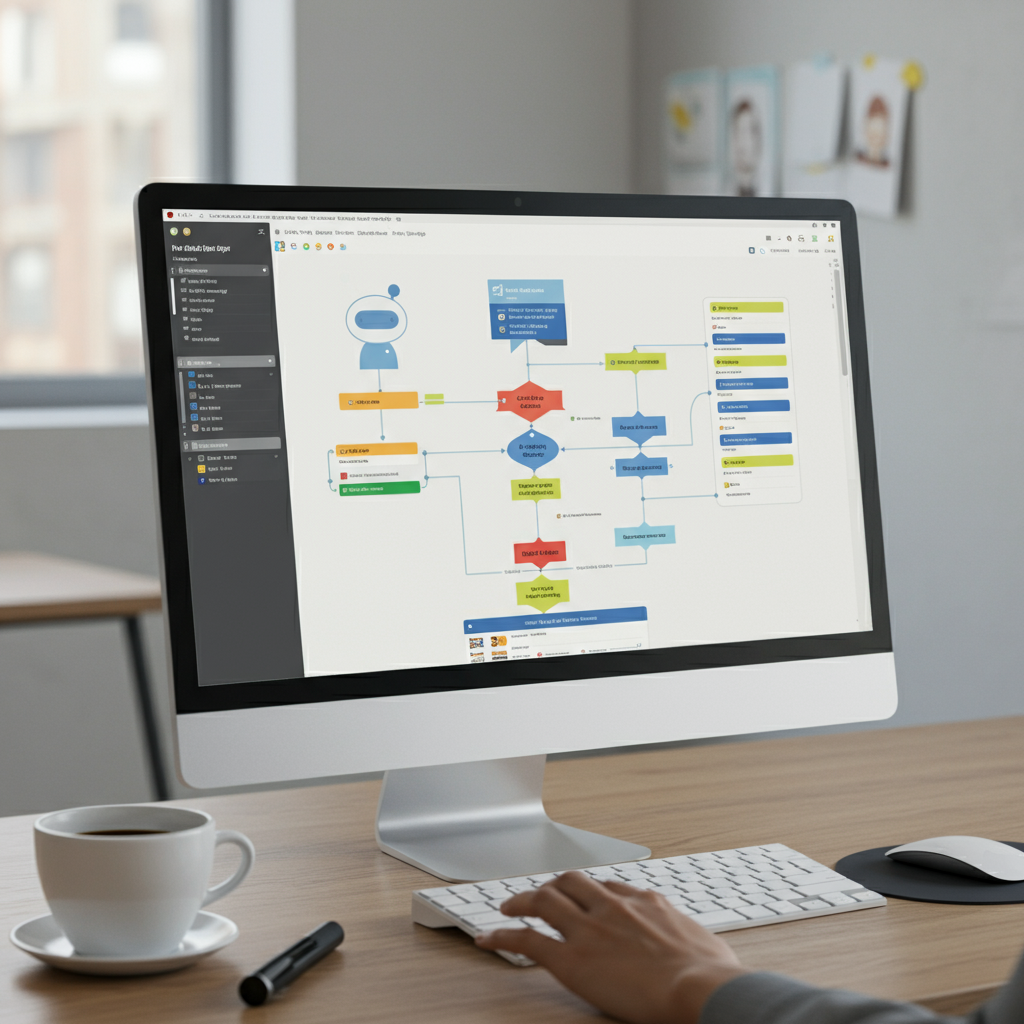
A user-friendly no-code chatbot builder interface on a computer screen, showing drag-and-drop features and chatbot conversation flow design, vibrant and clear visual style

Furthermore, the right no-code chatbot builder should support easy integration with your existing systems, enabling you to automate customer support for SMEs without disrupting current workflows. For more insights on integrating AI agents with CRM for SME growth, visit How to Integrate AI Agents with CRM for SME Growth.

Designing Effective Conversation Flows Without Coding

Designing intuitive and effective conversation flows is essential for maximising the impact of no-code AI chatbots for SMEs. Most no-code platforms provide visual editors where you can map out greetings, user intents, frequently asked questions, and fallback options. This approach allows you to create natural, user-friendly dialogues that address common customer queries and service requests. Additionally, it is important to include escalation paths to human agents for complex issues, ensuring a seamless customer experience. By focusing on clarity and simplicity, SMEs can deliver AI customer service automation that feels personal and responsive.

Moreover, using no-code chatbot builders enables rapid iteration and testing, so you can refine conversation flows based on real-world feedback. This agility is particularly valuable for SMEs looking to stay competitive and responsive to changing customer needs. As a result, your chatbot becomes a true virtual employee, capable of handling a wide range of support scenarios.

Building and Integrating a Knowledge Base for Accurate Responses

To ensure your no-code AI chatbot delivers accurate and consistent answers, it is vital to build a comprehensive knowledge base. Begin by compiling FAQs, company policies, and relevant content that addresses your customers’ most common concerns. Organise this information logically, so the chatbot can retrieve and present it efficiently. Integration with existing SME tools – such as WordPress, Shopify, CRM systems, and messaging platforms like Facebook Messenger and Instagram – further enhances the chatbot’s capabilities. This not only streamlines support but also ensures your AI customer service automation remains up-to-date and relevant.

Consequently, a well-integrated knowledge base empowers your chatbot to resolve queries quickly, reducing the need for human intervention. This approach supports both customer satisfaction and operational efficiency, making it a cornerstone of successful chatbot automation tools for SMEs.

Testing, Launching, and Monitoring Your AI Chatbot

Before going live, thoroughly test your no-code AI chatbot to ensure it handles a variety of queries accurately and provides a smooth user experience. Use the platform’s built-in testing tools to simulate real customer interactions, identify gaps, and fine-tune responses. Once testing is complete, launch your chatbot on your chosen platforms, such as your website or social media channels. It is crucial to monitor key performance indicators, including customer satisfaction, response times, and operational efficiency. Regularly review analytics and user feedback to identify areas for improvement.

Furthermore, ongoing refinement is essential for maintaining high standards of AI customer service automation. By continuously updating your chatbot’s knowledge base and conversation flows, you ensure it remains effective and relevant as your business evolves. This proactive approach positions your SME for sustained growth and customer loyalty.

Conclusion

No-code AI chatbots empower SMEs to automate customer service efficiently and affordably. By choosing the right tools, designing thoughtful conversation flows, and integrating with existing platforms, SMEs can enhance customer satisfaction and streamline support without technical expertise. Embracing these solutions not only saves time and money but also positions your business for long-term success in an increasingly digital world.

Posted on Leave a comment

Shopify Integration with AI Compliance Automation

Modern e-commerce workspace with a laptop displaying Shopify interface surrounded by digital icons representing AI, automation, compliance, and tax calculations

Understanding the Importance of Compliance Automation for Shopify Stores

For SMEs operating Shopify stores, compliance automation is no longer a luxury – it’s a necessity. Manual compliance management often leads to tax calculation errors, audit risks, and overwhelming regulatory complexity. These challenges can quickly escalate, especially as businesses grow and expand into new markets. Furthermore, keeping up with constantly changing tax regulations across multiple jurisdictions can be daunting for small teams. However, AI-driven compliance automation software for SMEs offers a robust solution, significantly reducing these risks while improving operational efficiency and customer trust. By automating compliance tasks, Shopify merchants can focus on growth, knowing their regulatory obligations are being met accurately and on time.

A small business owner using a laptop with Shopify interface on screen, surrounded by icons representing AI compliance automation, tax calculations, and regulatory documents, in a modern office setting

Exploring Shopify Integration with Compliance Automation Tools

Shopify integration with compliance automation tools has revolutionised how SMEs handle regulatory requirements. Top platforms such as Avalara, Sovos, Vertex, and Kintsugi seamlessly connect with Shopify, automating sales tax calculations, VAT, filing, and remittance. These tools provide real-time tax updates, exemption management, and multi-jurisdiction support, ensuring businesses remain compliant as they scale. Consequently, SMEs benefit from simplified processes, reduced manual intervention, and greater accuracy. For those seeking a beginner-friendly approach, check out this No-Code AI Workflow Automation for SMEs guide, which highlights how non-technical users can leverage automation to streamline operations.

Step-by-Step No-Code Guide to Integrating Shopify with AI Compliance Automation

Integrating Shopify with compliance automation software for SMEs is now easier than ever, thanks to no-code AI automation for e-commerce. Here’s a practical, step-by-step guide:

  1. Select the Right Compliance Software: Research platforms like Avalara, Sovos, or Vertex. Consider features such as automated audit trails, multi-jurisdiction support, and ease of integration with Shopify.
  2. Configure Tax Profiles: Set up tax rules and profiles within your chosen software. This ensures accurate calculations for every transaction, regardless of customer location.
  3. Link Shopify via APIs or App Store: Most compliance automation tools offer direct Shopify integration through APIs or app store apps. Follow the provider’s instructions to connect your store securely.
  4. Set Up Automated Audit Trails: Enable features that automatically log compliance activities and generate audit-ready reports. This is crucial for passing regulatory checks and simplifying future audits.
  5. Test and Monitor: Run test transactions to ensure everything works correctly. Monitor compliance dashboards regularly to catch and resolve any issues promptly.

Even those without technical expertise can manage these integrations effectively, reducing the burden on internal teams and ensuring ongoing compliance. For a more detailed walkthrough, visit the Integrating Agents24x7 with Shopify: Step-by-Step Guide.

Leveraging AI Virtual Employees to Enhance Compliance and Workflow Automation

AI virtual employees are transforming compliance management within Shopify workflows. These intelligent agents monitor transactions in real time, flag potential compliance issues, automate audit trails, and generate comprehensive reports. As a result, manual workload is drastically reduced, and accuracy is significantly improved. Furthermore, AI virtual employees for compliance can adapt to regulatory changes instantly, ensuring your Shopify store remains compliant without constant manual updates. This level of automation not only saves time but also minimises the risk of costly errors and regulatory penalties.

An AI virtual employee represented as a futuristic digital assistant monitoring e-commerce transactions on multiple screens, with compliance alerts and automated reports in a sleek tech environment

Optimising Shopify Store Operations with Unified Sales and Compliance Workflows

Integrating Shopify with AI compliance automation creates unified workflows that streamline both sales and regulatory processes. Automated compliance checks, tax calculations, and reporting can be embedded directly into sales workflows, boosting efficiency and reducing friction. Moreover, this approach enables SMEs to maintain seamless operations, even as regulatory requirements evolve. Best practices include regularly updating compliance software, training staff on new features, and leveraging workflow automation for Shopify stores to ensure ongoing adherence. By adopting these strategies, businesses can focus on growth, innovation, and customer satisfaction, confident that compliance is under control.

Conclusion

Combining Shopify integration with AI compliance automation empowers SMEs to streamline operations, reduce regulatory risks, and enhance accuracy without technical barriers. This unified approach not only saves time but also builds customer trust and supports sustainable e-commerce growth.

Posted on Leave a comment

How to Automate Audit Trails and Compliance for SMEs

Small business team working with digital devices showing data charts and compliance documents, representing audit trails and compliance automation with AI tools in a modern office setting

Understanding Audit Trails and Compliance Challenges for SMEs

Audit trails are digital records that chronologically document every action, change, and transaction within a business system. For small and medium-sized enterprises (SMEs), maintaining accurate audit trails is essential for regulatory compliance and risk management. These records not only prove adherence to industry standards but also protect businesses during audits and investigations. However, SMEs often face significant compliance challenges, such as limited resources, manual errors, and complex regulations that are constantly evolving. Consequently, the risk of non-compliance increases, potentially leading to fines or reputational damage. Accurate, immutable audit records are therefore critical for demonstrating compliance and supporting robust risk management strategies.

Small business office environment with employees working on computers, surrounded by digital icons representing audit trails and compliance challenges

Benefits of Automating Audit Trails and Compliance Processes

Automating audit trails and compliance processes offers SMEs a powerful way to overcome traditional challenges. Firstly, automation improves audit trail accuracy by eliminating manual data entry, which is prone to human error. Furthermore, it accelerates compliance reporting, enabling businesses to respond quickly to regulatory demands. With no-code AI tools, SMEs can implement automation without any programming skills, making advanced compliance solutions accessible to all. These platforms provide continuous monitoring, real-time insights, and enhanced regulatory adherence, ensuring that compliance is maintained around the clock. Additionally, automation reduces operational costs and frees up staff to focus on strategic growth initiatives.

No-Code AI Tools for Audit Trail and Compliance Automation

Several leading no-code AI platforms are designed specifically for SME compliance automation. Odin AI, FlowForma, and Scrut Automation are among the top choices, each offering unique features tailored to small businesses. Odin AI excels in workflow automation and AI-powered data parsing, while FlowForma provides intuitive drag-and-drop workflow builders and real-time compliance tracking. Scrut Automation stands out for its seamless integration capabilities and advanced compliance dashboards. These tools simplify the process of building, managing, and scaling compliance workflows, allowing SMEs to automate audit trails without technical barriers. For more guidance on selecting the right platform, see Best No-Code Workflow Automation Tools for SMEs.

Diverse team using no-code AI tools on laptops and tablets with digital overlays of workflow automation and real-time compliance tracking

Practical Steps to Implement Audit Trail Automation in Your SME

To automate audit trails and compliance, SMEs should follow a structured approach. Begin by identifying your specific compliance requirements, considering both industry regulations and internal policies. Next, select a no-code AI tool that aligns with your business needs and integrates smoothly with your existing systems. Design automated workflows that capture all relevant actions and changes, ensuring that audit trails are comprehensive and immutable. Integrating these workflows with current business applications further streamlines compliance processes. Training staff on new systems is crucial, as it ensures consistent usage and maximises the benefits of automation. Finally, continuous monitoring and regular updates to workflows are essential to adapt to regulatory changes and maintain ongoing compliance. For a broader perspective on automating compliance and customer service workflows together, visit Automate SME Compliance & Customer Service Workflows.

Ensuring Ongoing Compliance and Risk Reduction Through Automation

Automated audit trails provide SMEs with real-time monitoring and instant alerts, supporting continuous compliance and proactive risk management. By leveraging automation, businesses can effortlessly prepare for audits, as all necessary records are readily available and up to date. Furthermore, automation enables SMEs to identify and address potential risks before they escalate, ensuring a robust compliance posture. Regular reviews of automated workflows and adapting to regulatory updates are vital for sustaining compliance and minimising risk exposure. Ultimately, embracing compliance automation empowers SMEs to focus on growth, knowing that their regulatory obligations are managed efficiently and effectively.

Conclusion

Automating audit trails and compliance with no-code AI tools offers SMEs a practical, efficient way to meet regulatory demands. By adopting these technologies, small businesses can reduce risk, save time, and maintain hassle-free compliance without technical barriers.

Posted on Leave a comment

How No-Code AI Agents Save You Time and Money

Diverse small business owners using AI technology with icons of automation and virtual employees in a modern office setting
  • Save up to 20 hours a month by automating FAQs, order updates, and appointment bookings.
  • Reduce manual tasks – AI virtual employees handle repetitive work, so your team can focus on growth.
  • Lower support costs by up to 50% – no need for extra staff or expensive developers.
  • Faster response times – AI agents work 24/7, delighting customers and boosting loyalty.

Understanding No-Code AI Agents: Automation for Small Businesses

No-code AI agents are user-friendly tools designed for SME owners who want to automate without hiring developers. These platforms let you set up AI-powered workflows – like customer service, inventory checks, or data entry – using simple drag-and-drop interfaces. Anyone can build and deploy an AI virtual employee in minutes, democratising automation for small businesses and levelling the playing field.

A small business owner using a no-code AI platform on a laptop, surrounded by icons representing automation tasks like customer service, inventory management, and data processing, in a modern office setting

How No-Code AI Agents Save Time and Money for SMEs

Imagine never answering the same question twice. No-code AI agents automate routine tasks – customer inquiries, order tracking, appointment reminders – so you reclaim hours every week. Furthermore, these agents work around the clock, reducing errors and manual labour. For example, these workflow automation tools for SMEs can be set up in a day, making your business more responsive and efficient.

A busy small business environment showing AI virtual employees working alongside human staff, automating routine tasks such as order processing and customer follow-ups, with a focus on efficiency and teamwork

4 Steps: Get Started with No-Code AI Agents

  1. Pick a use case: Choose what to automate first – lead capture, customer support FAQs, or appointment booking.
  2. Choose a template & connect tools: Select a prebuilt no-code template and link your email, CRM, or calendar.
  3. Configure rules & responses: Use plain-language prompts (no coding!) to set how your AI agent replies and acts.
  4. Launch, monitor & iterate: Go live, check basic analytics, and refine your prompts for even better results.

Quick ROI: Real-World SME Scenarios

  • If your team answers 30 FAQs daily at 2 minutes each, an AI agent saves you 1 hour/day – ~20 hours/month. At £30/hr, that’s £600/month saved.
  • Automating order confirmations (10 per day, 3 minutes each) saves 2.5 hours/week – 10 hours/month, or £300–£400/month.
  • AI-powered appointment scheduling can cut admin time by half, freeing up staff for higher-value work.

For more practical ideas, see 5 Practical Ways SMEs Can Start Using AI Agents This Week.

Start Saving Time and Money Today

Ready to automate and grow? SME owners across the UK are already using no-code AI agents to save time and money – don’t get left behind.

Start your free trial with agents24x7

Posted on Leave a comment

Unlock AI Automation: 5 SME Workflow Hacks

Diverse small business owners collaborating with AI automation tools in a modern office, surrounded by icons representing workflow automation, customer service, e-commerce, compliance, and productivity.

1. Harness No-Code AI Automation Workflows

No-code AI automation platforms let you automate complex business processes without any programming. For instance, tools like Lapala and Process Street offer drag-and-drop workflow builders, so you can set up approval processes, data capture, or even integrate with your CRM or ERP system. A small retail shop could automate inventory reordering using these platforms. Estimated time-to-implement: 1–2 hours.

  • Save on IT costs by skipping developers
  • Customise automations for your unique needs
  • Quickly adapt workflows as your business grows

A small business owner using a no-code AI automation platform on a laptop, with visual workflow builders and automation icons around, representing ease of use and empowerment for SMEs

For a deeper dive, see How to Build No-Code AI Automation Workflows for SMEs.

2. Streamline Customer Service with AI Virtual Employees

AI-powered chatbots and virtual employees can handle customer queries 24/7, instantly answering FAQs and freeing up your staff. Using no-code chatbot builders, you can integrate these bots with your existing customer service platform in under an hour. For example, a local service provider could automate appointment bookings and support queries. Estimated time-to-implement: 30–60 minutes.

  • Reduce response times and increase satisfaction
  • Lower operational costs by automating repetitive tasks
  • Build customer loyalty with consistent, always-on support

An AI-powered chatbot assisting customers on a digital screen, showing 24/7 customer service automation with happy customers and virtual employee icons

Read more in AI Virtual Employees: Automate Customer Service for SMEs.

3. Boost E-commerce Efficiency with AI and Shopify Integration

If you run an online shop, integrating AI automation with Shopify can transform your operations. Automate inventory management, order processing, and personalised marketing campaigns – all without coding. For example, a boutique could set up AI-driven abandoned cart reminders and stock alerts. Estimated time-to-implement: 1–2 hours.

  • Increase sales through targeted customer engagement
  • Minimise stockouts and overstocking
  • Reduce manual admin work

4. Ensure Compliance with AI-Driven Automation Software

AI compliance automation software helps SMEs manage regulatory requirements with ease. Automate document management, audit trails, and compliance checks using no-code platforms. For example, a consultancy could automate GDPR compliance documentation. Estimated time-to-implement: 1 hour.

  • Reduce risk of human error
  • Stay compliant with industry standards
  • Save time on paperwork

5. Maximise Productivity with Workflow Automation Tools

Workflow automation tools tailored for SMEs can automate tasks like invoicing, scheduling, quoting, and inventory forecasting. For example, a small manufacturer could automate invoice generation and reminders. Estimated time-to-implement: 1–2 hours.

  • Boost productivity by up to 40%
  • Free up time for strategic growth
  • Reduce errors and improve accuracy

When choosing the best workflow automation software for SMEs, look for solutions that are easy to use, integrate with your current systems, and offer robust support.

Take Action: Try Agents24x7 Today

Implementing these no-code AI automation hacks can transform your SME’s workflows, customer service, compliance, and e-commerce efficiency. Try Agents24x7 now to see immediate results and sustainable growth.

Posted on Leave a comment

5 Practical Ways SMEs Can Start Using AI Agents This Week

Diverse SME owners collaborating with AI virtual assistants in a modern office, representing AI automation and digital transformation for small businesses.
  1. Automate Customer Service Workflows to Enhance Support. Set up an AI chatbot or virtual assistant to answer FAQs, route complex queries, and manage ticketing – no coding required. For example, a local retailer can use a tool like Tidio or Intercom to provide 24/7 support, reducing manual workload and boosting customer satisfaction. A friendly AI chatbot interacting with customers on a computer screen in a modern office setting, representing automated customer service workflows for SMEs For more on how AI virtual employees can transform your support, see AI Virtual Employees: Automate Customer Service for SMEs.

  2. Simplify Appointment Scheduling and Internal Task Management. Use no-code AI tools like Calendly or Google Calendar’s AI features to automate appointment bookings, reminders, and internal HR queries. For instance, a dental practice can deploy an AI assistant to handle patient bookings and send automated reminders, saving hours each week. An AI virtual assistant managing appointments and internal tasks on a digital calendar with notifications, illustrating AI automation for scheduling and task management in small businesses
  3. Implement Compliance Automation to Reduce Risk and Save Time. Adopt AI tools like ComplyAdvantage or Vanta to automate compliance checks, reporting, and audit readiness. For example, a small financial consultancy can use these platforms to streamline regulatory tasks, ensuring ongoing compliance and reducing errors without extra staff.
  4. Leverage AI for Content Creation and Marketing Automation. Try AI-powered platforms such as Jasper or Mailchimp to generate blog posts, social media updates, and email campaigns. A local trades business, for example, can automate weekly newsletters and social posts, keeping customers engaged with minimal effort. For a step-by-step guide to e-commerce AI agent setup, check Step-by-Step Guide: E-Commerce AI Agent Setup.
  5. Integrate AI Agents with E-Commerce Platforms like Shopify. Connect AI agents using tools like Zapier or Shopify Flow to automate product recommendations, inventory updates, and customer follow-ups. For instance, a boutique owner can automate low-stock alerts and post-purchase emails, freeing up time to focus on growth. Start with simple, no-code integrations for immediate impact.

Ready to see real results? Try agents24x7 today and discover how easy it is to automate your SME’s operations with AI virtual employees – no technical skills needed!

Posted on Leave a comment

How No-Code AI Agents Save SMEs Time and Money

Diverse small business professionals using laptops and tablets with digital AI automation icons representing no-code tools and virtual assistants in a modern office environment.

No-code AI agents are digital helpers that automate routine business tasks without any coding or technical skills required.

  • Customer Support Automation (Support): Instantly respond to common customer queries via chatbots or email, freeing up staff for more complex issues. For example, a retail SME can use a no-code AI agent to handle order tracking questions 24/7.
  • Data Entry and Processing (Operations): Automatically capture and organise data from forms, emails, or spreadsheets, reducing manual input errors. For instance, a property management firm can use an AI agent to update tenant records and sync them with their CRM.
  • Appointment Scheduling (Sales/Support): Book meetings or service calls directly from customer requests, eliminating back-and-forth emails. A dental clinic, for example, can let patients self-schedule appointments through an AI-powered calendar integration.
  • Invoice Generation and Tracking (Finance): Create, send, and follow up on invoices automatically, helping SMEs get paid faster and reduce late payments. A freelance agency can automate its entire invoicing process with a no-code AI agent.
  • Personalised Email Campaigns (Marketing): Send targeted, timely emails to customers based on their behaviour or preferences, boosting engagement and sales. For example, a boutique can automate birthday offers or abandoned cart reminders.

A small business owner using a laptop with AI virtual assistant icons floating around, symbolising no-code AI agents automating tasks in a modern office environment

How No-Code AI Agents Save Time and Money for SMEs

  • Save 5–8 hours per week by automating repetitive admin tasks like data entry, appointment reminders, and order updates.
  • Cut costs by 20–35% compared to outsourcing customer support or bookkeeping, thanks to always-on AI virtual employees.
  • Reduce manual errors by up to 90% with automated workflows, leading to fewer costly mistakes and less time spent on corrections.
  • Boost productivity by 15–25% as staff focus on high-value work, such as sales or customer relationships, instead of routine admin.

A busy SME office with employees working efficiently alongside AI virtual assistants represented by futuristic holograms, highlighting time and cost savings through AI automation

Simple Steps to Onboard No-Code AI Agents

  1. Choose a starter workflow template that matches your business need (e.g., automate emails, schedule calls, or manage leads).
  2. Connect your tools such as email, calendar, or CRM by following the platform’s simple prompts.
  3. Set guardrails (rules and limits) to ensure the AI agent acts within your business guidelines.
  4. Install a WordPress plugin to embed or trigger your AI agents:
    1. Install the plugin from your WordPress dashboard.
    2. Connect your Agents24x7 account or API key.
    3. Add the provided shortcode or block to any page or post.

Related Resources

Ready to Save Time and Money?

Start automating your business with no-code AI agents today. Try Agents24x7 Free

Posted on Leave a comment

Best No-Code Workflow Automation Tools for SMEs

Small business owners collaborating with digital devices displaying no-code workflow automation tools in a modern office setting

Understanding No-Code Workflow Automation and Its Benefits for SMEs

No-code workflow automation tools have rapidly transformed how small and medium-sized enterprises (SMEs) operate. By allowing business owners to automate repetitive tasks without writing a single line of code, these platforms empower teams to focus on growth rather than manual processes. Consequently, SMEs can streamline operations, reduce human error, and achieve significant cost savings. For example, tasks such as email marketing, data entry, and approval processes can be automated with just a few clicks, leading to increased productivity and operational efficiency. Furthermore, these tools are designed with user-friendly interfaces, making them accessible even for those with no technical background.

A small business owner using a no-code workflow automation tool on a laptop, surrounded by icons representing email marketing, data entry, and approval processes, symbolising increased productivity and efficiency

Additionally, SMEs can benefit from automating workflows such as onboarding new employees, managing customer support tickets, and tracking inventory. As a result, business owners can allocate resources more strategically, ensuring sustainable growth in a competitive market. For a deeper dive into building no-code AI automation workflows, explore How to Build No-Code AI Automation Workflows for SMEs.

Key Features to Look for in No-Code Workflow Automation Tools

When selecting the best no-code workflow automation tools for SMEs, it is essential to prioritise features that align with your business needs. An intuitive drag-and-drop interface ensures that even non-technical users can design and deploy workflows efficiently. Pre-built templates further accelerate setup, while multi-step workflows and conditional logic enable the automation of complex business processes. Approval routing is another critical feature, allowing for seamless collaboration and oversight within teams.

Moreover, integration capabilities are paramount. The ideal no-code automation platform should connect effortlessly with popular business apps such as CRM systems, email marketing platforms, and spreadsheets. This ensures data flows smoothly across your business ecosystem, reducing silos and manual data entry. Scalability is equally important, as your chosen tool should support your business as it grows. Cloud accessibility, robust security standards, and responsive customer support round out the list of must-have features for SMEs seeking the best workflow automation software.

Evaluating Integration Capabilities and Workflow Complexity

Assessing integration capabilities is crucial when choosing no-code workflow automation tools for SMEs. Broad app integration allows businesses to automate processes across multiple platforms, ensuring flexibility and adaptability. For instance, a tool that integrates with your CRM, email marketing, and accounting software can automate lead nurturing, invoicing, and reporting without manual intervention. However, not all platforms offer the same integration scope, so it is vital to evaluate compatibility with your existing software stack.

Furthermore, consider the complexity of workflows your business requires. Some SMEs may need simple automations, while others demand multi-step workflows with conditional triggers and approval chains. Matching workflow complexity with business needs prevents over-investment in unnecessary features or, conversely, under-investment that limits growth. Testing a platform with real-world scenarios can reveal whether it meets your requirements. For additional insights on automating compliance and customer service workflows, visit Automate SME Compliance & Customer Service Workflows.

Comparing Popular No-Code Workflow Automation Tools for SMEs

The market for no-code workflow automation tools for SMEs is diverse, with several standout platforms catering to different needs. Zapier is renowned for its broad app connectivity and ease of use, making it a favourite among SMEs seeking quick wins in automation. Its intuitive interface and extensive library of integrations allow users to automate tasks across thousands of apps. Cflow, on the other hand, offers AI-powered workflow management with advanced approval features, making it ideal for businesses that require more sophisticated process control.

Comparison of popular no-code workflow automation tools for SMEs, showing diverse business users interacting with different platforms like Zapier, Cflow, Nected, and RunMyJobs in a modern office setting

Nected and RunMyJobs by Redwood are also gaining traction, especially among SMEs with more complex or enterprise-grade needs. Nected excels in handling intricate workflows, while RunMyJobs is designed for robust, large-scale automation. Pricing models vary, with some platforms offering transparent monthly plans and others providing custom quotes based on usage. Ultimately, the best workflow automation software for SMEs is one that balances integration breadth, workflow flexibility, and cost-effectiveness.

Practical Tips for Choosing the Right Tool Within Your Budget

Choosing the best no-code workflow automation tools for SMEs requires a strategic approach. Start by identifying your core automation needs and prioritising platforms that offer transparent pricing and trial periods. This allows you to evaluate functionality without committing significant resources upfront. Furthermore, assess the quality of customer support, as timely assistance can be invaluable during implementation and scaling.

It is often wise to begin with simpler, affordable platforms and gradually scale up as your business grows. Internal testing with key workflows ensures the selected tool aligns with your operational requirements. Additionally, consider seeking feedback from team members who will use the platform daily. Their insights can highlight potential challenges and opportunities for optimisation. By following these practical tips, SMEs can confidently invest in workflow automation tools that drive efficiency and support long-term growth.

Conclusion

In summary, selecting the best no-code workflow automation tools for SMEs involves balancing ease of use, integration capabilities, workflow flexibility, security, and cost. Platforms like Zapier and Cflow offer accessible entry points for SMEs looking to streamline operations and boost productivity. However, careful evaluation and practical testing are essential to ensure the chosen solution aligns with your business goals and growth plans. By leveraging no-code automation platforms, SMEs can unlock new levels of efficiency and innovation, positioning themselves for sustained success in an increasingly digital world.