Posted on Leave a comment

Blog Content Repurposing Across Platforms

Diverse professionals engaging with digital devices connected by social media icons for LinkedIn, Facebook, and Reddit, illustrating AI-driven multi-channel content automation for SMBs.

Blog content is your most valuable asset, yet most businesses publish once and move on. What if you could extract multiple platform-optimised snippets from each post to amplify reach exponentially? Furthermore, imagine a system that transforms your blog into a 24/7 multi-channel publishing machine, reaching professionals on LinkedIn, communities on Reddit, and engaged audiences on Facebook – without requiring additional effort.

This isn’t just theory; it’s the reality of AI-driven content repurposing automation. By leveraging intelligent systems like Agents24x7’s WordPress plugin and Shopify app, small businesses can finally bridge the gap between content creation and distribution. Consequently, the question isn’t whether to repurpose blog content – it’s how to do it at scale without burning out your team.

Why Most SMBs Fail at Multi-Channel Content Distribution

Statistics reveal that 94% of marketers attempt to repurpose content, yet most do so inefficiently by copy-pasting identical posts across channels. Additionally, this approach fundamentally misunderstands how different platforms operate. LinkedIn rewards thought leadership and authentic professional dialogue; Facebook thrives on relatable, shareable moments; Reddit demands niche authenticity and value-first participation. However, most small businesses treat all platforms identically, resulting in poor engagement and wasted effort.

The core barrier is time and labour. Manually adapting a single blog post for LinkedIn, Facebook, and Reddit – while maintaining platform-specific tone, formatting, and messaging – requires 2-3 hours of skilled work per post. Consequently, most SMBs abandon the idea entirely, choosing instead between focusing on one platform or spreading themselves thin with mediocre, rushed content. Furthermore, without automation, the opportunity cost becomes staggering: one high-performing blog post could generate weeks of social media engagement if optimised for each platform, yet most remain dormant after initial publication.

The missed opportunity is substantial. Without consistent, platform-specific distribution, algorithms deprioritise your content, organic reach plummets, and lead generation stalls. Moreover, competitors who master multi-channel repurposing gain exponential visibility advantages. Therefore, automated AI-driven repurposing isn’t optional – it’s the infrastructure required for competitive SMBs to survive in 2024.

Understanding Platform-Specific Content Preferences

Each platform operates under fundamentally different audience dynamics and algorithmic rules. LinkedIn, for instance, prioritises thought leadership, storytelling, and meaningful professional dialogue. Furthermore, native LinkedIn posts (text-based, not external links) perform significantly better than shared links. Additionally, engagement in the first 90 minutes is critical; the algorithm amplifies visibility based on early comment activity. Consequently, LinkedIn rewards consistency and niche focus over viral breadth.

Facebook, conversely, caters to a broader demographic and favours engaging, shareable, relatable content. Moreover, video content generates 1,200% more shares than text and links combined. Furthermore, interactive posts (polls, carousel formats) drive substantially higher engagement. Additionally, Facebook’s CPM ranges from £4.60-£7.80 with typical conversion rates of 2-4%. However, success on Facebook demands visual hooks and emotional resonance rather than pure information.

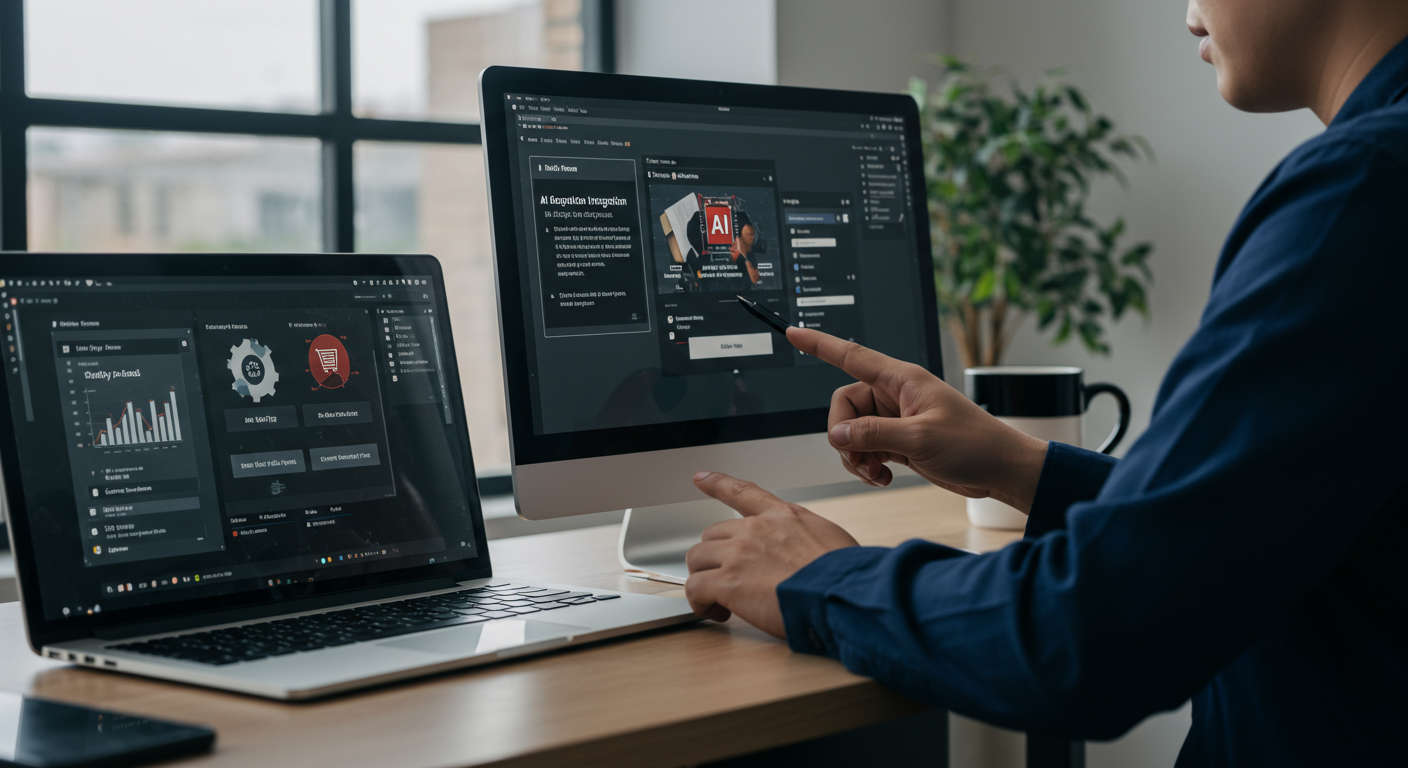
Small business team managing multiple social media channels on laptops and mobile devices in a modern office environment

Reddit operates as a community-driven, niche-focused platform where inauthentic promotional content is immediately rejected. Furthermore, Reddit’s AI-powered targeting has improved conversion rates by 28% in recent years. Moreover, Reddit ads achieve the lowest CPM (approximately £2.10) whilst maintaining 3-6% conversion rates through highly targeted audience understanding. However, success demands genuine value-first participation; communities immediately identify and downvote spam. Consequently, effective Reddit strategy requires participating authentically whilst subtly linking to relevant resources.

Adapting content for these platforms requires more than reformatting. LinkedIn snippets should emphasise professional value and thought leadership (150-200 words). Facebook posts must focus on engagement and relatability (80-150 words with visual hooks). Reddit comments must deliver authentic, value-driven insights under 200 words, tailored to specific subreddit communities. Therefore, each repurposed piece demands platform-specific intelligence built into your workflow.

The Business Case for Automated Content Repurposing

The financial argument for automation is compelling. Businesses implementing AI-driven content repurposing report a 30% boost in engagement and a 35% increase in leads compared to manual repurposing. Furthermore, one comprehensive blog post, when properly repurposed, fuels weeks of social media content, email campaigns, and lead magnets – multiplying original investment without proportional budget increase. Consequently, ROI becomes exponentially attractive.

Resource efficiency amplifies this benefit. Repurposing leverages existing assets, reducing creation time and cost whilst improving consistency. Moreover, automation handles repetitive formatting, scheduling, and optimisation tasks, freeing teams to focus on strategy and creativity. Additionally, manual approaches lead to sporadic posting, which damages algorithmic reach and audience engagement. However, consistent daily posting via automation increases organic reach by 300-400% compared to irregular posting.

Platforms reward consistency and fresh content signals. Consequently, daily repurposed posts become an SEO and engagement multiplier. Furthermore, Agents24x7’s autonomous operation performs 100+ tasks daily, including competitor research, keyword optimisation, and multi-platform publishing – multiplying content output exponentially. At just £20/month, this infrastructure becomes essential rather than luxury. Therefore, automation isn’t a cost centre; it’s a competitive necessity.

Setting Up Your Multi-Channel Repurposing Workflow

Begin by auditing existing blog content to identify top-performing posts suitable for repurposing. Furthermore, select 2-3 blog posts weekly as repurposing sources. Additionally, plan your platform-specific adaptation strategy: identify 2-3 key insights from each blog post, then create LinkedIn snippets emphasising professional value and thought leadership. Moreover, develop Facebook posts focusing on engagement and relatability, and Reddit comments tailored to specific subreddit communities.

Agents24x7’s WordPress plugin and Shopify app automate this entire process using AI to extract insights, adapt tone, and optimise length for each platform. Furthermore, you establish automation rules for daily posting across channels, ensuring consistency without manual intervention. Consequently, scheduling becomes intelligent: LinkedIn posts perform best during weekday business hours (9am-2pm); Facebook mid-afternoon (1pm-4pm); Reddit evenings and weekends. Therefore, optimal timing multiplies reach without additional effort.

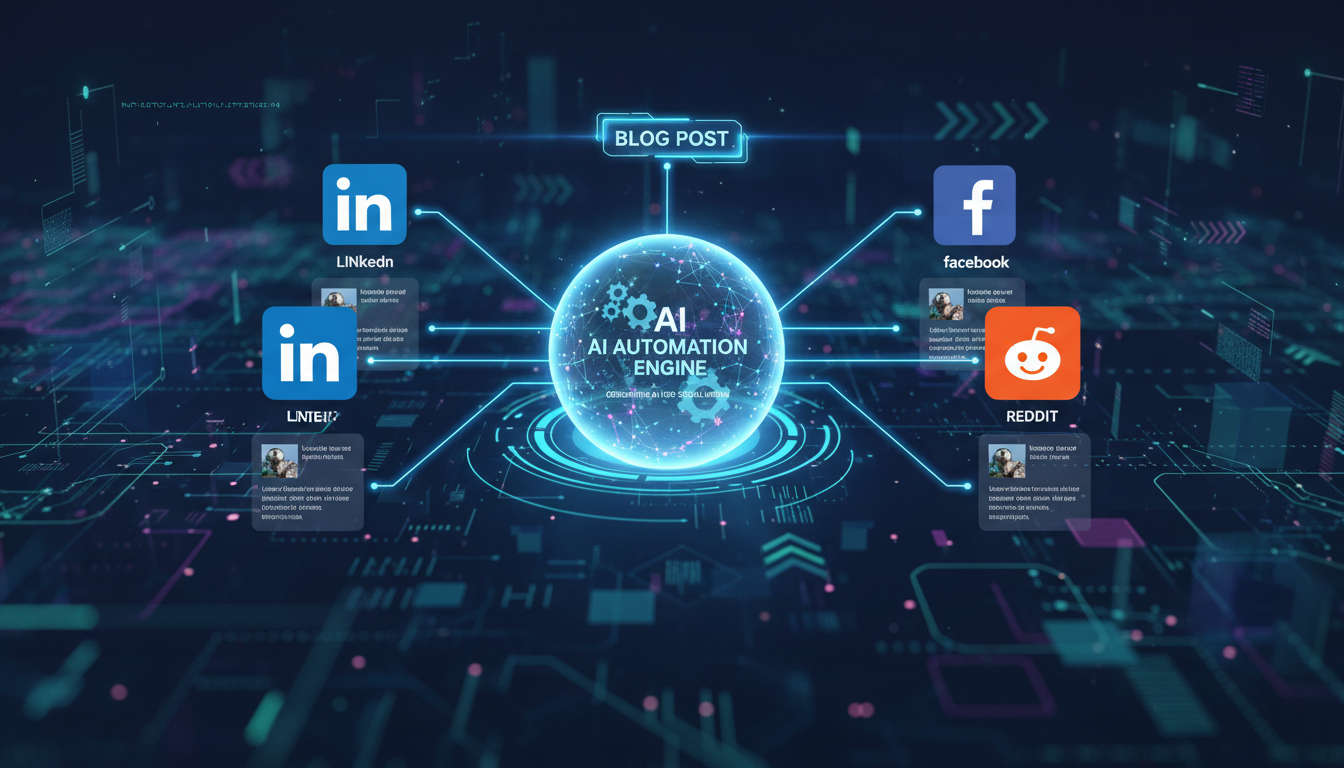
Digital marketing workflow showing AI-driven automation producing social media posts from a blog post with icons for LinkedIn, Facebook, and Reddit

The system learns your brand voice and audience preferences over time, improving repurposing quality automatically. Furthermore, monitor initial results and refine automation rules based on engagement data. Additionally, track which content types, posting times, and messaging angles generate highest engagement. Consequently, the system becomes smarter and more effective with each publication cycle.

For a deeper understanding of content scheduling best practices, explore our comprehensive guide on AI content scheduling tools for startups, which demonstrates how automation scales content distribution across platforms efficiently.

Optimising Each Platform for Maximum Engagement

Post-publication optimisation separates average campaigns from exceptional results. For LinkedIn, engagement in the first 90 minutes is critical; respond to all comments within that window and encourage meaningful discussion through strategic questions. Furthermore, LinkedIn’s algorithm values consistency, so maintaining regular posting (ideally daily via automation) signals expertise. Moreover, external links in comments, not post bodies, keep users within LinkedIn’s ecosystem whilst boosting visibility.

Facebook demands visual excellence and consistent A/B testing. Furthermore, experiment with carousel posts, video content, and interactive formats. Additionally, identify optimal posting times through platform analytics. Moreover, monitor click-through rates and conversion metrics religiously. Consequently, Facebook success requires continuous refinement based on performance data.

Reddit requires community immersion and authentic participation. Furthermore, don’t simply post links; participate in discussions, answer questions, and provide value first before subtly linking to relevant content. Additionally, Reddit’s algorithm recognises long-term brand awareness effects beyond immediate conversions. Moreover, maintain subreddit-specific language and tone to avoid appearing as spam. Consequently, Reddit success demands patience and genuine community contribution.

Track platform-specific metrics: LinkedIn engagement rate and profile visits; Facebook conversion rate and share count; Reddit upvote ratio and community karma. Furthermore, these metrics reveal what resonates with each audience. Additionally, use UTM parameters to track repurposed content performance distinctly from original blog posts. Consequently, attribution becomes clear and data-driven optimisation possible.

Measuring ROI and Scaling Your Repurposing Operation

Establish baselines before implementing multi-channel repurposing: measure organic traffic, track lead generation by channel, and monitor cost per acquisition across platforms. Furthermore, understand that some conversions happen immediately whilst others result from awareness building over time. Additionally, create a monthly performance dashboard tracking key metrics and adjusting strategy based on data.

Daily repurposing automation scales results dramatically. Furthermore, if one blog post generates 50 LinkedIn engagements weekly manually, automation enabling daily repurposing increases that to 300+ engagements with zero additional effort. Moreover, SMBs implementing automated multi-channel repurposing typically see 35-40% increase in organic traffic within 90 days. Consequently, the compounding effect of consistent daily distribution becomes transformative.

For concrete examples of scaling through automation, review our case study documenting 150% traffic growth through AI-driven blogs, which illustrates how lean teams achieve exponential results through consistent, automated publishing.

Agents24x7’s 24/7 autonomous operation multiplies content output exponentially. Furthermore, by performing 100+ tasks daily – including competitor research, keyword optimisation, and multi-platform publishing – the platform transforms how SMBs approach content strategy. Moreover, at just £20/month through both WordPress plugin and Shopify app, this infrastructure becomes accessible to businesses of all sizes. Consequently, scalable automation enables sustainable growth without proportional team expansion.

Transforming Blog Content Into Lead Generation Engines

Multi-channel content repurposing is no longer optional for competitive SMBs – it’s essential infrastructure. Furthermore, automating this workflow through AI-driven platforms transforms blog posts into systematic lead-generation machines operating 24/7 across LinkedIn, Facebook, and Reddit. Additionally, at just £20/month, Agents24x7 enables consistent daily publishing, 30% engagement gains, and 35% lead increases. Consequently, you’re maximising ROI on existing content whilst building sustainable competitive advantage.

The future of SMB content strategy belongs to those who master automation. Therefore, implement multi-channel repurposing today and watch your blog transform from static archive into dynamic, platform-optimised lead generation engine. Moreover, your competitors are already moving – don’t fall behind.

Posted on Leave a comment

Automate Price Tracking: Shopify & WordPress

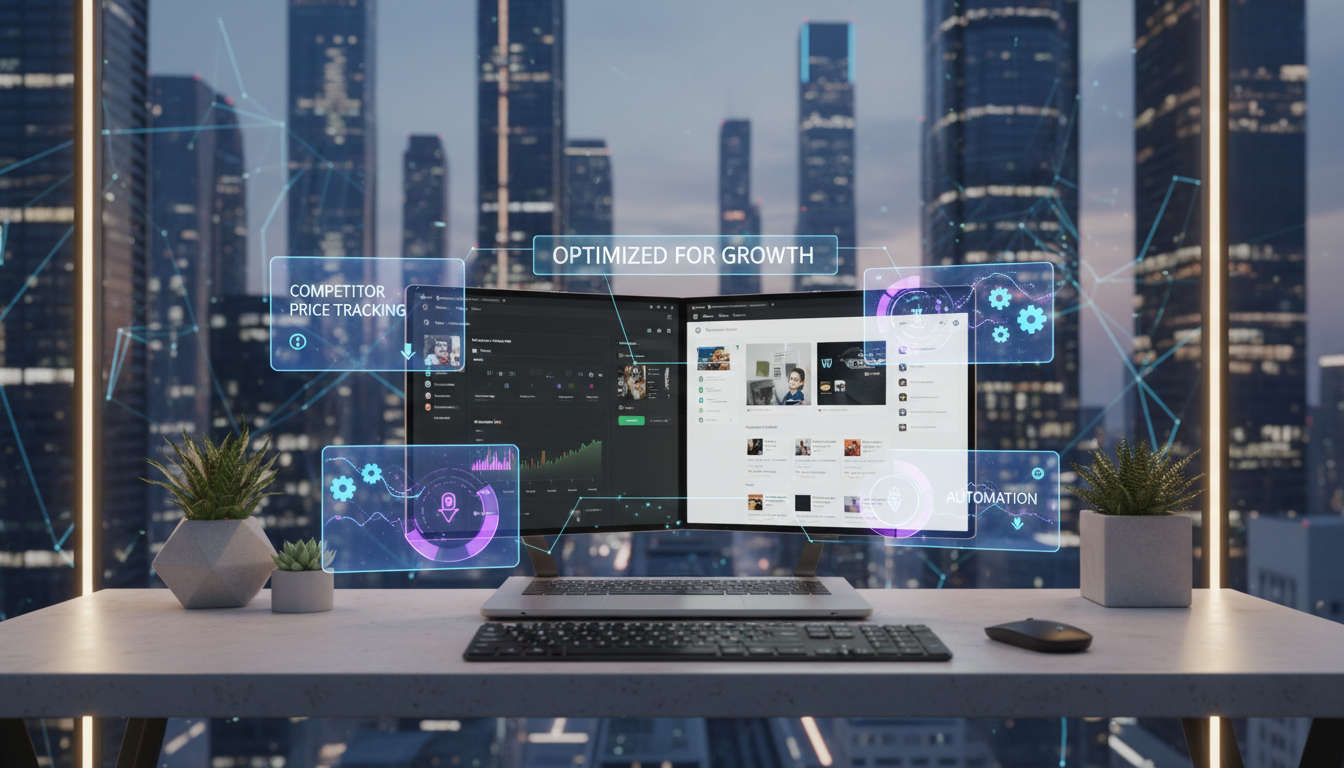
Modern e-commerce workspace with a laptop showing Shopify and WordPress dashboards, AI data streams, and charts symbolising competitor price tracking and automation in a futuristic business setting

Why Manual Competitor Monitoring Is Costing You Money

E-commerce business owners face a relentless challenge: tracking competitor prices manually drains valuable time and resources. Furthermore, human-driven analysis introduces costly errors that compound quickly across your inventory. Consequently, small business owners spend an estimated 15-20 hours weekly monitoring competitor websites, pricing pages, and promotional changes – time that could focus on growth instead of data collection.

Manual tracking becomes impossible beyond a certain scale. Moreover, delays in spotting competitor price changes create missed opportunities for margin protection. When competitors drop prices and your team notices three days later, you’ve already lost sales or been forced into reactive repricing. Additionally, human analysts struggle with complex product matching across platforms, missing key pricing signals that intelligent systems catch instantly.

E-commerce business owner analysing competitor prices on multiple digital screens showing graphs and price changes in a modern office setup, emphasising real-time competitor price monitoring

The business impact manifests as margin erosion, lost sales velocity, and competitive disadvantage. However, scaling manual monitoring to track multiple competitors across different channels becomes operationally impossible. Real examples abound: a retailer notices competitors lowered prices for a flash sale only after revenue dips significantly, or pricing misalignments persist because no one manually tracked a competitor’s inventory clearance promotion. Furthermore, cash flow suffers when pricing decisions lag market movements by days rather than minutes.

How AI Agents Solve Real-Time Competitor Intelligence

Autonomous AI agents revolutionise competitor price monitoring by working 24/7 without human intervention. Unlike traditional monitoring tools requiring manual updates, intelligent agents continuously crawl competitor websites, extract pricing data, and flag changes instantly. Consequently, you receive alerts minutes after competitors adjust prices, not days later.

The technical workflow proves elegant in execution. Furthermore, AI systems extract product information from competitor sites, match products across platforms intelligently, and compare pricing in real-time. These capabilities include real-time price alerts, trend analysis, stock availability tracking, and automated competitor analysis AI that processes millions of product listings daily. Moreover, no-code AI platforms democratise this technology for SMBs lacking technical resources, making enterprise-grade competitor intelligence accessible at modest investment.

The processing power advantage proves transformative. Additionally, AI agents handle complex competitor matching scenarios that would overwhelm manual teams. These systems connect directly to business outcomes – faster response times to market changes, better pricing decisions, and protected margins. Consequently, forward-thinking SMBs now rely on no-code AI competitor analysis solutions to maintain competitive positioning.

Setting Up AI Price Tracking on Your Shopify Store

Implementing AI competitor price monitoring on Shopify requires minimal setup. Start by identifying your competitor list and defining which products require tracking. Furthermore, establish acceptable price variation thresholds – the margins within which price differences become actionable signals. Consequently, your monitoring system focuses on meaningful changes rather than noise.

The Shopify app integration process emphasises ease and speed. However, successful implementation requires connecting your Shopify store data precisely. Moreover, configure product matching rules that accurately identify competitor equivalents to your inventory. Additionally, set price alert triggers that notify you when competitors breach your defined thresholds. The Agents24x7 Shopify app streamlines this process, enabling rapid deployment across your entire product catalogue.

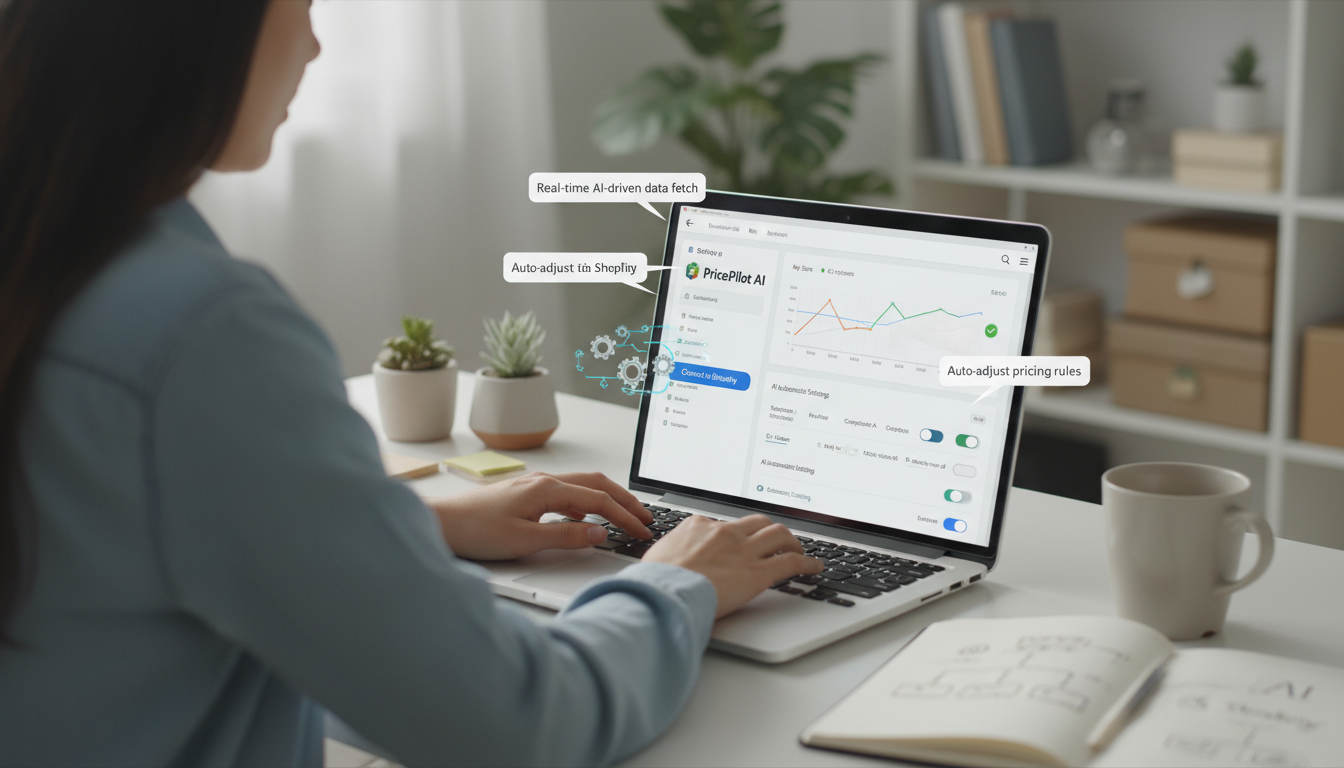
Small business owner setting up AI-powered competitor price tracking on a Shopify store using a laptop, with a focus on AI automation, Shopify interface, and seamless integration

Automated workflows translate monitoring data into action. Furthermore, configure notifications that reach your team instantly when competitors launch promotions. Consequently, your team responds to market moves within minutes rather than hours. The automation potential extends beyond alerts – implement rules-based pricing adjustments that execute without manual approval, protecting your margins continuously. Additionally, interpret monitoring reports by identifying patterns: which competitors consistently undercut you, when promotional windows typically occur, and how inventory levels affect competitor pricing.

Implementing Competitor Tracking on WordPress and WooCommerce

WordPress and WooCommerce stores require slightly different implementation approaches. Furthermore, plugin-based solutions integrate seamlessly with your existing WooCommerce architecture. Consequently, installation and activation happen within minutes through your WordPress dashboard. However, successful setup requires connecting your WooCommerce product catalogues completely and accurately to the monitoring system.

Configure data sync schedules that refresh competitor pricing information regularly – typically every 4-8 hours depending on your market dynamics. Moreover, handle custom product attributes that distinguish your offerings from competitors. Additionally, integrate with popular WooCommerce tools like inventory management plugins and email notification systems to create cohesive automated pricing strategy systems. The Agents24x7 WordPress plugin handles these integrations elegantly, reducing complexity significantly.

WordPress-specific considerations include server resource usage and API configurations. Furthermore, mapping competitor products to WooCommerce equivalents requires attention, particularly for stores with custom product structures or multiple variants. Consequently, troubleshoot common issues proactively: incomplete product data sync, timezone mismatches affecting alert timing, or variant matching errors. Moreover, test your configuration thoroughly before full deployment to ensure accurate competitor tracking from day one.

Building Your Competitive Advantage with Real-Time Insights

Real-time monitoring data extends beyond simple price matching. Furthermore, identify pricing patterns that reveal competitor strategies and market trends. Consequently, predict competitor moves before they happen by recognising seasonal pricing cycles and promotional windows. Trend analysis uncovers margin compression signals – warning signs when competitors aggressively pursue volume over margin, potentially destabilising your market.

Competitor strategy profiling reveals whether rivals target volume, margin, or specific customer segments through pricing. Moreover, use this intelligence to refine product positioning and identify pricing gaps in your market. Additionally, data-driven pricing decisions balance competitiveness with profitability, avoiding commoditisation trap of purely matching prices. Consider how AI competitor analysis tools for SMBs transform strategic insights into actionable decisions. Furthermore, competitor intelligence informs product development and feature prioritisation, connecting market data to innovation decisions.

Automating Actions Based on Competitor Price Changes

Move beyond monitoring to autonomous action through intelligent automation. Furthermore, implement rule-based pricing that adjusts your prices automatically based on predefined triggers. Consequently, your store maintains competitive positioning even whilst you focus on other business priorities. Different pricing strategies serve different business models: undercutting competitors by fixed percentages, maintaining margin-based thresholds, or dynamic tiered pricing based on inventory levels.

The decision-making framework for setting automation rules requires balancing competitiveness against margin protection. Moreover, establish safety mechanisms and guardrails preventing dangerous price spirals. Additionally, implement A/B testing approaches validating pricing rules before full automation deployment. Furthermore, monitoring and alerting systems notify you of significant price wars requiring manual review. Consequently, you retain control whilst benefiting from autonomous pricing agents that handle routine decisions instantly.

Pricing rules adapt to different scenarios: new competitor entries, holiday seasons, inventory clearance periods, and normal market conditions. Moreover, test each scenario thoroughly before activation. Furthermore, your system learns from historical data, continuously refining rules for improved effectiveness. Consequently, competitor price tracking automation becomes increasingly precise and profitable over time.

Measuring ROI and Optimising Your Monitoring Strategy

Track business impact through carefully selected key performance indicators. Furthermore, measure response time to competitor price changes, margin impact, and sales volume changes attributable to pricing decisions. Consequently, establish baseline metrics before implementation and track progress systematically. Set realistic targets based on your market dynamics and competitive intensity.

Attribution challenges exist when isolating pricing decisions from other marketing activities. Moreover, cost-benefit analysis demonstrates how modest monitoring investment generates significant returns. Additionally, consider seasonal and cyclical variations in pricing dynamics – holiday seasons, clearance periods, and industry events create pricing volatility requiring strategy adjustments. Furthermore, iterative optimisation uses historical data to refine pricing rules continuously. Consequently, your competitive advantage compounds as your system becomes increasingly sophisticated.

Your Path to Intelligent Pricing Mastery

AI-powered competitor price tracking transforms e-commerce from reactive guesswork to data-driven strategy. Furthermore, automating monitoring across Shopify and WordPress stores provides intelligence advantages previously available only to enterprise retailers. Consequently, you combine real-time alerts with intelligent automation, maintaining margins whilst staying competitive.

The journey from manual monitoring to autonomous competitor tracking delivers measurable business benefits. Moreover, implement this strategy systematically – start with your highest-volume products and expand gradually. Additionally, use both the Shopify app and WordPress plugin depending on your platform, gaining instant access to 24/7 competitor monitoring AI capabilities. Furthermore, these solutions process 100+ tasks daily at just £20/month, making enterprise-grade automation accessible to SMBs and startups.

Your competitive positioning strengthens immediately. Consequently, respond to market movements minutes rather than days. Moreover, protect your margins through intelligent automation whilst maintaining customer satisfaction. Furthermore, the minimal investment required delivers disproportionate returns as pricing intelligence compounds over months and years. Start your AI competitor price tracking journey today and reclaim the time and resources currently wasted on manual analysis.

Posted on Leave a comment

Calculate AI Agent ROI for Your Content

A modern small business team working with laptops and digital screens illustrating AI content automation and productivity gains

Understanding the Economics Behind AI Content Automation

Traditional content creation drains small business budgets relentlessly. Freelance writers charge £50–150 per article, SEO specialists demand £60–100 hourly, and designers expect £30–80 for thumbnails. Furthermore, the time investment compounds these costs – research, writing, editing, and publishing consume 3–8 hours per piece. Consequently, a SMB publishing just 20 monthly blog posts faces annual content expenses exceeding £20,000 through freelancers or in-house staff.

Autonomous AI content agents fundamentally reshape this economic equation. Instead of linear scaling where more content means higher costs, platforms like Agents24x7 operate on a fixed £20 monthly subscription producing 100+ tasks daily. This subscription-based model enables unlimited scaling without proportional labour increases. Rather than capital-intensive hiring, businesses now access AI virtual employee capabilities operating 24/7. Moreover, the difference is transformative: a SMB currently spending £2,000–5,000 monthly on content creation can achieve superior volume and consistency at a fraction of the cost.

Small business owner using AI content automation platform on computer, showing time and cost savings, digital interface with charts and graphs, modern office environment

Traditional ROI calculations frequently fail to capture AI’s complete benefits. These systems excel at compounding advantages – consistency breeds algorithmic preference, 24/7 publishing captures market presence advantages, and regular content building domain authority systematically. Additionally, the opportunity cost of freed labour enables strategic reallocation toward sales, product development, and customer acquisition. Therefore, understanding true AI agent ROI requires measuring beyond simple arithmetic.

Calculating Time Savings with Autonomous Content Agents

Precise time calculations form the foundation of ROI measurement. Begin by establishing baseline metrics: typical blog post creation requires 3–8 hours averaging 5 hours (1 hour research, 3 hours writing, 1 hour editing). Multiply this across monthly frequency – a business needing 20 posts monthly invests 100 manual hours. Furthermore, when valued at average freelancer rates (£25–50/hour), this represents £2,500–5,000 monthly investment. Consequently, the core calculation formula emerges:

(Manual Hours Per Task) × (Tasks Per Month) × (Cost Per Hour) = Monthly Labour Investment

AI agents reduce manual hours per task to near-zero through autonomous research, writing, and publishing. Agents24x7’s capability of 100+ tasks daily provides a powerful benchmark. A SMB needing 20 blog posts monthly saves (5 hours per post) × (20 posts) = 100 hours monthly. Therefore, calculating annual time savings: 100 hours × 12 months = 1,200 annual hours. When converted using average employee salary (£28/hour), this equals £33,600 yearly value generated.

Comparison of traditional content creation with freelancers versus AI autonomous content agents, visualising cost, time, and productivity differences in a creative workspace

Break-even calculations reveal striking advantages. The £20 monthly subscription costs £240 annually. Therefore, an AI agent saving just 12 hours monthly (£336 value at £28/hour) already provides 140% annual ROI. Moreover, most content-focused businesses save considerably more – 20–50 hours monthly is typical, delivering 1,400–3,500% ROI from time savings alone. Consequently, the investment recycles itself within days for most businesses.

Measuring Direct Cost Reductions Across Production Scenarios

Direct expense elimination provides concrete financial justification. Traditional content workflows demand freelancer payments averaging £50–150 per article. Furthermore, additional costs accumulate: SEO optimisation (£60–100/hour), graphic design for social media (£30–80/hour), and editing rounds. Additionally, project management overhead adds hidden expenses through communication, revision requests, and approval cycles.

Agents24x7’s integration with WordPress and Shopify platforms eliminates these layers entirely. Calculate cost-per-article comparison: Traditional approach (5 hours × £40 average rate) = £200 per article. Conversely, the AI agent marginal cost approach (£20 monthly ÷ 33 articles produced) = £0.61 per article. Therefore, producing 20 articles costs £200 (£0.61 × 20), a reduction from £4,000 traditional spending to £200 AI-powered spending annually.

Different business scenarios reveal varying cost reduction profiles. A solopreneur needing 4 posts monthly saves (4 × £40/hour × 5 hours) = £800 monthly through elimination of freelancer dependency. A SMB requiring 20 posts monthly reduces content budget from £4,000 to £240, a 94% reduction. Furthermore, agencies managing multiple client blogs multiply these savings dramatically – five clients × 20 posts × £200 per article reduction = £20,000 monthly savings potential. Consequently, understanding your specific scenario ensures accurate ROI projection.

Quality Improvements Multiply Returns Beyond Cost Savings

Superior content consistency and quality enhance returns exponentially. AI agents publishing regularly improve SEO performance systematically through algorithm preference for fresh, consistent content. Research demonstrates 79% of small businesses report better content quality when adopting AI tools, whilst 68% experience measurable ROI growth. Furthermore, consistent publishing builds domain authority – search engines reward websites with regular updates.

Calculate secondary ROI from organic traffic improvements. Assuming average blog content drives 50 monthly visitors with 2% conversion rate at £25 customer lifetime value, one article generates £25 value. Therefore, 20 articles monthly produce £500 revenue. Moreover, traffic typically increases 40–60% when publishing frequency improves from sporadic to consistent – conservative estimates suggest additional £300–500 monthly revenue. Consequently, Year 1 total revenue impact reaches £3,600–6,000 from 20 monthly articles.

Agents24x7’s WordPress and Shopify integration enables direct link-backs, affiliate earning potential, and product discovery opportunities. Discover how businesses using autonomous content agents achieve remarkable results – see our case study showing 150% traffic growth through consistent AI blog publishing. Additionally, improved brand authority attracts inbound leads, partnerships, and hiring interest. Therefore, total ROI encompasses cost savings plus traffic revenue plus customer acquisition cost reduction plus brand authority building.

Building Your Customised ROI Calculation Framework

Personalised ROI measurement requires systematic analysis. Follow this framework:

Step 1 – Define Baseline: Document current monthly content production hours, team size, total annual content spend, and existing blog traffic conversion rates. Furthermore, record your average customer acquisition cost and typical customer lifetime value.

Step 2 – Project AI Agent Usage: Determine target monthly articles using Agents24x7, anticipate daily task automation from the 100+ capability, and identify which content types require automation.

Step 3 – Calculate Time Savings: Apply formula (baseline hours × monthly target articles × hourly rate × 12 months) = annual time savings value.

Step 4 – Identify Direct Cost Reductions: Eliminate freelancer spend, reduce tool subscriptions, and quantify publishing overhead reduction through WordPress and Shopify native integration.

Step 5 – Model Traffic Improvements: Estimate organic traffic lift from consistent publishing (typically 40–60% increase), calculate incremental customer acquisition using conversion rates and customer value.

Step 6 – Calculate Total ROI: (Annual Savings + Revenue Gains – £240 annual Agents24x7 cost) ÷ £240 × 100 = ROI percentage.

Consider three personas: a content solopreneur (minimal existing spend, saves £800–1,200 annually), SMB with 1–2 staff (£3,000 annual spend, achieves £15,000+ value), and agency managing multiple clients (£20,000+ annual spend, realises £100,000+ combined savings). Therefore, your specific calculation yields different timelines.

Real-World Scenarios and Break-Even Timelines

Three specific scenarios demonstrate Agents24x7 ROI across different business types:

E-commerce Solopreneur (Shopify): Currently spending £500 monthly on occasional freelance blog posts, targeting 8 posts monthly. Time saved: 8 posts × 4 hours × £35/hour = £1,120 monthly. Furthermore, £1,120 – £20 subscription = £1,100 net monthly savings or £13,200 annually. Secondary ROI from improved product visibility: 40% traffic increase × 2% conversion × £100 average order value = £2,400 additional monthly revenue. Therefore, Year 1 total: (£13,200 + £28,800) ÷ £240 = 17,500% ROI. Break-even occurs immediately.

WordPress Blog Monetised Through Ads: Needing 20 posts monthly, currently producing only 4–5 due to time constraints. Scaling to 20 posts saves 80 hours monthly at £30/hour = £28,800 annually. Furthermore, consistent publishing increases ad impressions from 10,000 to 25,000 monthly (150% increase), raising ad revenue from £100 to £250 monthly (+£1,800 annually). Consequently, Year 1 ROI: (£28,800 + £1,800) ÷ £240 = 12,750% ROI.

Agency Managing 5 Client Blogs: Each client blog saves 20 hours monthly. Therefore, 5 clients × 20 hours × £40/hour × 12 months = £48,000 annual value. Additionally, improved client results increase retention and referral value significantly. Consequently, break-even occurs within hours of implementation.

Understanding Productivity Leverage and Compounding Benefits

Traditional ROI calculations frequently underestimate AI agent value through overlooking productivity leverage. The ‘productivity leak’ phenomenon describes scenarios where businesses save time but reallocate it strategically toward higher-value activities – sales development, product innovation, customer service excellence. Furthermore, Agents24x7’s 24/7 operation creates compounding benefits: first month 20 articles, second month 40 cumulative articles with improved domain authority, third month 60 total articles benefiting from algorithmic compound ranking advantages.

Strategic market presence differentiates competitors. Consistent publishing attracts inbound leads systematically, improves hiring appeal through content credibility, and builds competitive moat against sporadic competitors. Therefore, you gain both immediate ROI and long-term competitive positioning. Consider exploring our comprehensive guide to calculating AI agent ROI specifically for Shopify stores – featuring step-by-step metric tracking and proven ROI formulas.

Qualitative ROI metrics extend beyond monetary measurement. Team morale improves when automating repetitive work, enabling focus on strategic initiatives. Furthermore, existing staff serve more customers without proportional hiring increases. Additionally, faster market response time captures timely content opportunities competitors miss. Consequently, total value encompasses financial ROI plus strategic advantage plus team capability enhancement.

To maximise results, explore automating your SEO content calendar planning with AI – enabling consistent publishing, building authority, and competing with larger enterprises without manual overhead. Moreover, Agents24x7 provides this capability through both our WordPress plugin and Shopify app, integrating seamlessly with your existing platforms.

Calculating Your Exact Return on Investment

Most SMBs achieve positive ROI within days, then experience compounding returns through improved SEO, traffic growth, and customer acquisition. Agents24x7 delivers £13,200+ annual value through labour cost elimination and 24/7 autonomous publishing alone. Moreover, when accounting for traffic improvements and brand authority building, realistic Year 1 ROI ranges from 1,000–25,000% depending on your specific situation.

The fundamental equation remains compelling: invest £20 monthly to automate content that previously consumed 80–200 hours monthly. Furthermore, this automation operates continuously whilst your team focuses on revenue-generating activities. Consequently, for growth-focused small businesses and startups, autonomous AI content agents represent essential efficiency multipliers justifying immediate implementation.

Posted on Leave a comment

Automate SEO Product Descriptions with AI Agents

Abstract modern e-commerce visual with AI neural networks, digital shopping icons, and a small business owner using AI for product description automation on Shopify and WordPress platforms

Why Manual Product Descriptions Are Costing Your Business Time and Revenue

Small business owners and startups face an uncomfortable reality: writing product descriptions manually demands extraordinary time investment without delivering commensurate returns. Furthermore, writers can produce only 250 descriptions per week per person, meaning a catalogue of 1,000 products requires months of labour. Consequently, resource constraints prevent most SMBs from competing against larger retailers with dedicated content teams. Manual processes inherently lead to inconsistent brand voice, duplicate manufacturer-provided descriptions that trigger SEO penalties, and outdated content that fails to reflect product updates across Shopify, WooCommerce, and WordPress platforms. Additionally, 87 percent of customers say product content is the most important factor when deciding to purchase online – yet about 10 percent of e-commerce sites still fail to provide sufficiently detailed descriptions. The opportunity cost runs deep: products never reach first-page Google rankings due to thin or poorly optimised content, whilst team members waste hours on description writing instead of pursuing growth-focused activities.

How AI Agents Automate Description Creation at Scale

Autonomous AI agents work through sophisticated natural language processing and machine learning models to understand product attributes, brand voice, and target audience intent simultaneously. Moreover, these agents integrate seamlessly with e-commerce platforms to extract product data – SKU numbers, specifications, categories, pricing – and use that information to create contextually relevant descriptions automatically. Consequently, AI-powered product description generators can produce descriptions in multiple languages simultaneously, dramatically accelerating international expansion efforts without multiplying labour costs. These autonomous AI agents work 24/7 to continuously improve and regenerate descriptions as products are added or updated, ensuring your catalogue remains fresh and optimised. Furthermore, AI models trained on your brand’s existing product content learn and replicate your unique voice and style with remarkable accuracy. Beyond descriptions alone, these agents generate meta descriptions, bullet points, and Open Graph tags – all SEO-critical elements – automatically and consistently. Additionally, agents generate thousands of unique, on-brand descriptions in hours rather than weeks, enabling rapid scaling impossible through manual processes.

An AI-powered agent automatically generating product descriptions on a laptop screen for an ecommerce business owner, showing diverse products like electronics and apparel around, in a bright modern office environment

Integration Setup for Shopify and WordPress

Setting up automated product description generation on your e-commerce platform requires just minutes rather than days. For Shopify, you’ll install an application from the Shopify App Store, connect your product data sources, configure AI parameters (tone, length, keyword targets), and schedule bulk generation runs – no coding knowledge required whatsoever. Moreover, our Agents24x7 Shopify app provides intuitive dashboard controls for monitoring generation progress and reviewing drafts before publishing. For WordPress and WooCommerce, simply activate the Agents24x7 WordPress plugin, configure your product feeds, customise description templates, and sync AI output directly into product posts automatically. Furthermore, both platforms include built-in safeguards such as draft review stages before live publication, ensuring you maintain quality control. Consequently, you can map custom product fields, handle inventory updates, and manage API connections securely with authentication and permission controls built in. Additionally, the dashboard interface lets you monitor performance metrics, track which descriptions drive conversions, and schedule recurring updates to keep content fresh.

A small business owner setting up AI automation integration on Shopify and WordPress platforms, showing screens with plugin installation, product feeds, and AI configuration in a clean, tech-savvy workspace

The SEO Science Behind AI-Generated Product Descriptions

AI agents incorporate keyword research findings directly into product descriptions, ensuring natural keyword placement without the stuffing that triggers search penalties. Moreover, these systems understand semantic relevance and keyword intent, creating descriptions that rank for long-tail variations and question-based queries that drive high-value traffic. Furthermore, AI automatically adds schema markup – product schema, pricing schema, review schema – that generates rich snippets in search results, directly improving click-through rates from SERPs. Consequently, well-optimised descriptions present compelling, benefit-focused summaries rather than bare product titles, encouraging customers to click through from search results. Additionally, unique, consistent descriptions help overcome duplicate content penalties that plague businesses using manufacturer-provided text. Research shows e-commerce sites rank for approximately 1,783 organic keywords per brand, driving nearly 9,625 monthly organic visits – demonstrating the compounding effect of optimised descriptions across large catalogues. Furthermore, AI-generated descriptions optimised for voice search queries capture growing market share, as voice searches now account for over 50 percent of all searches. Consequently, quality, informative descriptions reduce bounce rates and increase time-on-page, both positive signals search engines reward with higher rankings.

Real ROI from Autonomous Description Automation

Quantifying returns from automated product content generation reveals substantial financial benefits for SMBs. Direct cost savings include reduction in writer salaries and editing time, elimination of expensive freelancer or agency fees, and dramatic operational overhead reduction. Moreover, companies using automation report 60–70 percent reduction in content creation time, translating to thousands of hours saved annually for large catalogues. Consequently, a business writing 1,000 new product descriptions per year at £50 per person-hour invests £10,000 annually; automation at just £20 per month (£240 annually) delivers identical output with minimal human review time. Furthermore, improved search rankings lead to increased organic traffic, whilst better descriptions drive higher conversion rates – typical revenue increases range from 10–30 percent from improved content quality and SEO. Additionally, automation enables rapid catalogue expansion without proportional labour cost increases, allowing SMBs to compete directly with larger retailers. The speed-to-market advantage proves crucial: products can be listed and sold faster, accelerating revenue cycles and improving cash flow. Consequently, as businesses grow from startup to established operation, automation scales effortlessly whilst manual processes become completely unsustainable. Customer testimonials consistently show businesses recovering 15–20 hours per week previously spent on descriptions, freeing staff for strategic growth initiatives.

Combining Autonomous Agents with Your SEO Strategy

Product description automation fits seamlessly into a holistic SMB SEO strategy that spans multiple content channels. Moreover, autonomous agents should complement blog posts, category pages, customer reviews, and internal linking – all working together to improve domain authority and topical relevance. For additional insights on scaling your approach, explore our guide on how to set up Agents24x7 on Shopify for daily SEO blog posts. Furthermore, AI agents can generate blog content around products and keywords, directly supporting the product pages’ SEO efforts through contextual connections. Consequently, freed-up team members can focus on high-value SEO activities such as link building, content strategy, and competitive analysis rather than mechanical description writing. Additionally, product descriptions serve as the foundation for other marketing channels – social media copy, email campaigns, and paid ads can all be derived from AI-generated descriptions. For deeper understanding of technical optimisation, review our resource on automating on-page SEO including meta tags and schema markup. Moreover, answer engine optimisation (AEO) gains increasing importance as AI-powered search answers proliferate; detailed, structured descriptions help products appear in these emerging search formats. Consequently, businesses that invest in autonomous description creation now position themselves perfectly for future search algorithm evolution.

Overcoming Common Implementation Challenges

Real-world obstacles emerge during automation implementation, yet proven solutions exist for each. Data quality issues arise when product information is incomplete or inconsistent, confusing AI models – data cleaning and standardisation before automation prevents these problems entirely. Furthermore, balancing automation speed with human review requirements demands establishing efficient editing workflows that don’t negate automation’s time savings. Moreover, concerns about content uniqueness deserve clarification: AI generates genuinely unique descriptions for similar products, and verification processes confirm automated content doesn’t duplicate competitor or manufacturer copy. Consequently, niche or specialist products may occasionally require human supplementation when AI struggles with highly technical specifications. Additionally, platform compatibility challenges – custom fields, legacy systems, non-standard structures – require mapping solutions during integration setup. Furthermore, maintaining SEO performance during the transition from manual to automated descriptions demands avoiding sudden bulk changes that might trigger search algorithm volatility. Consequently, phased rollouts and monitoring dashboards help organisations manage this transition smoothly. Moreover, brand voice concerns diminish significantly when AI models train on existing brand content, capturing personality and tone accurately. Additionally, for large product catalogues, strategic prioritisation determines which products receive automated descriptions first, enabling manageable implementation timescales.

Scaling Your E-commerce Presence from Startup to Growth Stage

Autonomous description automation enables SMBs to leverage scalability advantages previously reserved for enterprise retailers. Furthermore, rapid catalogue expansion becomes genuinely feasible – adding 500 or 5,000 new items requires no proportional hiring of additional staff. Moreover, geographic expansion accelerates dramatically when descriptions generate in multiple languages optimised for regional search behaviours. Consequently, marketplace scaling improves across Shopify, WooCommerce, Amazon, eBay, and other channels simultaneously using unified, SEO-optimised descriptions. Additionally, whilst competitors manually write descriptions, automated SMBs refresh and optimise descriptions monthly, staying ahead in SEO trends and customer preferences. The competitive advantage compounds over time: Agents24x7’s 100+ autonomous tasks per day capability allows businesses to automate not just descriptions but complementary activities including competitor research, keyword analysis, and blog content generation. Furthermore, freed-up team capacity redirects toward product development, customer service, and growth marketing – higher-value activities driving business success. Consequently, automation data and insights reveal top-performing descriptions, keyword trends, and conversion patterns that inform broader business strategy. Moreover, automation infrastructure established during growth stages provides foundation for scaling further without architectural rebuilds. Additionally, businesses invested in autonomous content creation adapt faster as search algorithms evolve toward answer engine optimisation and AI-generated answers – positioning them defensibly ahead of competitors still relying on manual processes.

The Future of E-commerce Content Automation

Automating SEO product descriptions with AI agents represents no longer a luxury option but rather a competitive necessity for SMBs competing in modern digital markets. Moreover, combining speed, consistency, and SEO sophistication at just £20 per month, autonomous description generation transforms how small businesses compete against larger retailers. Consequently, SMBs that adopt this technology scale their content production 60–70 percent faster whilst driving measurable improvements in search rankings and conversion rates. Furthermore, the question today isn’t whether to automate product descriptions – it’s how quickly you can begin implementing these systems before competitors capture market share. Additionally, Agents24x7 makes this accessible to every small business and startup, eliminating technical barriers and proving that enterprise-grade automation need not cost enterprise-grade budgets. Start your journey toward autonomous, AI-powered product descriptions today, and watch your e-commerce business transform into a truly scalable, competitive force in your market.

Posted on Leave a comment

Automate SEO Content Calendar Planning

A modern office environment showing an AI interface on a computer screen planning a content calendar with graphs, charts, and digital assistants, surrounded by a diverse team of small business people collaborating, emphasising automation, efficiency, and technology in marketing and SEO content planning.

SMBs struggle relentlessly with consistent content publishing that drives sustained organic growth. Content creation remains the biggest bottleneck, consuming precious time without proportional returns. However, AI content calendar automation revolutionises this landscape entirely. Furthermore, automated content calendar AI enables businesses to maintain a predictable publishing rhythm that strengthens SEO authority without manual overhead. Consequently, your team can focus on strategic growth rather than reactive publishing scrambles.

Why Content Calendar Planning Remains the Top Marketing Bottleneck

Research reveals that 51 percent of SMBs report content creation as their biggest bottleneck, consuming time without proportional returns. Moreover, SMB owners wear multiple hats simultaneously, leading to reactive rather than systematic content approaches. Additionally, inconsistent publishing causes up to a 30 percent engagement drop within quarters, undermining long-term SEO performance.

The reality is stark: lack of structured processes results in crisis-driven content efforts that drain resources. Furthermore, owners spend 8 plus hours weekly on reactive strategies instead of strategic activities. Consequently, the tension between maintaining consistent publishing and limited bandwidth becomes a universal pain point across SMBs, regardless of industry or company size. However, this challenge is entirely solvable with the right automation platform.

How AI Transforms Keyword Clustering and Topic Research

SEO content planning AI uses natural language processing and semantic analysis to group related keywords by search intent and topical relevance. Furthermore, automated AI keyword clustering differs dramatically from manual approaches, demonstrating significant speed and scalability advantages. Consequently, what previously consumed days of research now completes within hours.

AI identifies pillar topics and supporting subtopics, enabling structured content strategies that reflect how users actually query information. Moreover, semantic relationships identified by AI tools support topical authority development effectively. Additionally, practical examples show how AI clusters keywords into coherent topic groups, reducing manual research time from hours to mere minutes. Furthermore, this foundational step informs your entire content calendar, ensuring every piece aligns with audience needs and search behaviour rather than guesswork. Consequently, your publishing strategy becomes data-driven and measurable.

A business owner using AI technology on a laptop for keyword clustering and topic research, with data visualisation and digital networking icons floating around, modern office setting, natural lighting

Autonomous Topic Generation and Content Gap Identification

Autonomous content research enables AI agents to conduct comprehensive analysis of trending topics, competitor strategies, and content gaps within your industry. Moreover, AI analyses competitor content, identifies underserved audience questions, and suggests high-intent topics aligned with your target market. Additionally, AI topic generation algorithms consider seasonality, search volume trends, and audience behaviour patterns systematically.

This process eliminates the manual research phase that typically consumes 5 to 10 hours weekly for SMBs. Furthermore, AI continuously scans the competitive landscape in real-time, surfacing emerging opportunities before competitors respond. Consequently, your content calendar addresses audience needs proactively rather than reactively. Additionally, AI-powered topic generation positions your brand as an authority in key topic clusters, establishing sustained visibility. Moreover, this autonomous approach compounds advantages over time, creating exponential growth in organic reach.

Scheduling Intelligence That Respects Your Publishing Rhythm

AI agents optimise posting schedules based on historical engagement data, audience timezone distribution, and platform-specific algorithms. Furthermore, automated scheduling analyzes when your specific audience is most active, considering both peak engagement windows and content consumption patterns. Consequently, every piece reaches maximum visibility when published.

Moreover, AI scheduling optimization balances publishing frequency – typically 2 to 6 posts weekly for optimal SEO impact – with your operational capacity, ensuring sustainable consistency. Additionally, predictive analytics enable AI to schedule posts at moments maximising visibility, click-through, and share potential. Furthermore, AI-powered content scheduling removes the daily manual effort of publishing, freeing SMB owners from last-minute scrambles. Consequently, your team achieves greater productivity without burnout.

A diverse team of small business owners remotely coordinating content publishing schedules on multiple devices, digital calendar and clock overlays, emphasising automation and consistency, bright contemporary workspace

Seamless Integration with Shopify and WordPress Platforms

Agents24x7 integrates directly with Shopify and WordPress plugins, enabling end-to-end automation from planning through publishing. Furthermore, the AI agent connects to your Shopify blog and WordPress site, respecting platform-specific publishing requirements and SEO metadata fields. Consequently, your workflow remains streamlined regardless of platform choice.

Moreover, integration handles featured images, meta descriptions, internal linking suggestions, and category taxonomies automatically. Additionally, the system maintains brand voice consistency across platforms despite architectural differences. Furthermore, automation reduces manual tasks like formatting, metadata entry, and cross-platform publishing coordination substantially. Additionally, the plugin architecture ensures data security, compliance, and seamless updates without disrupting your existing website infrastructure. Consequently, WordPress Shopify content automation becomes effortless and reliable.

Maintaining Topical Authority Through Consistent Publication Patterns

Consistent, AI-scheduled publishing builds topical authority and improves long-term SEO performance significantly. Moreover, Google rewards regular, relevant content updates within topic clusters, signalling expertise and freshness comprehensively. Furthermore, sustained publishing patterns establish predictable crawl patterns, increasing indexing speed for new content dramatically. Consequently, content consistency SEO becomes your competitive advantage.

Research demonstrates that brands using structured content calendars report 40 percent higher ROI from content marketing efforts. Additionally, SEO publishing rhythm compounds organic traffic growth exponentially over time, with early-stage compounding becoming remarkable after 6 to 12 months. Furthermore, AI scheduling ensures your publishing rhythm never wavers regardless of seasonal business demands, staff turnover, or competing priorities. Consequently, topical authority develops through discipline and consistency, not occasional viral hits, making automation particularly valuable for SMBs seeking sustainable growth.

Quantifying Time Savings and Productivity Multipliers

AI calendar agents can reduce manual scheduling from 15 to 20 hours weekly to 2 to 3 hours, representing 85 percent efficiency gains. Moreover, this frees 6 to 7 hours weekly for creative work, customer engagement, and strategic planning instead of administrative tasks. Furthermore, automated blog scheduling assistants boost realistic daily task throughput by 66 percent, translating into decades of cumulative productivity gains annually.

The £20 monthly investment represents extraordinarily cost-effective automation when compared with traditional hiring. Additionally, freed time enables SMB owners to focus on high-impact activities like audience research, conversion optimisation, and business development. Furthermore, virtual AI content manager capabilities compound these benefits, creating multiplier effects where 1 to 2 additional consistent posts monthly generate 12 to 24 annual pieces. Consequently, each piece strengthens organic visibility individually whilst collectively establishing domain authority.

Implementing Your Autonomous Content Calendar in Four Weeks

Week One focuses on onboarding, connecting platforms, and training the AI on your industry, audience, and brand voice through brief conversations and competitor analysis. Moreover, this foundational work establishes your AI agent’s understanding of your market position. Furthermore, initial setup typically requires 3 to 4 hours of your time.

Week Two covers creating your initial keyword clusters, setting publishing frequency targets aligned with capacity, and reviewing AI topic suggestions comprehensively. Additionally, you’ll identify your top 20 to 30 cornerstone topics during this phase. Furthermore, this stage involves 2 to 3 hours of collaborative refinement between you and the system.

Week Three involves scheduling your first 8 to 12 weeks of content, setting publishing calendars across platforms, and establishing performance tracking metrics. Moreover, AI-powered competitor analysis helps identify opportunities during this scheduling phase. Additionally, you’ll see your no-code content calendar for Shopify and WordPress come to life.

Week Four addresses optimisation, reviewing early performance data, refining AI recommendations based on what resonates, and establishing a sustainable weekly review cadence. Furthermore, by Week Four, the system runs autonomously, requiring only 30 minutes weekly oversight to approve scheduled content and adjust topics. Consequently, measurable consistency and early organic traffic improvements emerge within the first month, justifying the investment immediately.

Beyond Scheduling: The Complete Content Automation Picture

Content automation extends beyond simple scheduling when leveraging comprehensive AI platforms. Moreover, AI on-page SEO automation handles meta tags and schema markup simultaneously. Furthermore, your entire content infrastructure becomes optimised for search engines and users alike. Additionally, autonomous content scheduling SMB solutions produce 100+ tasks daily at £20 monthly, delivering exceptional value.

The platform operates 24/7, continuously researching topics, identifying opportunities, and publishing content when optimal. Moreover, this 24/7 content scheduling capability means your organic visibility grows continuously without human intervention. Furthermore, AI blog calendar WordPress plugin and Shopify integration ensure your chosen platforms receive consistent, high-quality content streams. Consequently, your competitors wake up to find you’ve already published three optimised pieces.

Starting Your Transformation Today

AI-powered content calendar automation transforms SMB marketing from a time-intensive burden into a scalable, consistent engine for organic growth. By automating keyword research, topic generation, and strategic scheduling across platforms, Agents24x7 content calendar automation enables SMBs to publish regularly, build topical authority, and compete with larger enterprises – all for £20 monthly. Furthermore, the investment pays for itself through time savings alone. Consequently, waiting another month costs you 4 to 8 pieces of strategic content that could be driving qualified traffic today.

Your competitive advantage awaits. Moreover, AI topic research and scheduling becomes your secret weapon for consistent visibility. Additionally, the question is no longer whether to adopt automation – it’s when. Start your transformation today and watch your organic reach compound monthly. Your future SMB self will thank you for eliminating the content calendar bottleneck permanently.

Posted on Leave a comment

Automate Inventory Management & Alerts with AI

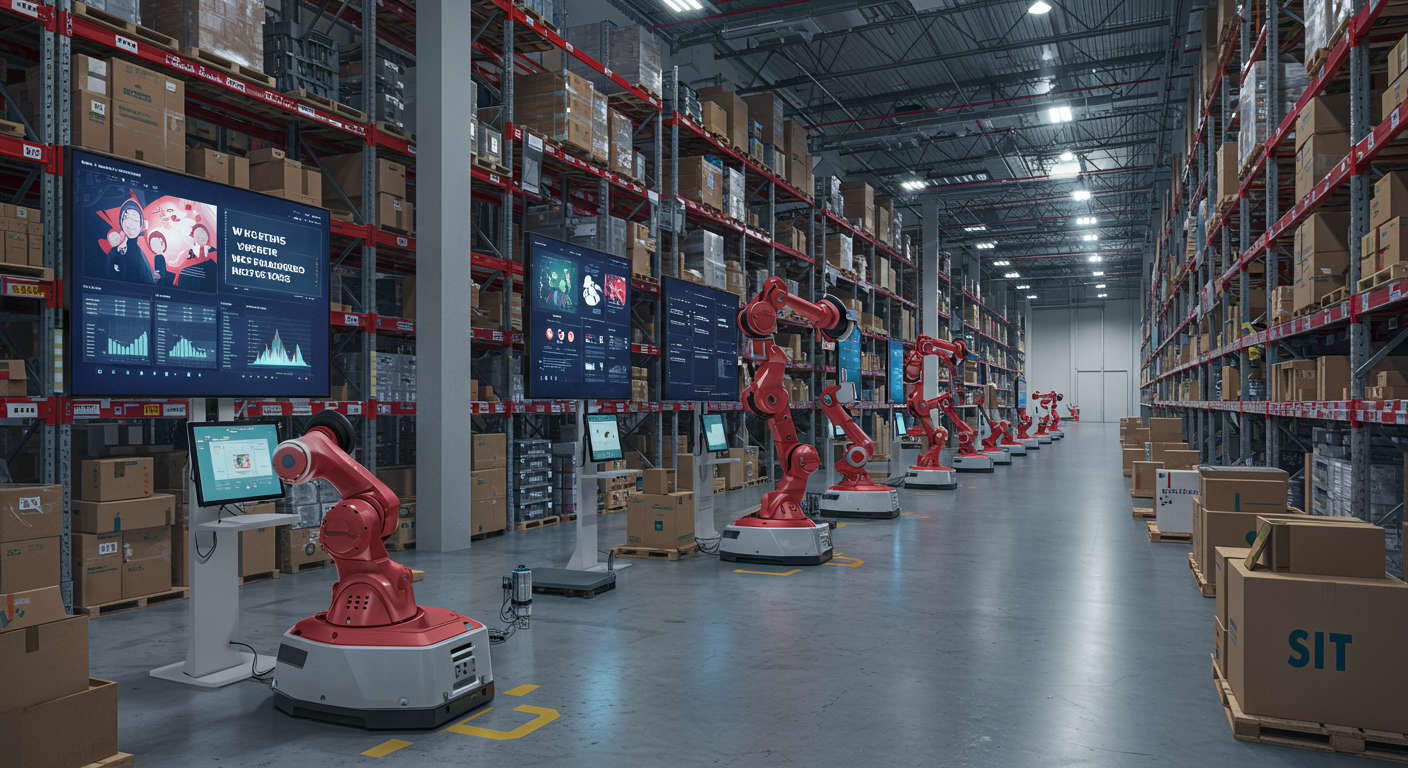
Modern e-commerce warehouse with automated stock shelves and digital inventory displays, symbolising AI-powered real-time inventory management integration for Shopify and WooCommerce

Why Inventory Management Fails Without Automation

Manual inventory management remains a critical bottleneck for small businesses and startups, creating cascading operational failures that directly impact profitability. Most SMBs rely on spreadsheet-based tracking, outdated point-of-sale systems, or fragmented spreadsheets across multiple locations, consequently leading to data entry errors that propagate throughout the supply chain. Furthermore, the labour-intensive nature of manual stock counts means merchants capture only snapshots in time rather than real-time visibility, thereby making informed decisions nearly impossible.

The lack of real-time inventory visibility across Shopify storefronts, WooCommerce shops, and multiple warehouses creates dangerous blind spots. Additionally, inadequate demand forecasting leads to both stockouts and overstocking simultaneously – a paradox that plagues businesses lacking analytical capabilities. Consequently, statistics reveal that stockouts cause 40-69% of lost sales per occurrence, whilst businesses lose up to 11% of annual revenue due to out-of-stock items. Moreover, approximately 65% of customers develop negative views of brands experiencing frequent stockouts, directly impacting customer lifetime value and brand reputation.

Consider a typical small business tracking inventory manually across Shopify and multiple warehouses. Furthermore, without real-time alerting, merchants often discover critical low-stock situations only after customers complain about unavailable products. Consequently, this reactive approach triggers emergency restocking with rush shipping premiums, overtime labour costs, and irreplaceable lost sales. Moreover, the operational burden of managing inventory without AI inventory automation software consumes 5-15 hours weekly, representing substantial opportunity costs that prevent focus on growth initiatives.

The True Cost of Stockouts and Inventory Mismanagement

The financial impact of inventory mismanagement extends far beyond immediate lost sales, creating a complex web of compounding costs that directly threaten business sustainability. Additionally, stockouts are responsible for approximately £1 trillion to £1.8 trillion in global lost sales annually, demonstrating the massive scale of this challenge. Furthermore, direct costs include lost sales revenue when customers cannot purchase desired products, emergency restocking expenses including expedited shipping and overtime labour, and long-term customer acquisition expenses from customer churn resulting from negative experiences.

Understanding the true cost requires analysing the calculation method: Days Out of Stock multiplied by Average Units Sold per Day multiplied by Profit Per Unit. Consequently, a product going out of stock for 3 days with 15 units per day sales and £18 profit per unit results in £810 lost profit – a seemingly modest incident that compounds across product lines. Moreover, most businesses experience multiple stockouts monthly, meaning monthly revenue loss often exceeds £5,000 to £20,000, depending on store size. Furthermore, stockouts impact brand reputation, reduce customer lifetime value, and weaken competitive positioning in crowded e-commerce markets.

Additionally, the customer acquisition cost of replacing churned customers typically ranges from 5 to 25 times the cost of retaining existing customers. Consequently, a single stockout causing customer attrition can result in lifetime value losses exceeding £500 to £2,000 per defected customer. Moreover, recognising these cascading costs helps explain why AI-powered inventory automation functions as an investment in profitability rather than merely an operational expense. Furthermore, the ability to prevent just 2-3 stockout incidents monthly typically generates savings that dwarf the investment in automated systems.

How AI Agents Monitor and Manage Inventory in Real-Time

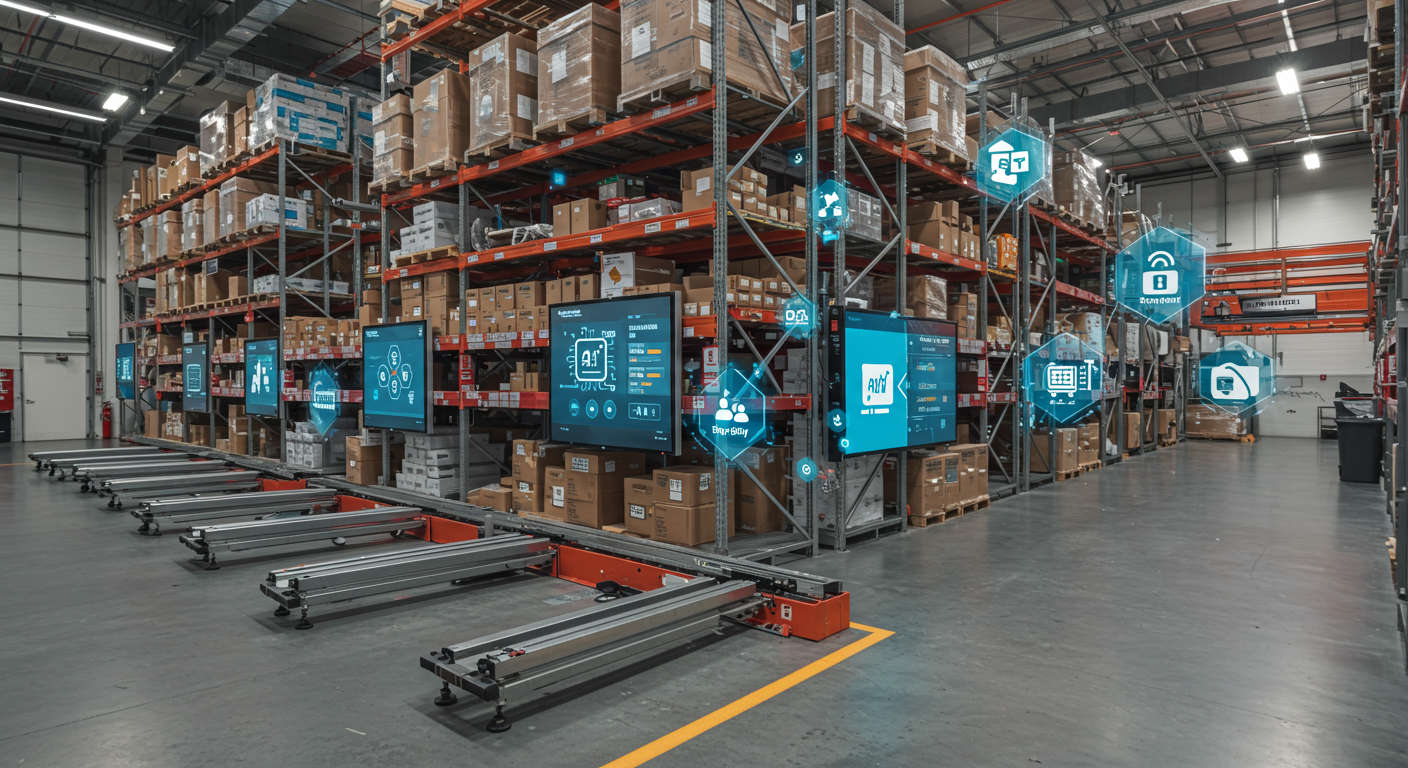
An AI-powered warehouse with robots and digital screens displaying real-time inventory data and stock alerts in a modern e-commerce fulfilment centre

AI agents function as autonomous inventory monitors, working continuously 24/7 without fatigue, breaks, or human limitations. Additionally, these AI stock monitoring tools track inventory levels in real-time across Shopify and WooCommerce stores, simultaneously analysing sales velocity patterns, historical data, seasonal trends, and market indicators. Consequently, whilst manual processes capture static snapshots, AI agents maintain constantly updated awareness of stock positions, enabling proactive decisions rather than reactive scrambles.

The sophistication of modern AI inventory agents enables them to set and adjust dynamic reorder points based on product performance, sales forecasting, and demand patterns specific to each SKU. Furthermore, the system incorporates machine learning that continuously improves accuracy as it learns from business operations and market changes. Moreover, real-time alerting systems notify merchants via email, SMS, Slack, or custom integrations when inventory falls below customizable thresholds, ensuring critical information reaches decision-makers immediately. Consequently, merchants maintain awareness of stock situations without constant manual monitoring.

Additionally, AI agents integrate seamlessly with supplier systems to trigger automated purchase orders without manual intervention. Furthermore, this autonomous operation covers 100+ inventory management tasks daily, requiring zero manual oversight whilst simultaneously coordinating across multiple sales channels. Consequently, merchants focus on strategic initiatives whilst AI agents handle the operational minutiae of real-time inventory tracking, prevention systems, and continuous optimization that would otherwise consume vast amounts of human time and mental energy.

Demand Forecasting and Predictive Stock Optimization

Machine learning algorithms now surpass human forecasting capabilities by analysing hundreds of variables simultaneously that human analysts simply cannot process. Additionally, AI-driven demand forecasting examines historical sales data, seasonal trends, customer behaviour patterns, promotional calendars, weather influences, and market factors to predict future demand with unprecedented accuracy. Furthermore, real-world examples demonstrate the transformative potential – IKEA’s AI Demand Sensing improved forecast accuracy from 92% to 98% using 200 data sources per product, consequently reducing excess inventory whilst preventing stockouts.

Predictive analytics enable AI agents to maintain optimal stock levels, reducing inventory carrying costs by up to 30% whilst simultaneously improving forecast accuracy by up to 50%. Consequently, businesses hold less dead inventory consuming warehouse space and capital, yet maintain stronger availability for customer orders. Moreover, AI forecasting handles complex, nonlinear demand patterns that manual systems and spreadsheet-based approaches cannot capture – seasonal volatility, promotional effects, and competitive dynamics that create forecasting challenges beyond human analysis. Furthermore, the automated replenishment workflow where AI predictions trigger purchase orders automatically at optimal times balances availability against cash flow constraints and storage limitations.

Connect this predictive inventory management to tangible business benefits including reduced waste from obsolete inventory, improved cash flow from optimised purchasing, enhanced supply-demand matching, and the ability to respond quickly to market opportunities and seasonal shifts without overstocking. Additionally, businesses using AI forecasting report higher customer satisfaction scores because product availability improves. Consequently, demand forecasting transforms from a constant challenge into a competitive advantage that improves both profitability and customer experience simultaneously.

No-Code Setup and Custom Alert Triggers

AI inventory agents eliminate technical barriers that previously prevented SMBs from accessing enterprise-grade inventory automation. Additionally, no-code platforms enable businesses to configure inventory monitoring in minutes rather than weeks of development work. Furthermore, merchants can connect Shopify or WooCommerce stores to AI agents through simple API integrations and intuitive drag-and-drop interfaces without requiring programming knowledge or technical expertise.

Customization options allow setting inventory thresholds, reorder points, and alert conditions specific to individual products, product categories, or warehouses. Consequently, a merchant can define custom triggers based on business logic including minimum stock levels, maximum holding periods, seasonal adjustments, or velocity-based thresholds unique to product performance profiles. Moreover, configuring alert recipients, notification channels (email, SMS, Slack integration), and alert frequency prevents notification fatigue whilst ensuring critical information reaches the right people. Furthermore, best practice guidance suggests starting with 20% of inventory to test configurations, gradually expanding automation, and refining triggers based on historical accuracy data.

For merchants exploring comprehensive solutions, the AI inventory automation process is designed specifically for SMBs, offering streamlined setup that transforms Shopify inventory management. Additionally, the Shopify app provides seamless integration for store owners, whilst the WordPress plugin serves WooCommerce merchants perfectly. Consequently, the accessibility of this technology to non-technical team members democratises enterprise-level inventory sophistication across all business sizes.

Seamless Integration with Shopify and WooCommerce Workflows

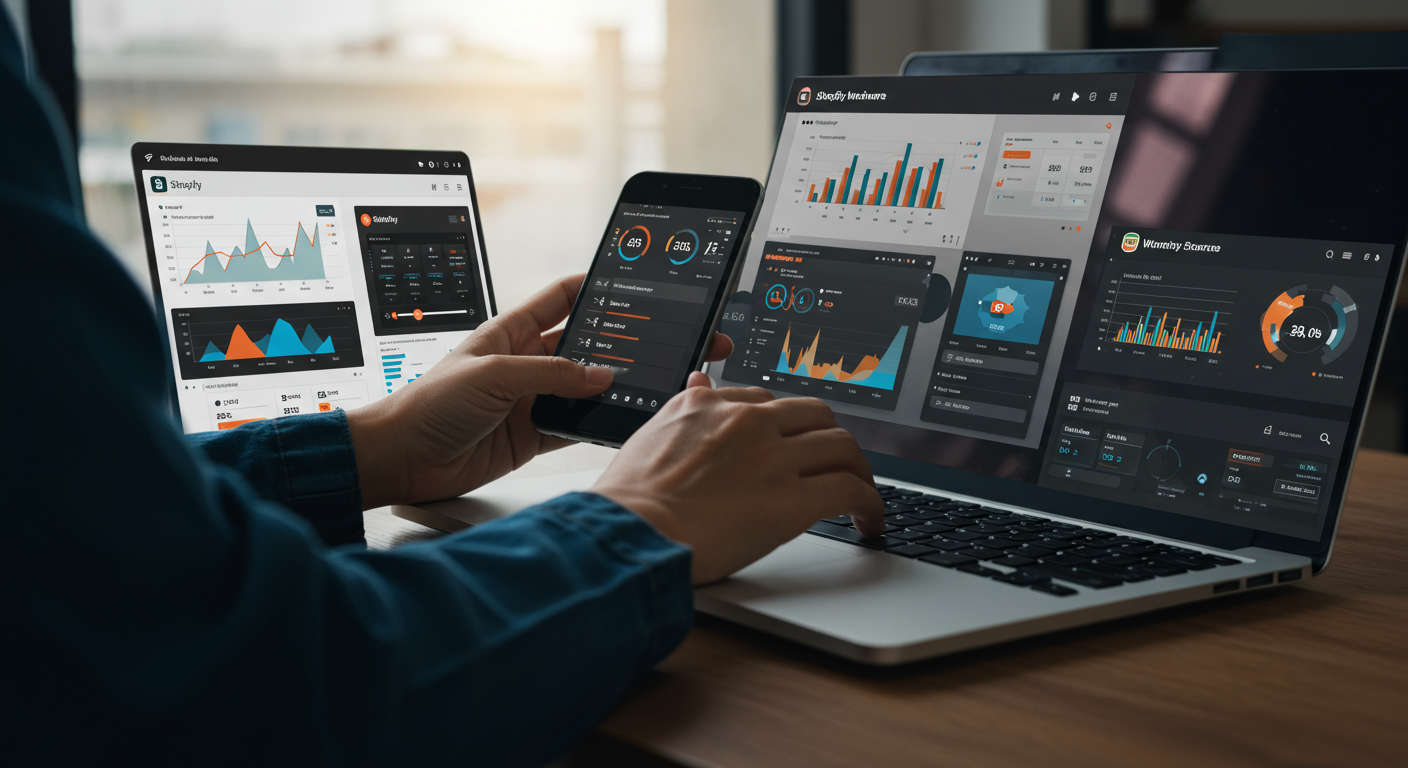
A small business owner managing multiple Shopify and WooCommerce online stores with dashboards showing inventory levels, sales charts, and automated alerts on a laptop and smartphone

AI inventory agents integrate directly into existing Shopify and WooCommerce infrastructure without disrupting current workflows or requiring system replacements. Additionally, AI agents sync with product catalogues automatically, understanding SKU structures, variant relationships, and multi-location inventory across linked warehouses without manual configuration. Furthermore, these agents pull real-time sales data directly from Shopify and WooCommerce dashboards to inform forecasting and alerting mechanisms that respond to actual business performance.

Purchase orders generated by AI agents flow directly into supplier management systems or email workflows for approval and fulfilment. Consequently, multi-channel inventory synchronisation prevents overselling across Shopify storefronts, WooCommerce shops, and third-party sales channels by coordinating stock levels centrally. Moreover, automated workflows including low-stock alerts trigger supplier communications, purchase order generation, shipment tracking integration, and stock level updates upon goods receipt. Furthermore, complex scenarios such as managing backorders, forecasting across different product tiers or seasons, and coordinating inventory between multiple fulfilment centres operate seamlessly within this integrated framework.

For deeper insight into integration strategies, explore how AI virtual employees transform Shopify inventory management through comprehensive automation capabilities. Additionally, reporting dashboards display inventory turnover rates, stockout incidents, supplier performance, and demand forecasting accuracy, supporting informed business decisions. Consequently, merchants gain complete visibility and control over their supply chain through unified, intelligent systems.

Actionable Order Management and Fulfillment Automation

AI inventory automation extends beyond stock monitoring to streamline the complete order-to-fulfillment process, transforming how businesses handle customer transactions. Additionally, accurate inventory visibility powered by AI agents enables confident order processing without overselling or cancellations that damage customer relationships. Furthermore, AI agents automatically allocate inventory to orders based on location-optimised fulfillment rules, warehouse proximity, or stock age to minimise picking and shipping times whilst improving efficiency metrics.

Automated fulfillment workflows trigger picking instructions, packing optimisation, and carrier selection automatically upon order confirmation. Consequently, the manual coordination that previously consumed staff hours now operates autonomously and error-free. Moreover, AI agents prevent stockouts during peak sales periods by dynamically managing available-to-promise inventory and implementing temporary purchase limits when stock becomes constrained. Furthermore, the system handles order amendments and cancellations automatically, returning inventory to available stock with updated reorder point adjustments that maintain accuracy throughout the process.

The financial impact of automation includes labour cost reduction from fewer manual processing steps, improved cash conversion through faster fulfillment, and customer retention from fewer order cancellations. Additionally, AI-driven inventory forecasting ensures products remain available when customers want them, transforming inventory management from a cost centre into a profit driver. Consequently, teams focus on marketing and customer experience rather than inventory administration, allowing businesses to scale revenue without proportional staff increases.

ROI and Cost-Benefit Analysis for SMBs

The financial case for AI inventory automation proves compelling when calculated correctly, particularly for small businesses operating on limited budgets. Additionally, monthly costs start at just £20/month, positioning AI agents as the most accessible enterprise-grade inventory solution available to SMBs. Furthermore, this investment generates savings through reduced stockout incidents preventing the 40-69% sales loss per occurrence, labour hours eliminated through automated monitoring, and emergency restocking costs avoided including expedited shipping and overtime labour.

Real-world ROI scenarios demonstrate how small businesses avoiding just 2-3 stockout incidents monthly recoups AI agent costs whilst also reducing labour overhead significantly. Consequently, break-even typically occurs within the first month for most merchants. Moreover, a business preventing three stockout incidents of £500 profit loss each saves £1,500 monthly, creating a 75x return on a £20/month investment. Additionally, labour savings of 10 hours weekly at £15/hour generate £600 monthly in recovered productivity, further amplifying ROI calculations dramatically. Furthermore, hidden benefits beyond direct cost savings include improved business visibility, data-driven decision-making, ability to scale without proportional staff increases, and competitive advantages from faster inventory response times.

Recognise that AI agents operate autonomously 24/7 covering 100+ tasks daily versus the fraction of capacity manual processes achieve. Consequently, the psychological barrier to adoption often stems from underestimating true costs of manual management rather than concerns about AI agent affordability. Moreover, frame AI agents as affordable profit multipliers enabling SMBs to operate with enterprise-level inventory automation software sophistication previously available only to large corporations with substantial IT budgets. Furthermore, this democratisation of technology allows small businesses to compete effectively on inventory responsiveness and customer availability, transforming operational efficiency into competitive advantage.

AI inventory agents eliminate the chaos of manual stock management by monitoring levels 24/7, triggering timely reorders, and preventing costly stockouts automatically. Consequently, for just £20/month, SMBs gain enterprise-grade inventory visibility, demand forecasting, and fulfillment automation across Shopify and WooCommerce. Moreover, this investment transforms inventory from an operational burden into a competitive advantage that drives profitability and enables sustainable growth. Furthermore, the combination of real-time monitoring, intelligent forecasting, and automated workflows creates a system that continuously improves whilst freeing merchants to focus on strategic business expansion rather than daily inventory crises.

Posted on Leave a comment

Automate FAQ Generation & Schema for Shopify

Modern ecommerce workspace showing laptop with Shopify store and WordPress dashboard, surrounded by digital marketing and AI technology icons representing automated FAQ generation and schema markup

Why FAQ Automation Matters for Ecommerce SEO Today

FAQ automation transforms customer engagement and search visibility for Shopify and WordPress stores. Furthermore, using AI-powered FAQ generation paired with FAQPage schema markup enables small businesses to deploy intelligent Q&A systems that work 24/7, boost SEO rankings, and improve conversion rates without manual maintenance. However, most small business owners lack the time to manually create, optimise, and maintain FAQ pages that actually drive results. Consequently, this creates a critical gap between search demand for FAQ content and the resources available to SMBs competing against larger retailers.

FAQ schema markup enables rich snippets that increase click-through rates by up to 87% compared to standard search results. Moreover, FAQ-rich results receive higher visibility on SERPs, taking up significantly more space and drawing attention away from non-optimised competitors. Additionally, FAQ content appears prominently in featured snippets and voice search results, capturing traffic that traditional results miss. This expanded SERP real estate represents a competitive advantage that forward-thinking SMBs cannot ignore.

From a customer journey perspective, FAQs addressing common concerns about shipping, returns, sizing, and product compatibility reduce friction and increase conversion rates by pre-answering objections before checkout. Furthermore, FAQ automation solves support ticket reduction, lowering operational costs whilst improving customer satisfaction simultaneously. Consequently, implementing comprehensive FAQ automation strategies enables SMBs to compete with larger retailers without hiring additional staff or dedicating expensive resources to content maintenance.

How AI-Powered FAQ Generation Works End-to-End

Autonomous AI FAQ generation functions through a sophisticated multi-step process that analyses your store data comprehensively. Furthermore, AI agents examine product catalogues, customer support logs, and Google search trends to identify commonly asked questions automatically. However, the process extends beyond simple pattern recognition – the system identifies gap patterns in existing content and customer inquiries, then generates contextually relevant, high-quality Q&A pairs tailored to each product or service category. Additionally, the AI ensures responses align with your brand voice and business policies through configurable parameters.

The autonomous validation step represents a critical safety checkpoint where generated FAQs undergo fact-checking against product specifications and existing customer feedback to maintain accuracy. Moreover, the system integrates with ecommerce platforms to extract real customer interactions, purchase history, and browsing behaviour to refine question relevance continuously. Consequently, this process runs 24/7 without human intervention, updating FAQs automatically as new customer inquiries emerge or product offerings change. Furthermore, this autonomous approach generates clean, SEO-optimised Q&A pairs ready for immediate deployment across product pages, category pages, and standalone FAQ pages at scale – 100+ tasks daily across multiple stores.

AI-powered autonomous virtual employee analysing ecommerce data to generate FAQ content for Shopify and WordPress platforms

Implementing FAQPage Schema Markup for Rich Snippets

FAQPage schema markup represents an essential component of modern ecommerce SEO success, fundamentally changing how search engines understand and display your content. Furthermore, schema.org’s FAQPage type structures your Q&A content using JSON-LD format, which serves as the recommended approach for WordPress and Shopify implementation. However, many businesses remain unfamiliar with this markup type, missing significant visibility opportunities. Consequently, understanding schema implementation becomes critical for maintaining competitive advantage in organic search.

JSON-LD schema deployment proves remarkably straightforward for WordPress and Shopify, requiring minimal technical expertise or HTML modifications. Moreover, WordPress users can activate FAQ schema features through popular SEO plugins including Yoast SEO, Rank Math, and All in One SEO, each providing intuitive interfaces for Q&A structuring. Furthermore, Shopify stores implement FAQPage schema through theme customisation or no-code apps that inject schema automatically without developer intervention. Additionally, validation using Google’s Rich Results Test ensures your markup displays correctly before going live, identifying and resolving common errors preventatively.

Ecommerce business owner deploying FAQPage schema markup on Shopify and WordPress websites, highlighting SEO benefits and increased site traffic

Google’s evolving stance on FAQ schema recognises that commercial websites may see reduced rich snippet eligibility compared to government or health sites. However, the SEO benefits still include improved content organisation, better crawlability, and enhanced voice search compatibility. Consequently, implementing FAQPage schema remains strategically valuable for ecommerce businesses seeking every competitive advantage.

Deploying FAQs Natively Across Shopify and WordPress

Native FAQ deployment keeps your customer journey friction-free whilst maintaining direct control over content presentation and SEO crawlability. Furthermore, Shopify stores create dedicated FAQ pages within the Pages section, then link them strategically from main navigation or footer areas. However, simply creating pages represents only the foundation – structuring them effectively requires accordion layouts, expandable sections, or card-based designs that dramatically improve user experience and mobile usability. Additionally, embedding FAQ schema markup directly into the Shopify theme using Liquid code or no-code apps injects schema automatically without ongoing maintenance burden.

WordPress sites leverage the native block editor with accordion blocks or custom FAQ plugins providing dedicated post types and taxonomies. Moreover, deploying FAQs across multiple strategic locations – product pages, category pages, standalone archives, and blog content – maximises visibility and customer benefit. Furthermore, a mobile-first approach ensures accordion elements remain touch-friendly, load quickly, and display clearly on smartphones. Consequently, organising FAQs logically by topic (Shipping & Delivery, Returns & Refunds, Product Features, Order Status, General) with anchor links and internal cross-linking dramatically improves navigation and SEO performance.

Maximising SEO Impact and Conversion Benefits

Optimising deployed FAQs requires strategic keyword integration ensuring questions incorporate high-intent keywords identified from search trends and competitor analysis. Furthermore, placing primary keywords in question titles and secondary keywords in answers improves semantic relevance and SERP visibility substantially. However, keyword stuffing must remain strictly avoided – natural phrasing consistently outperforms artificial keyword insertion. Additionally, internal linking strategy within FAQs – linking related questions, FAQs back to product pages, and connecting FAQ categories – distributes page authority whilst strengthening topical clusters around core ecommerce categories.

Conversion optimisation places FAQs strategically to address objections at critical decision points throughout the customer journey. Moreover, positioning shipping costs near checkout and return policies on product pages builds customer confidence. Furthermore, clear, benefit-focused language consistently converts better than technical jargon. Additionally, A/B testing FAQ formats – comparing accordion versus expanded layouts and different orderings – measures impact on bounce rate, time-on-page, and conversion metrics. Consequently, FAQ schema markup increases CTR by displaying rich snippets that answer queries directly on the SERP, typically improving CTR by 9–58% depending on query type.

Monitoring critical metrics including organic traffic to FAQ pages, impressions and clicks in Google Search Console, CTR improvement month-over-month, and customer support ticket reduction ensures you measure actual business impact. Moreover, this data-driven approach identifies optimisation opportunities and validates your FAQ strategy’s effectiveness systematically.

Automating FAQ Maintenance and Continuous Improvement

AI-driven FAQ automation enables ongoing optimisation without manual effort, continuously monitoring customer support channels, product feedback, and search trends. Furthermore, autonomous agents identify emerging questions or outdated information in existing FAQs automatically. However, more importantly, the system generates new Q&A pairs addressing trending questions and suggests refinements based on customer feedback sentiment. Additionally, underperforming FAQs get flagged for improvement, ensuring your content remains competitive and conversion-focused.

As ecommerce stores scale from 100 to 10,000 products, manual FAQ maintenance becomes operationally impossible. Nevertheless, autonomous agents scale effortlessly, generating and maintaining Q&A coverage across your entire catalogue. Furthermore, the AI learns from performance data, tracking which FAQs drive conversions and reduce support tickets. Consequently, this intelligence prioritises similar content generation for future materials. Additionally, version control and rollback capabilities enable reverting to previous versions if new FAQs underperform, providing essential safety mechanisms.

For sensitive categories involving health, legal, or financial information, human review workflows remain advisable. Moreover, continuous AI automation at £20/month provides effectively unlimited FAQ updates compared to manual maintenance requiring ongoing contractor time. Furthermore, setting frequency thresholds prevents constant updates while maintaining content freshness. Additionally, this cost-efficient approach represents a transformative advantage for resource-constrained SMBs.

Real-World Results and ROI for SMBs Using FAQ Automation

Consider a mid-sized Shopify store maintaining FAQs for only 5% of its 500-product catalogue due to resource constraints. Furthermore, after deploying AI FAQ automation, the store achieved rich FAQ coverage across 95% of products. Moreover, organic traffic to product pages increased by 15–20%, support tickets decreased by 30%, and conversion rates improved by 2–3%. Additionally, this business freed 15–20 weekly staff hours previously dedicated to FAQ research, reducing FAQ maintenance time to 1–2 hours weekly.

Cost comparison reveals the economic advantage clearly: AI-powered FAQ automation at £20/month plus minimal staff review time costs roughly £300/month, whereas hiring part-time contractors costs £800–1,500 monthly. Furthermore, this cost differential enables SMBs previously unable to maintain comprehensive FAQs to now compete directly with larger retailers on search visibility. However, the real value extends beyond mere cost savings – improved customer confidence and trust represent measurable business benefits that drive long-term customer lifetime value.

For deeper insights into integrating AI virtual employees across your ecommerce platforms, explore our comprehensive guide on integrating AI virtual employees with Shopify and WordPress, which details how to automate 100+ daily tasks for just £20/month. Additionally, our resource covering best AI automation plugins for WordPress and Shopify SMBs in 2025 explores additional automation opportunities beyond FAQ generation that multiply your efficiency gains.

Ecommerce stores implementing FAQ schema typically see 5–15% rich snippet impression share for brand and product keywords, with rich snippet CTR exceeding standard results by 40–60%. Moreover, businesses report 0.5–3 percentage point conversion improvements, particularly when FAQs address common product concerns. Furthermore, most competitors focus FAQ efforts on top 20 products, but automation enables covering entire catalogues, capturing long-tail search traffic from niche queries. Consequently, the combination of improved organic traffic, reduced support costs, and conversion uplift typically delivers 3–6x ROI within the first six months for SMBs that previously maintained minimal FAQ infrastructure.

Getting Started With FAQ Automation Today

Automating FAQ generation and deploying FAQPage schema markup represents a transformative, cost-effective strategy for Shopify and WordPress SMBs seeking sustainable SEO growth and improved customer experience. Furthermore, with AI agents handling continuous Q&A creation, maintenance, and optimisation at just £20/month, small businesses compete directly with larger retailers. Moreover, you’ll capture rich SERP visibility, reduce support costs, and drive measurable conversion uplift – all hands-off. Additionally, the time-to-value remains remarkably short, with most businesses seeing improved search visibility within 4–6 weeks of deployment.

For comprehensive guidance on complementary on-page SEO improvements, our article on AI on-page SEO automation including meta tags and schema markup explores how to transform your site’s complete visibility profile. Furthermore, leveraging AI automation across FAQs, schema markup, and meta optimisation creates a powerful compound effect that accelerates your organic growth trajectory substantially. Consequently, the moment to invest in intelligent FAQ automation has arrived – your competitors are likely still maintaining FAQs manually whilst you’ll be capturing the competitive advantages they’ve overlooked.

Posted on Leave a comment

Automate Backlink Outreach for Shopify & WordPress

A modern workspace with a laptop showing SEO backlink analytics, surrounded by AI and digital marketing icons symbolising autonomous backlink outreach for Shopify and WordPress small business SEO.

Why Manual Backlink Outreach Is Costing Your Business Fortune

Manual backlink outreach drains resources that small businesses simply cannot afford to lose. Furthermore, the financial burden extends far beyond direct spending – agencies charge £100–£250 per hour, with monthly link-building budgets starting at £2,500–£5,000. Consequently, per-link costs range from £300–£2,000 depending on authority levels, making sustainable link building prohibitively expensive for startups and SMBs. Additionally, in-house teams cost £170,000–£260,000+ annually when factoring in salaries, tools, and infrastructure, yet 41% of SEO professionals still expect backlink acquisition costs to increase due to the competitive and labour-intensive nature of the work.

The specific challenges small business owners face when handling outreach internally are multifaceted and time-consuming. However, creating personalised pitches for each prospect, managing follow-up sequences, researching relevant link opportunities, and verifying contact information consume 10–20 hours weekly. Moreover, inconsistency in outreach campaigns hampers results – sporadic pitches fail to build momentum, and the difficulty of scaling efforts manually creates a ceiling on growth. Ultimately, outsourcing or hiring for link building is neither scalable nor sustainable for SMBs trying to maintain daily, consistent campaigns that drive organic visibility.

Small business owner overwhelmed with manual backlink outreach tasks and high costs in office

How AI Transforms Link Building from Manual Grind to Autonomous Success

Artificial intelligence fundamentally changes backlink outreach by automating every stage of the prospecting and outreach workflow. An AI-driven link building agent identifies high-authority link prospects using advanced SERP analysis and backlink profile analysis. Furthermore, it crafts personalised outreach emails tailored to each prospect’s site and audience, sends campaigns at scale without human intervention, and tracks responses automatically. Consequently, companies using AI-powered link building strategies report 40% higher success rates in earning backlinks from Domain Authority 50+ sites, achieving 37% higher response rates and 28% increases in link placements compared to manual campaigns.

Enterprise systems demonstrate the transformative power of autonomous backlink acquisition. For instance, an enterprise SaaS company deployed AI systems to generate over 200 link sources weekly with a 62% reduction in manual outreach time. Moreover, autonomous agents function as virtual employees working 24/7, completing 100+ tasks daily without fatigue or human error. Importantly, AI handles the repetitive, data-intensive work whilst freeing your team to focus on strategy, relationship building, and content creation. Additionally, 86% of SEO professionals have already integrated AI into their strategies, indicating this is now standard practice rather than cutting-edge innovation.

AI virtual agent working autonomously 24/7 on backlink outreach with automation and data analytics

Agents24x7 AI Agent Platform for Shopify and WordPress Sites

Agents24x7 operates as a specialised AI agent platform designed specifically for Shopify and WordPress sites, functioning as a virtual employee for link building and SEO tasks. Importantly, the platform requires zero technical expertise and operates as a no-code solution available for just £20 per month, capable of handling 100+ autonomous tasks daily. Furthermore, the platform integrates seamlessly with both Shopify and WordPress through dedicated plugins and apps, enabling direct integration into your existing website infrastructure without complex setup. Additionally, users can access the Agents24x7 Shopify app or the Agents24x7 WordPress plugin to activate their AI agent immediately.

The AI agent’s capabilities for backlink outreach include automated prospect research using competitor analysis and niche identification. However, the platform distinguishes itself through personalised email generation tailored to each site’s content and authority level, intelligent follow-up sequences based on response patterns, and comprehensive reporting on link acquisition success and domain authority impact. Consequently, the AI agent learns your business, industry, and link-building goals continuously, improving outreach effectiveness over time. When compared with expensive tools like Ahrefs (£129+ monthly) and Respona (£95+), Agents24x7 delivers enterprise-level automation at startup-friendly pricing, making affordable backlink tools accessible to all business sizes.

Setting Up Your First Autonomous Backlink Campaign in Minutes

Launching your first automated backlink building campaign using Agents24x7 is straightforward and accessible for non-technical users. Initially, you define your niche, target link prospects, and campaign goals directly within the platform. Moreover, connecting your Shopify store or WordPress site via the dedicated plugin requires no API keys, webhooks, or server configuration – simply authenticate and begin. Furthermore, you configure the AI agent with your brand voice, company information, and link acquisition targets so it understands your business context completely.

The prospect research stage begins automatically once configured. Consequently, the AI identifies potential link sources by analysing competitor backlink profiles, examining industry directories, and finding relevant blogs and resource pages. However, you maintain control by setting personalisation parameters so each outreach email reflects the target site’s content and includes relevant references or compliments. Additionally, campaign scheduling and timing options enable you to set outreach frequency to achieve consistent daily pitches without overwhelming prospects. Importantly, the entire setup process takes minutes, not weeks, and requires no technical skills or coding knowledge – a small Shopify store owner could launch 50 personalised outreach emails to vetted link prospects within their first hour.

WordPress and Shopify SEO Differences and How Agents24x7 Adapts

WordPress offers greater SEO flexibility and customisation through plugins like Yoast SEO, extensive URL structure control, and deep integration with content management workflows. However, it requires more technical knowledge than Shopify, which features built-in SEO capabilities, generally faster site speed due to platform-managed hosting, and easier setup for beginners. Furthermore, Shopify offers more restricted URL customisation and fewer native content marketing tools, yet both platforms benefit equally from high-quality, dofollow backlinks from authoritative sites that pass trust signals and improve domain authority.

Agents24x7 adapts its outreach approach for each platform strategically. For WordPress link building automation, the AI customises pitch angles that value long-form guest content and SEO plugin mentions. Conversely, for Shopify backlink strategy, pitches emphasise product reviews, resource recommendations, and merchant network opportunities. Additionally, the AI agent learns to position WordPress sites as content authorities whilst presenting Shopify stores as trusted ecommerce merchants. Importantly, domain authority remains significant for both platforms as it correlates with search visibility and reflects accumulated backlink quality, regardless of platform choice.

Real Results: How Automated Backlink Outreach Scales Your Organic Growth

Companies deploying AI-powered link building systems generated over 200 link sources weekly, resulting in 40% increases in high-authority backlinks and 62% reductions in time spent on manual outreach. Furthermore, the 37% increase in response rates and 28% rise in link placements translate to faster domain authority growth, which correlates directly with improved search rankings and organic traffic. Consequently, securing 10–20 backlinks monthly through automation creates momentum in organic visibility that manual outreach struggles to match.

Starting at just £20 monthly with Agents24x7, small businesses maintain consistent daily campaigns that cost mere pennies per backlink compared to agency pricing of £300–£2,000 per link. However, the real advantage emerges from compounding effects – a Shopify store or WordPress blog reaching 30 quality backlinks monthly via automation could expect 300–500% organic traffic increases within 6–12 months. Moreover, consistent daily outreach builds brand recognition and credibility in your niche more effectively than sporadic manual attempts. Importantly, autonomous campaigns never skip weekends or holidays, meaning link acquisition continues 24/7 without human fatigue affecting campaign consistency. Additionally, teams save 10–20 hours weekly previously spent on outreach, freeing capacity to focus on content creation, relationship nurturing, and strategic initiatives.

Automating backlink outreach with Agents24x7 transforms link building from exhausting manual work into a consistent 24/7 engine driving organic growth. At just £20 monthly for an AI virtual employee handling 100+ daily tasks, small businesses on WordPress or Shopify now compete with enterprises without hiring costly specialists or sacrificing strategy time. Furthermore, you can access the Shopify app or WordPress plugin today to begin your autonomous backlink campaigns immediately. Consequently, sustainable organic growth is no longer reserved for companies with enterprise budgets – it’s accessible to every ambitious startup and SMB ready to automate their link-building success.

Posted on Leave a comment

AI Internal Linking for Shopify & WordPress

Futuristic office setting with AI technology integrating website elements from Shopify and WordPress, symbolising autonomous internal link building and SEO optimisation for SMBs and startups.

Why Internal Linking Remains SEO’s Most Underutilised Asset

Internal linking represents one of the most powerful yet neglected levers in modern SEO strategy. Furthermore, most businesses fail to recognise that pages with 45-50 well-placed internal links demonstrate substantially stronger search engine performance compared to poorly linked alternatives. Consequently, this oversight creates significant ranking gaps that persist across your entire site architecture.

The relationship between internal linking and site structure fundamentally shapes how search engines crawl, index, and rank your content. Additionally, internal links distribute link equity from authoritative pages to lower-ranking content, establish proper content hierarchy, and accelerate indexing of newly published pages. Moreover, implementing a flat site structure – where content remains reachable within three clicks from your homepage – directly improves both crawl efficiency and user engagement metrics that Google monitors.

Without systematic internal linking approaches, businesses miss critical opportunities to strengthen topical authority and concentrate page authority inefficiently across scattered content. Therefore, autonomous AI agents now eliminate this manual bottleneck, delivering AI-powered internal link building that scales effortlessly alongside growing content libraries.

How AI Transforms Internal Linking from Manual Task to Autonomous Strategy

Artificial intelligence and natural language processing enable semantic content analysis at unprecedented scale, fundamentally surpassing simple keyword-matching approaches. Instead, machine learning algorithms understand contextual relevance across vast content libraries, identifying linking opportunities humans would simply miss due to time constraints. Notably, AI agents complete in minutes what SEO specialists require hours or days to accomplish manually.

AI agent analysing a vast content library with data connections highlighting semantic internal linking opportunities using natural language processing

Furthermore, artificial intelligence maintains consistency across your entire internal linking strategy, ensuring anchor text quality, balanced link distribution, and contextually appropriate connections throughout your site. Consequently, research indicates that 86% of SEO professionals now adopt AI tools, with reported ranking improvements reaching 30% within just six months. Additionally, autonomous agents operate 24/7, continuously monitoring new content and updating linking strategies without requiring human intervention or oversight.

This autonomous internal link strategy incorporates topical clustering – where AI identifies related content and creates semantic link paths that strengthen topical authority and E-E-A-T signals that Google values increasingly. Therefore, understanding how to leverage these capabilities becomes essential for businesses seeking sustainable competitive advantages in search results.

Shopify AI Internal Link Building Setup and Daily Automation

Installing and configuring the Agents24x7 Shopify app requires no technical background or coding knowledge whatsoever. Initially, the app analyses your product descriptions, blog posts, and collection pages to identify contextually related content systematically. Furthermore, the daily automation workflow identifies new pages or pages with insufficient internal links, generates relevant linking opportunities with anchor text recommendations, and presents suggestions through an intuitive approval interface.

Small business owner using Shopify app on a laptop with website pages and blog posts in background illustrating automated internal link building and SEO optimisation

The app respects Shopify’s native site architecture – product hierarchies, collection structures, and blog organization – whilst creating links that enhance both user navigation and search engine crawl paths. Moreover, the approval mechanism ensures editorial control, allowing business owners to review suggestions before publishing. Consequently, you maintain full authority over your linking strategy whilst benefiting from AI-driven recommendations.

Notably, Shopify internal link automation eliminates common concerns about over-linking or semantic irrelevance through sophisticated artificial intelligence that prevents these issues entirely. The system tracks metrics including pages linked, link equity distribution, and crawl efficiency improvements, providing visibility into ongoing optimisation efforts. For detailed setup guidance, explore our comprehensive Agents24x7 Shopify daily setup guide that walks through implementation step-by-step.

WordPress Plugin Architecture: How Autonomous Linking Works Daily

The Agents24x7 WordPress plugin installation integrates seamlessly with your native post and page systems, analysing content metadata including categories, tags, and post content to identify linking opportunities systematically. Furthermore, the daily automation process scans newly published posts, identifies pages with low internal link density, and generates contextually relevant suggestions aligned with your content strategy. Consequently, bloggers and small publishers maintain full editorial control whilst benefiting from AI-driven optimisation.

The plugin operates within WordPress’s native editor workflow, allowing publishers to review and approve suggestions before content goes live or after publication. Additionally, it handles different content types differently – blog posts, pages, and custom post types each receive tailored linking recommendations maximising relevance. Moreover, the WordPress AI link building system suggests natural, keyword-rich anchor text benefiting both user experience and search engine optimisation simultaneously.

The plugin prevents common mistakes including over-linking, broken linking chains, and semantically irrelevant connections through continuous machine learning refinement. Therefore, your internal linking strategy remains optimised without manual oversight. For detailed WordPress implementation details, review our 5-step onboarding guide for Agents24x7 which provides comprehensive configuration instructions for maximum effectiveness.

Beyond Basic Linking: Building Intelligent Site Architecture at Scale

Moving beyond simple internal linking, AI agents construct intelligent, scalable site architecture supporting exponential growth. Specifically, they identify your most authoritative content, group related topics strategically, and create link paths establishing genuine topical authority. Furthermore, as you publish 100+ posts monthly using daily AI publishing, internal links remain optimised and topically coherent without manual intervention.

Hub-and-spoke architecture models – where authoritative pillar pages connect with supporting topic clusters through strategic internal linking for SEO – represent industry best practices for sophisticated site organisation. Additionally, AI automation creates and maintains these structures continuously, ensuring link equity flows logically through your site architecture rather than accumulating in isolated pockets. Consequently, this architectural approach compounds over months, with consistent internal linking creating increasingly sophisticated topical networks outranking manual competitors.

Cross-linking strategies between blog categories, product types, and content verticals strengthen semantic SEO signals Google uses for ranking decisions. Moreover, intelligent internal linking supports keyword-topic associations that search engines rely upon for understanding content relevance. Therefore, adopting no-code SEO link building through automation provides competitive advantages sustaining long-term organic growth trajectories.

Measuring Impact: How AI Internal Linking Drives Organic Growth

Measuring internal linking impact requires understanding link equity distribution using internal PageRank concepts and verifying authority flows strategically from high-authority pages to chosen targets. Furthermore, improved indexing speed metrics reveal how well-linked internal structures reduce time for new content appearing in search results. Consequently, tracking these metrics establishes baseline performance enabling clear impact assessment.

Organic traffic attribution – comparing traffic growth before and after AI internal linking implementation whilst accounting for seasonal variations – provides concrete evidence of effectiveness. Additionally, Google Search Console verification confirms that internal linking changes improve crawl efficiency and fix crawl errors systematically. Moreover, user engagement metrics affected by site structure optimisation including session duration, pages per session, and bounce rates indirectly support improved search rankings.

Research data indicates businesses can expect 5% organic traffic improvements as internal linking optimisation compounds over time. Therefore, establishing monthly performance tracking from implementation day one creates visibility into growth trajectories. Notably, consistent internal linking correlates directly with ranking velocity improvements for newly published content, meaning newer pages rank faster alongside improved architecture.

SMBs and Startups: Why Autonomous Internal Linking Justifies Its Cost

For resource-constrained small businesses and startups, the business case for AI SEO automation becomes compelling immediately. Manual internal linking for 100+ monthly posts requires significant editor time that most SMBs cannot afford whilst maintaining other growth priorities. Furthermore, professional SEO specialists charge hundreds monthly – whereas Agents24x7 costs just £20/month for identical functionality delivered autonomously.

Productivity multiplication occurs because with 100+ daily tasks handled autonomously, small teams focus entirely on strategy, customer service, and revenue generation rather than repetitive optimisation work. Additionally, research shows SMBs adopting AI automation experience 150% organic traffic growth within three months through consistent publishing combined with intelligent linking. Consequently, opportunity cost calculations reveal that every hour employees spend manually creating internal links represents revenue-generating activities abandoned unnecessarily.

Scalability advantages become apparent as content volume grows – manual internal linking becomes impossible whilst AI automation scales identically without cost increases. Moreover, combining autonomous internal link strategy with autonomous content creation delivers complete hands-off SEO systems requiring minimal oversight. Therefore, SMBs using AI internal linking gain 6-12 month competitive headstarts over manual competitors still using outdated approaches.

Getting Started: Your First Month of Autonomous Internal Linking

Implementing Agents24x7’s AI agent virtual employee begins with installation on either Shopify or WordPress platforms, followed by initial site audits identifying existing internal links, gaps, and opportunities systematically. Furthermore, first-week configuration involves setting linking preferences, defining prioritised pages, and establishing anchor text guidelines matching your SEO strategy. Consequently, the app typically identifies 50-100 initial linking opportunities requiring review and approval.

First-month priorities focus on foundation-building rather than dramatic results, as AI learns your content patterns and establishes linking infrastructure. Additionally, providing feedback on suggestions – marking irrelevant recommendations whilst approving high-quality ones – refines AI recommendations continuously. Moreover, establishing metrics tracking from day one creates baseline organic traffic, rankings for priority keywords, and internal link metrics enabling later comparison.

After initial audit completion, subsequent months require minimal oversight as autonomous systems operate independently, freeing your time and resources for content creation or other growth initiatives. Therefore, month-one setup investments yield compounding returns across months two through twelve and beyond, delivering enterprise-level site crawlability improvement at startup-friendly pricing.

Take Action: Start Building Your Intelligent Link Architecture Today

AI-powered internal linking through Agents24x7 transforms SEO from time-consuming manual processes into autonomous 24/7 systems generating hundreds of contextually relevant linking opportunities monthly. For small businesses and startups, this no-code solution delivers enterprise-level site architecture optimisation at just £20/month, enabling sustainable organic growth without requiring specialist expertise.

Install the Agents24x7 Shopify app or WordPress plugin today and begin your autonomous internal linking journey immediately. Furthermore, your first month delivers comprehensive site audits and linking recommendations, whilst subsequent months operate entirely hands-off. Consequently, you’ll experience improved rankings, faster indexing, and stronger topical authority across your entire content library starting immediately.

Posted on Leave a comment

Automated Content Repurposing Across Platforms

Small business and startup teams collaborating on digital marketing with AI assistance, multiple screens showing LinkedIn, Facebook, Reddit, and content creation tools in a modern office setting

Why Content Repurposing Matters for Small Businesses

Content repurposing has become indispensable for SMBs and startups seeking to maximise their marketing impact without expanding team sizes. Furthermore, 65% of marketers now use AI tools for content repurposing, recognising that this strategic practice extends content lifespan significantly. Consequently, every piece of content created can serve multiple audiences across different platforms, dramatically improving return on investment.

The challenge is that different platforms attract distinct user segments with vastly different consumption preferences. Moreover, LinkedIn professionals expect thought leadership and industry insights, whilst Facebook communities seek engagement and authentic interaction. In addition, Reddit users value genuine discussion and real expertise shared authentically rather than promotional messaging. This fundamental difference means your blog post requires intelligent adaptation, not simple copying and pasting.

By repurposing strategically, SMBs can maximise ROI on every piece of content without requiring separate teams for each platform. Importantly, a single well-researched blog post transforms into LinkedIn thought leadership, Facebook community discussions, Reddit threads and video scripts – reaching audiences wherever they gather. Furthermore, this consistency improves SEO performance whilst maintaining unified brand messaging. Consequently, Agents24x7’s capability of producing 100+ tasks daily across platforms enables SMBs to compete with larger competitors while maintaining authentic, platform-appropriate content.

Small business digital marketing team using AI tools for automated multi-platform content repurposing on LinkedIn, Facebook and Reddit, diverse devices showing professional, casual and community engagement content

Understanding Platform-Specific Content Demands

Each platform – LinkedIn, Facebook and Reddit – requires distinctly different content approaches and formats. Importantly, recognising these differences ensures your repurposed content performs well rather than appearing tone-deaf to platform-specific audiences. Moreover, algorithmic preferences vary significantly across networks, affecting visibility and engagement.

LinkedIn’s professional ecosystem favours thought leadership and industry insights. Consequently, the optimal framework involves 40% expert authoritative content, 40% engagement-focused posts and 20% product or offer content. Furthermore, LinkedIn users expect credibility signals and connection to professional development. Additionally, posting between 10am and noon on weekdays aligns with when professionals check the platform during work hours.

Facebook, conversely, thrives on community-focused engagement. Moreover, live videos, polls, groups and user-generated content drive substantially higher engagement than traditional posts. Importantly, casual conversational tone resonates naturally on Facebook, encouraging comments and shares. Furthermore, Facebook Groups generate engagement rates exceeding individual Pages alone, creating opportunities for deeper community discussions.

Reddit’s discussion-based culture differs fundamentally from promotional platforms. Additionally, authentic participation in niche subreddits matters infinitely more than overt promotion. Furthermore, long-form meaningful posts and genuine expertise-sharing build trust within communities. Importantly, Reddit content also ranks exceptionally well on Google, providing unexpected SEO benefits alongside community engagement.

Converting Blog Posts into LinkedIn Professional Updates

Transforming blog content into LinkedIn updates demands strategic thinking beyond simple truncation. Importantly, extract key insights from your blog post and reframe them as professional thought leadership. Furthermore, LinkedIn’s algorithm heavily favours early engagement – posts receiving comments and shares within the first hour gain exponential visibility advantages. Consequently, posting at optimal times combined with compelling calls-to-action substantially improves performance.

Craft compelling headlines with clear engagement prompts encouraging comments and shares. Moreover, apply the 40/40/20 framework purposefully – your LinkedIn content strategy should balance authoritative insights, engagement questions and subtle product mentions. Additionally, leverage hashtags strategically to extend reach beyond your immediate network. Furthermore, tagging relevant users and industry leaders amplifies visibility when they engage with your content.

Statistics from blog posts become engaging LinkedIn infographics or carousel posts. Importantly, native LinkedIn documents and video content generate significantly higher engagement than external links. Consequently, repurposing blog data into visual formats capitalises on platform preferences. Moreover, employee advocacy amplifies reach – when team members share company content personally, algorithmic visibility increases substantially. By implementing Agents24x7 on your Shopify store or WordPress plugin installation, you automate this entire process, generating LinkedIn-ready versions within minutes rather than hours of manual work.

Crafting Facebook Community Engagement from Blog Content

Adapting blog content for Facebook requires embracing the platform’s community-first philosophy. Furthermore, break down lengthy blog articles into shorter, punchy Facebook posts with casual, conversational tone that Facebook’s algorithm actively favours. Importantly, this shift from formal to friendly increases shareability and organic reach substantially.

Facebook Groups represent extraordinary opportunities for hosting discussions around blog topics. Consequently, engagement rates within Groups exceed Page engagement by significant margins because community members feel invested in group conversations. Moreover, convert blog insights into group discussion starters that prompt member feedback and debate. Additionally, leverage user-generated content and customer testimonials related to blog themes, strengthening community bonds.

Create Facebook Stories teasing blog content or highlighting key takeaways with urgency. Furthermore, polls and questions derived from blog insights prompt immediate audience feedback and interaction. Additionally, Facebook Live sessions discussing blog topics in real-time Q&A format create authentic engagement opportunities. Importantly, automated systems like Agents24x7 generate multiple Facebook post variations from single blog posts, craft group discussion starters and schedule Stories automatically, enabling consistent daily presence without manual effort.

Building Reddit Discussion Threads from Blog Insights

Repurposing blog content into authentic Reddit discussions requires ethical consideration and genuine value provision. Furthermore, Reddit communities specifically reject overt advertising, so blog insights must reframe as helpful answers to community questions or thought-provoking discussion starters. Importantly, Reddit’s algorithm rewards authenticity and penalises obvious self-promotion severely.

Identify high-traffic subreddits aligned with blog topics where your audience genuinely congregates. Consequently, craft long-form, meaningful Reddit posts sparking authentic conversation and establishing your expertise credibly. Moreover, Reddit content ranks exceptionally well on Google search results, providing unexpected SEO benefits beyond community engagement. Additionally, blog data and statistics become natural discussion points inviting community feedback and debate.

Use Reddit as a listening tool gathering customer feedback and identifying user-generated content opportunities. Furthermore, encourage organic testimonials and success stories from authentic community members sharing genuine experiences. Importantly, AI content scheduling tools for startups can tailor blog content into discussion-appropriate Reddit threads that add value whilst subtly establishing brand credibility without appearing like spam.

Content creator transforming blog posts into video scripts, podcasts and social media posts with AI assistance, creative workspace with camera, microphone, laptop screens showing video editing and social feed drafts

Generating Video Scripts and Multimedia Content from Written Posts

Transforming blog posts into video scripts, podcast transcripts and multimedia formats dramatically expands content accessibility. Importantly, AI enables converting long-form articles into short-form video snippets perfect for social feeds, podcast discussions and email summaries. Furthermore, blog headlines become video titles, key points transform into script sections and data converts into on-screen graphics seamlessly.

Video content performs exceptionally well across LinkedIn, Facebook and Reddit – native videos generate significantly higher engagement than external blog post links. Consequently, creating multiple video lengths serves different contexts: 90-second clips for social feeds, 10-minute deep dives for YouTube and 30-second teasers for Stories. Moreover, podcast show notes and transcripts generated from blog content repurpose written material into audio-friendly formats. Additionally, AI video script generation for SMBs provides 24/7 creativity that complements your content strategy comprehensively.

Email snippets breaking up blog articles into bite-sized updates encourage subscription and engagement. Furthermore, multimedia expansion transforms a single blog post into videos, email sequences and podcast content in hours rather than weeks traditionally required. Importantly, this efficiency allows content teams focusing on strategic topics rather than distribution logistics.

Setting Up Automated Repurposing on WordPress and Shopify

Implementing Agents24x7 on WordPress and Shopify platforms automates content repurposing efficiently and reliably. Importantly, install the WordPress plugin from wordpress.org/plugins/agents24x7 and access the Shopify app from apps.shopify.com/agents24x7 directly. Furthermore, configure your AI agent to access blog post content, understand your brand voice and messaging guidelines, and set repurposing parameters for each platform.

Set up scheduling so repurposed content publishes automatically at optimal times across LinkedIn, Facebook and Reddit simultaneously. Moreover, integration with social media management tools and native platform APIs ensures seamless distribution. Additionally, the system learns from blog post performance – identifying which topics generate traffic – and adapts repurposing to emphasise high-performing content types automatically.

At just £20 monthly, Agents24x7 delivers extraordinary value compared to hiring content specialists. Importantly, discuss API setup, authentication and OAuth connections with your platform of choice. Furthermore, the system includes backup scheduling, failed post handling and manual override options for complete control. Consequently, SMBs can launch sophisticated multi-platform strategies without technical expertise barriers.

Measuring Success and Optimising Your Repurposing Strategy

Tracking multi-channel content repurposing performance requires platform-specific metrics. Importantly, LinkedIn engagement rate, comment sentiment and follower growth indicate professional audience resonance. Furthermore, Facebook reach, shares and group activity reveal community engagement levels. Additionally, Reddit upvotes, comment discussions and cross-platform traffic referrals demonstrate discussion quality and audience interest.

Using UTM parameters, track blog traffic sourced from each social channel precisely. Consequently, you’ll identify which platforms drive most qualified visitors and revenue. Moreover, attribution models show how repurposed social content feeds back into blog traffic and conversions. Furthermore, A/B testing different repurposing approaches reveals how the same blog post performs differently – LinkedIn thought leadership versus Facebook community posts versus Reddit discussions.

Analytics dashboards identify top-performing content themes, allowing repurposing prioritisation adjustments accordingly. Importantly, engagement velocity – how quickly content gains traction – indicates algorithmic favour and suggests optimal posting frequencies. Furthermore, Agents24x7’s 100+ daily tasks capability enables rapid experimentation and iteration across platforms simultaneously, accelerating optimisation compared to manual approaches. Consequently, SMBs can compete with sophisticated marketing departments through data-driven continuous improvement.

Time and Cost Savings Through Automation

Manual repurposing of a single blog post into LinkedIn updates, Facebook posts, Reddit discussions and video scripts typically requires 3-5 hours of content specialist work. Furthermore, this covers platform-specific research, writing, formatting, editing and scheduling labour. Consequently, Agents24x7 reduces this to minutes with 24/7 autonomous execution, delivering remarkable efficiency gains.

Calculate concrete annual savings: at average £20-30 hourly rates for content creators, manual repurposing of just 20 monthly blog posts costs £1,200-£1,800 yearly. Moreover, Agents24x7 at £20 monthly costs only £240 annually, representing 80-87% savings immediately. Additionally, opportunity costs matter substantially – time freed from repurposing enables content teams focusing on strategic blog topics, audience research and creative innovation rather than administrative distribution tasks.

The 100+ daily tasks mean one blog post generates dozens of social variations automatically, creating compound efficiency gains exponentially. Furthermore, consistency improves dramatically – automated daily posting maintains engagement even when teams lack bandwidth, whereas manual approaches often become sporadic and ineffective. Importantly, for e-commerce businesses on Shopify, increased social engagement and referral traffic directly impact revenue, making the £20 monthly investment extraordinarily profitable through improved sales.

Automated content repurposing fundamentally transforms SMBs’ ability to maintain consistent multi-platform presence without expanding content teams. Agents24x7’s £20/month AI agent delivers 100+ daily tasks – converting blog posts into tailored LinkedIn, Facebook and Reddit content plus video scripts – 24/7. Combined with WordPress and Shopify integration, this strategy drives engagement, extends content lifespan and recovers hours weekly whilst maintaining brand consistency across channels. Deploy today to compete confidently with larger competitors.