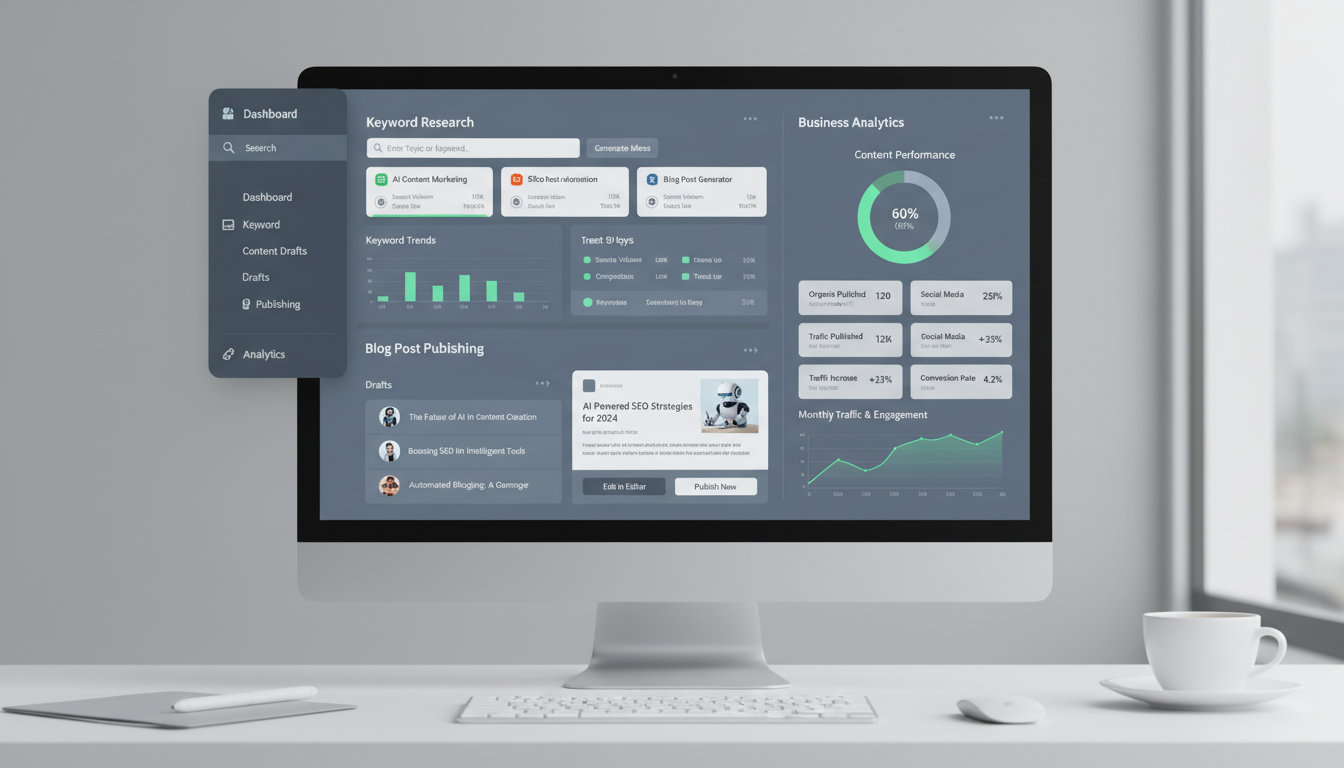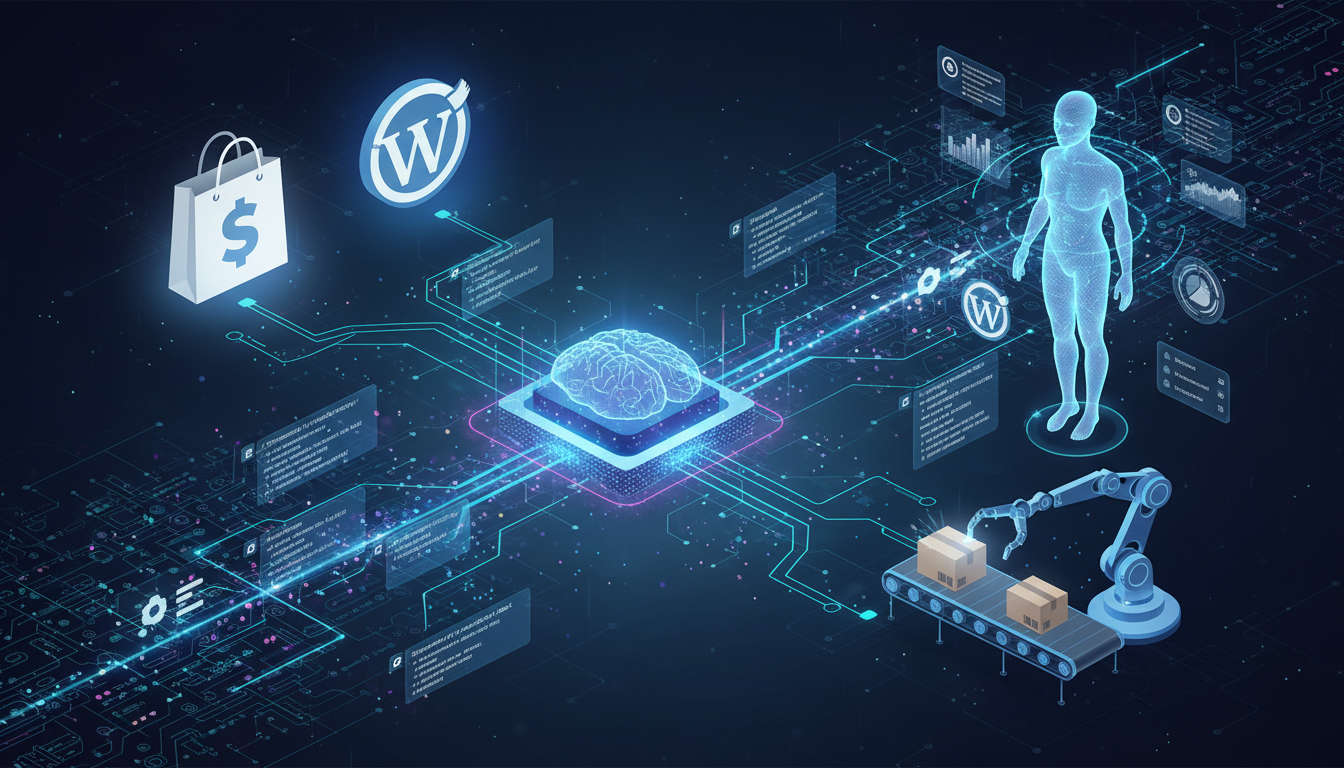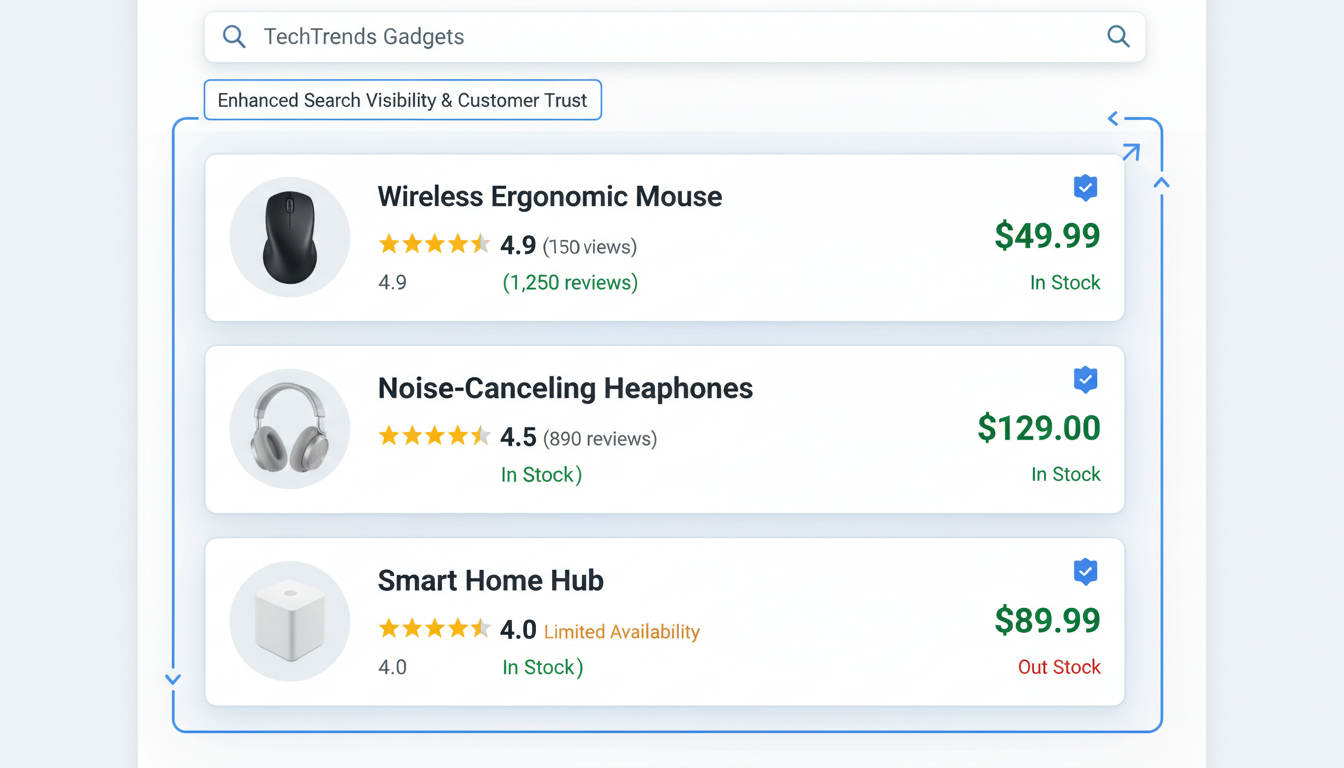
Posted on Leave a comment

Automate Backlink Outreach for SMBs with AI

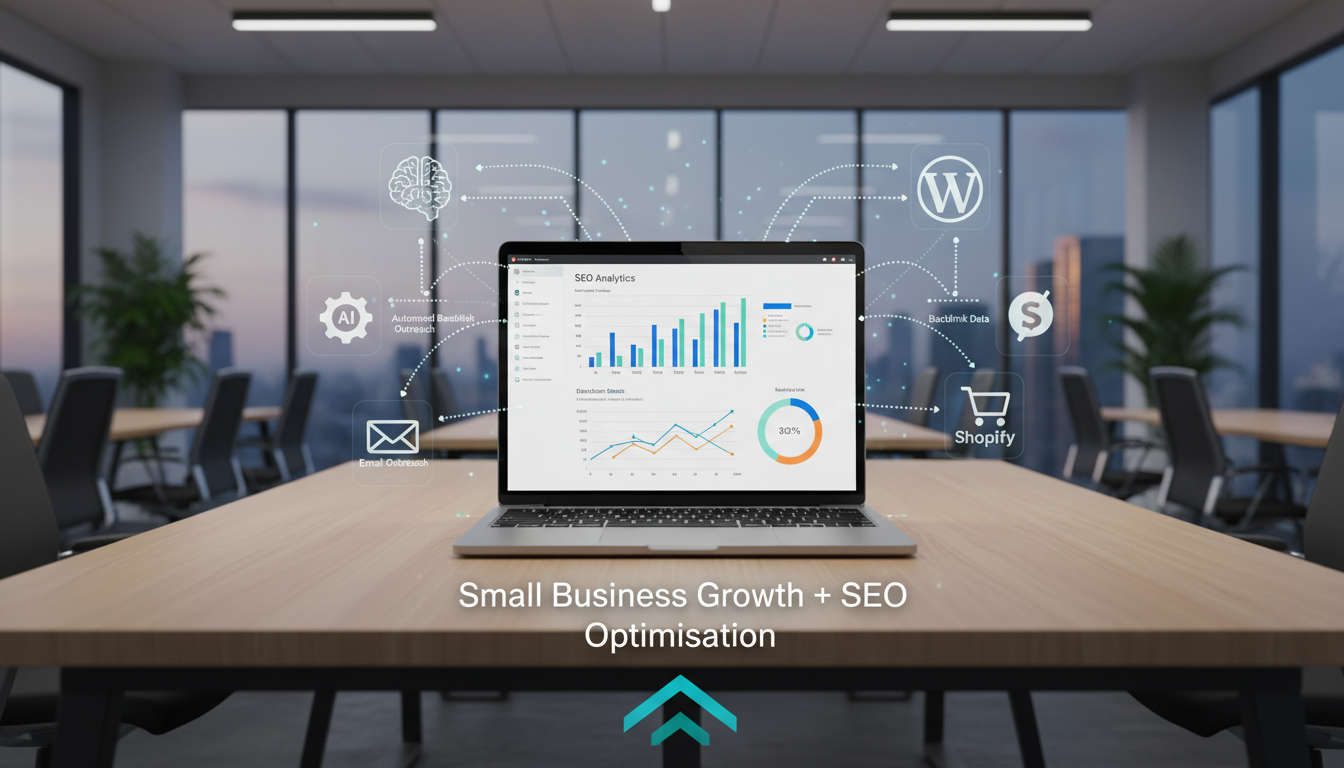
Modern office workspace with laptop showing SEO analytics and backlink data, surrounded by digital icons depicting AI automation and WordPress & Shopify integration for SMB backlink outreach and SEO growth.

Backlink outreach demands time, strategy, and consistency – resources most SMBs lack. Consequently, many small businesses struggle to build the domain authority needed for competitive search rankings. However, automating backlink outreach with AI agents fundamentally transforms this challenge into a scalable, hands-off process that runs 24/7 without hiring additional staff or requiring complex technical setups.

Why Backlinks Still Matter for SEO in 2024

Backlinks remain one of the most powerful ranking factors in modern SEO, yet their importance has evolved significantly. Furthermore, search engines now prioritise link quality, relevance, and semantic context over raw link count. Beyond that, backlinks signal E-E-A-T (Experience, Expertise, Authoritativeness, Trustworthiness), helping Google assess whether your content deserves prominent rankings.

Research consistently demonstrates that websites with quality backlinks rank substantially higher and attract significantly more organic traffic than competitors with weak link profiles. Moreover, businesses securing 50+ high-authority backlinks typically experience 30-50% improvements in search visibility within 3-6 months. Certainly, this reality creates urgency for SMBs to prioritise link building as part of their SEO strategy.

Yet here’s the challenge: manual backlink prospecting and outreach consume enormous amounts of time. Additionally, traditional agencies charge £300-500 monthly for link-building services, making professional help unaffordable for startups. Therefore, SMBs need automated solutions that deliver enterprise-grade link acquisition without proportional cost increases – which is precisely where AI-powered backlink outreach automation becomes transformational.

The Hidden Costs of Manual Backlink Outreach

Most SMBs underestimate the true expenses of manual backlink outreach. Firstly, hiring dedicated link-building staff costs £25,000-35,000 annually in salary alone, before accounting for training, management, and benefits. Similarly, outsourcing to agencies typically costs £3,000-6,000 monthly with no guarantee of quality link placements or consistent results. Correspondingly, these expenses accumulate quickly, totalling £15,000-30,000 annually for businesses attempting professional link building.

Beyond direct labour costs, manual outreach introduces substantial hidden inefficiencies. For instance, manual prospecting yields only 20-30 qualified leads daily, severely limiting outreach scalability. Additionally, staff members spend hours researching prospects, crafting personalised emails, managing follow-ups, and tracking link placements – time that could otherwise drive business growth. Furthermore, spreadsheet management, email platform subscriptions, and outreach tool fees add another £200-400 monthly to the total cost.

Most critically, manual outreach generates inconsistent results. Specifically, generic email templates achieve 1-3% response rates, whilst sporadic outreach campaigns create unpredictable ranking performance. Hence, SMBs end up spending thousands whilst securing mediocre link acquisition. Clearly, this inefficiency represents the fundamental problem that AI-powered backlink outreach automation solves.

How AI Agents Transform Backlink Outreach

Modern AI agents function as autonomous virtual employees capable of handling end-to-end backlink outreach without human intervention. Essentially, these agents combine prospect identification, email personalisation, follow-up automation, and link tracking into a unified workflow. Moreover, they work 24/7, processing 100-150 qualified leads daily – five times more than human teams could manage.

Business professionals using AI agents on laptops for backlink outreach automation in a modern office setting

Technically, AI agents analyse target websites using domain authority, traffic quality, relevance signals, and spam scores to identify high-potential backlink opportunities. Furthermore, they generate truly personalised outreach emails referencing specific content, achievements, and business interests – increasing response rates to 20% or higher compared to generic average rates of 8.5%. Consequently, genuine personalisation dramatically improves conversion rates and relationship building with prospects.

Additionally, automated follow-up sequences respect natural communication cadence whilst incorporating A/B testing to optimise performance continuously. Interestingly, statistics reveal that 65% of businesses report improved SEO outcomes after integrating AI into backlink strategies, whilst 86% of SEO professionals now regularly use AI tools for link building. Therefore, AI-driven backlink outreach represents the industry standard for competitive SMBs seeking scalable, cost-effective link acquisition.

Step-by-Step Automation with Agents24x7

Implementing backlink outreach automation through Agents24x7’s Shopify app or WordPress plugin follows a straightforward process requiring no coding. Firstly, connect your website and define target industries, competitor profiles, or keyword niches. Subsequently, AI automatically scans thousands of potential backlink sources, filtering for domain authority, content relevance, and link accessibility.

Next, the agent creates a prioritised prospect list ranked by link quality and success likelihood. Then, Agents24x7 generates personalised outreach emails with contextual references to each prospect’s recent content, audience, or achievements. Moreover, automated follow-ups trigger at optimal intervals (typically 3-5 days post-initial contact) with alternative messaging based on A/B testing results. Crucially, real-time link monitoring tracks when backlinks go live, verifies placement quality, and alerts you to any removals or broken links.

Importantly, the entire process runs autonomously, producing 100+ outreach activities daily. Additionally, the flat £20/month pricing enables SMBs to scale without proportional cost increases. Furthermore, comprehensive dashboard reporting shows response rates, successful placements, domain authority gains, and ROI – providing complete transparency on campaign performance.

Building Domain Authority Consistently

Traditional link-building projects tend to be sporadic – intense bursts of activity followed by lulls – creating inconsistent SEO performance. However, 24/7 automation maintains steady link acquisition momentum, building cumulative authority over time. Consequently, within 3-6 months, SMBs using AI-powered outreach typically secure 30-50 qualified backlinks from relevant sources, resulting in visible domain authority improvements and enhanced search rankings for target keywords.

Real case studies demonstrate remarkable results: one business achieved a 70% increase in backlinks within three months, whilst another gained over 70 dofollow links in six months, raising Domain Rating from 0 to 15. Additionally, that same business experienced a 20% rise in rankings alongside increased backlinks. Therefore, the correlation between consistent backlink growth and organic traffic increases becomes undeniable – 10-15 additional quality backlinks monthly translates to sustained ranking improvements.

Moreover, automated backlink outreach for Shopify and WordPress ensures link opportunities align with your niche, prioritising relevant, authoritative sites over low-quality sources. Furthermore, local SMBs benefit significantly from localised backlink acquisition focusing on community and industry-specific sites. Subsequently, monitoring domain authority progress via Ahrefs or Moz, combined with Agents24x7’s automated reporting, highlights which backlinks deliver maximum SEO value.

Personalisation at Scale Without Extra Work

AI personalisation enables SMBs to send thousands of genuinely customised outreach emails without hiring teams of writers or researchers. Specifically, personalised subject lines increase open rates by 26%, whilst personalised campaign messages achieve 83% positive feedback rates – dramatically outperforming generic templates. Furthermore, Agents24x7 uses natural language processing to analyse each prospect’s recent blog posts, social media activity, brand positioning, and linking patterns.

The AI then crafts truly bespoke emails that reference specific achievements, content gaps your material could fill, or shared audience interests – making each message feel authentically hand-written. Moreover, personalisation addresses common outreach objections: prospects receive messages about content genuinely relevant to their audience, rather than spammy requests. Consequently, this approach builds relationships, not just links – recipients remember genuine engagement and become repeat linkers or collaborators.

Additionally, A/B testing within automated campaigns continuously improves personalisation messaging, learning which angles resonate with different prospect segments. Importantly, SMBs achieve enterprise-level personalisation sophistication – historically reserved for large agencies – at just £20/month. Therefore, cost-effective personalisation represents one of AI-powered backlink outreach’s most significant advantages for resource-constrained businesses.

Tracking, Monitoring, and Measuring ROI

Measuring success and return on investment of automated backlink outreach requires tracking specific key performance indicators. Specifically, these include outreach volume (daily prospect contact numbers), response rates (percentage of positive replies), backlink placement rates (successful links divided by outreach attempts), link quality scores (domain authority and relevance metrics), and organic traffic impact (visitors gained from ranking improvements).

Team monitoring SEO dashboard showing backlink growth, domain authority metrics, and outreach campaign performance

Real-time dashboards provide complete transparency – SMBs see exactly which prospects converted to links, which follow-up sequences performed best, and which industries yielded highest success. Furthermore, automated link monitoring capabilities notify you immediately when backlinks go live, enabling quick verification of proper anchor text and placement quality. Additionally, agents track link removal or degradation, enabling rapid recovery outreach to replace lost links.

Connecting backlink metrics to business outcomes reveals compelling ROI: acquiring 50 quality backlinks typically correlates to improved rankings for 20-30 keywords, driving 200-500 additional organic visitors monthly. At £20/month for Agents24x7, a business seeing even 5-10 new backlinks monthly easily justifies the investment when considering the equivalent £300-500/month cost of manual outreach. Therefore, calculating realistic ROI becomes straightforward – most SMBs achieve payback within weeks of implementation.

Integrating with Your WordPress or Shopify Site

SMBs integrating Agents24x7 with existing WordPress or Shopify sites benefit from seamless, code-free setup. For WordPress users, installing the Agents24x7 WordPress plugin directly from the repository takes minutes. Subsequently, activate the plugin and connect your website via API – the plugin automatically syncs your blog content, metadata, and recent posts, enabling AI agents to reference your content in outreach emails. Moreover, the plugin integrates with WordPress SEO tools like Yoast SEO and Rank Math, prioritising backlinks for your highest-value keywords.

For Shopify store owners, installing the Agents24x7 Shopify app from the App Store involves similar simplicity. Furthermore, AI agent setup on Shopify and WordPress requires just five minutes with no technical experience necessary. Subsequently, Shopify integration enables backlink strategies specific to e-commerce – targeting product review sites, supplier partnerships, and industry directories.

Importantly, both platforms offer no-code setup ensuring SMBs need zero developer knowledge. Additionally, troubleshooting support, plugin updates, and permission management remain straightforward. Consequently, once connected, everything runs automatically within your existing platform with zero additional technical work.

Overcoming Common Backlink Outreach Challenges

SMBs contemplating automated backlink outreach often encounter legitimate concerns requiring honest addresses. Firstly, prospect fatigue from generic outreach genuinely reduces future email effectiveness – however, Agents24x7’s personalisation and frequency capping ensure each prospect receives maximum one initial contact plus two thoughtfully-timed follow-ups, respecting their inbox. Similarly, quality concerns dissolve when considering that AI filtering ensures outreach targets only high-authority, relevant sites, resulting in higher-quality links than random manual efforts.

Furthermore, spam folder deliverability represents a real challenge, yet Agents24x7’s warm-up protocols, authenticated sending infrastructure, and strategic follow-up timing mimics natural human correspondence – dramatically improving deliverability rates. Additionally, conversion confidence improves considerably when reviewing statistics: automated personalised campaigns achieve 20%+ response rates, with 40-50% of responsive prospects eventually placing links. Therefore, case studies showing 30-70% backlink increases within 3-6 months provide compelling evidence of automation’s effectiveness.

Regarding ethical concerns, clarify that Agents24x7 uses exclusively white-hat, ethical link-building – genuine outreach to relevant prospects without buying links or manipulative tactics. Consequently, all strategies maintain Google compliance and long-term SEO safety. Most challenges stem from myths rather than actual implementation difficulties, making hesitation largely unfounded.

Scaling Your Link-Building Efforts as You Grow

SMBs can scale backlink outreach automation sustainably as their business grows. Initially, setups typically target 1-2 core industries or content pillar topics. Subsequently, as results accumulate and confidence builds, businesses expand: adding new content categories, targeting secondary industries, or pursuing geographical expansion. Importantly, Agents24x7’s flat £20/month pricing scales without proportional cost increases – unlike hiring additional staff, which multiplies expenses dramatically.

Increasing AI agent workload is remarkably simple: expand target parameters by adding new keywords, industry segments, or competitor profiles, and agents automatically adjust prospect databases and campaigns. Moreover, compound effects become powerful: SMBs securing 10 backlinks monthly build cumulative domain authority, improving rankings for progressively more keywords. Furthermore, this organic growth generates additional traffic without requiring additional outreach expenditure.

Strategic scaling involves phased expansion: Phase 1 (months 1-3) – focus on 2-3 top-performing content topics establishing baseline link acquisition rates. Phase 2 (months 4-6) – expand to 5-7 content areas, increasing outreach to 200-300 daily activities. Phase 3 (months 6-12) – add adjacent industries pursuing 400-500 daily activities with specialised agents. Therefore, automated link building becomes your core competitive advantage – SMBs maintaining 50-100 monthly backlinks rank significantly above competitors managing sporadic manual outreach.

Automated backlink outreach removes manual labour, accelerates link acquisition, and delivers measurable domain authority growth for SMBs. By combining AI prospect identification, personalised email generation, intelligent follow-ups, and round-the-clock execution at just £20/month, small businesses achieve enterprise-grade link-building sophistication without expensive agencies. Start automating your backlink strategy today and watch your SEO performance compound month after month.

Posted on Leave a comment

AI Content Repurposing: Automate All Channels

Abstract digital marketing concept with AI transforming content into multiple social media formats representing automation and multi-channel repurposing for SMBs

Imagine publishing fresh content across LinkedIn, Facebook, Reddit, and video platforms every single day – without hiring a single team member or spending hours on repurposing tasks. This isn’t a distant dream; it’s the reality for SMBs now leveraging AI agents for multi-channel content automation.

Traditional content creation follows a linear path: write a blog post, manually adapt it for social media, adjust tone for each platform, schedule posts individually. Consequently, this process consumes 10–15 hours weekly for growing businesses. However, autonomous content publishing with AI agents transforms this workflow entirely. Furthermore, what took days now happens in seconds, freeing your team to focus on strategy rather than repetitive execution.

Why Multi-Channel Content Repurposing Matters for SMBs

SMBs face a brutal choice: maintain consistent posting cadence across platforms or preserve team sanity. Additionally, data reveals that 42% of marketers saw measurable success by updating and repurposing existing content rather than constantly creating from scratch. Moreover, 56% of workers now use AI to boost efficiency on routine tasks, yet many SMBs remain stuck in manual workflows.

The business case is compelling. Fundamentally, one blog post contains multiple insights, stories, and data points suited to different audiences. Therefore, professional audiences on LinkedIn value data-backed insights and industry trends. Conversely, Facebook communities engage with conversational, personality-driven content. Meanwhile, Reddit users appreciate genuine questions and discussion-oriented framing. Additionally, video platforms reward clear hooks, chapter markers, and direct calls-to-action.

Without AI-driven social media content repurposing, SMBs either accept inconsistent publishing or bleed budget hiring freelancers (typically £500–2,000 monthly). However, this is where AI agents solve the ROI problem: extend content lifespan, broaden audience reach, and reinforce brand messaging without proportional cost increases. Furthermore, consistent posting signals freshness to search algorithms, directly improving SEO performance and organic visibility.

Small business owner using AI agents on a laptop, multitasking and automating social media content repurposing for LinkedIn, Facebook, Reddit, and video platforms in a modern tech office.

How AI Agents Transform Content Into Multiple Formats Autonomously

Modern no-code AI content repurposing tools operate through a sophisticated but invisible process. First, AI agents analyse your source material – blog posts, product pages, case studies – extracting core messaging, tone, and audience context. Subsequently, these agents generate channel-specific variants tailored to each platform’s unique expectations and user behaviour.

Here’s the practical magic: take a 2,000-word blog post on productivity tools. Concurrently, an AI agent breaks this into five distinct pieces. For instance, a professional LinkedIn article emphasises ROI and industry data. Meanwhile, a casual Facebook post uses emojis, questions, and community-oriented language. Simultaneously, a Reddit snippet frames content as a genuine discussion question, avoiding overt promotion. Additionally, a video script structures long-form insights into chapters with clear hooks and viewer retention tactics. Lastly, an email snippet extracts the most compelling insight for newsletter audiences.

Crucially, this happens without developers or technical expertise. The no-code nature means SMBs configure workflows visually – no coding required. Furthermore, AI learns from uploaded content (competitor research, business guidelines, keyword targeting), understands audience expectations per platform, and generates outputs in real-time. Moreover, the system produces these adaptations 24/7, generating 100+ tasks daily without human intervention.

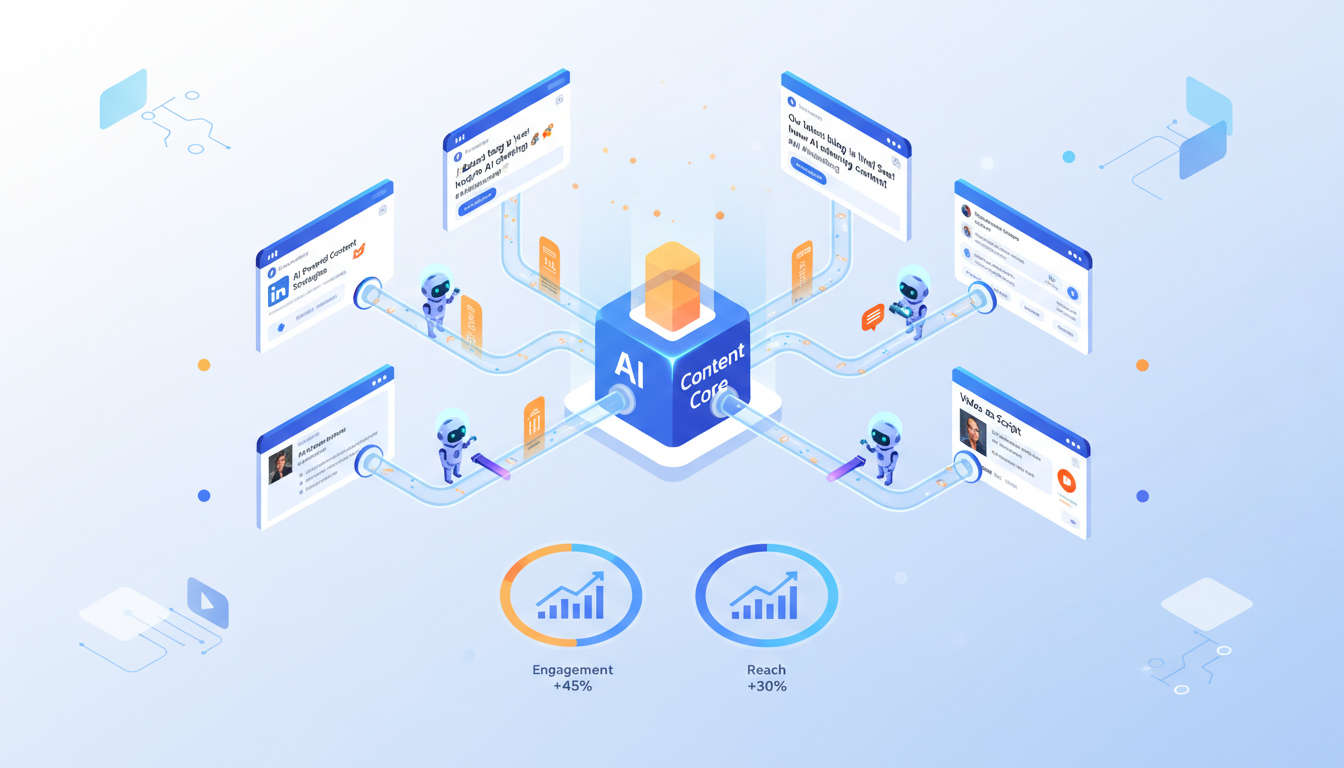
Visual representation of automated multi-channel content workflow with AI agents converting a blog post into LinkedIn posts, Facebook posts, Reddit discussions, and video scripts, showing growth and engagement charts.

Setting Up Your 24/7 Autonomous Repurposing Workflow

Starting an AI multi-channel content automation workflow is straightforward. Initially, connect your content source – whether WordPress blog, Shopify product pages, or external platforms. Using the Agents24x7 WordPress plugin, SMBs integrate directly with their blogging platform, enabling automatic detection of new published posts.

Next, define target channels and posting schedules. Accordingly, configure whether you want real-time repurposing (instantly convert new blog posts) or batched workflows (process content weekly). Subsequently, establish brand voice guidelines so AI outputs consistently reflect your company tone. For example, specify whether your brand is formal, conversational, data-driven, or playful. Moreover, set audience segments per platform – this ensures content feels native to each community rather than generically adapted.

Once configured, monitor output quality through preview modes before publishing. Certainly, most platforms offer approval workflows where your team reviews AI-generated content before it goes live. Furthermore, connect your LinkedIn, Facebook, Reddit, and video platform credentials directly. Consequently, scheduling and publishing become entirely automated. Additionally, for Shopify store owners seeking automate content repurposing for Shopify, the process integrates product descriptions, reviews, and store announcements into social content automatically using the Agents24x7 Shopify app.

The investment? Just £20/month for the Agents24x7 platform. In contrast, hiring a freelancer for equivalent output runs £500–2,000 monthly. Moreover, once the system runs, your team focuses on strategy whilst AI handles execution. Consequently, the ROI becomes obvious within the first month.

Maximising Engagement Across LinkedIn, Facebook, Reddit, and Video

Not all platforms reward identical content. Distinctly, each channel has evolved unique user expectations, optimal posting times, and format preferences. Therefore, successful cross-platform content repurposing strategies embrace these differences rather than fight them.

LinkedIn audiences consume professional insights, industry trends, and thought leadership. Consequently, repurposed blog content performs exceptionally well when positioned as expertise sharing. Moreover, posts with data visualisations, linked articles, and industry commentary drive engagement and lead generation. Furthermore, LinkedIn’s algorithm rewards consistent publishing, making daily posting from autonomous content publishing systems a significant competitive advantage.

Facebook thrives on community-focused, conversational tone with visual hooks. Importantly, emojis, questions, and relatable storytelling increase shares and comments. Additionally, Facebook users engage differently than LinkedIn audiences – they seek entertainment, community connection, and practical tips rather than corporate positioning. Consequently, the same productivity blog repurposed for Facebook becomes more casual, visual, and dialogue-oriented.

Reddit demands authenticity and genuine discussion. Critically, overt promotion fails; instead, framing content as honest questions or discussion starters builds niche community credibility. Moreover, subreddit-specific customisation ensures your repurposed content feels native rather than outsider marketing. Furthermore, successful Reddit content often drives referral traffic and builds authority within specific communities.

Video platforms reward AI-generated scripts with clear hooks, chapter markers, and calls-to-action. Additionally, optimal video length varies by platform (YouTube prefers 10+ minutes, TikTok succeeds at 15–60 seconds, LinkedIn at 30–120 seconds). Moreover, AI agents automatically adjust scripts to match platform specifications, maximising watch time and algorithmic reach.

Tracking performance is essential. Monitor click-through rates, engagement rates, and platform-specific ROI. Subsequently, use these insights to refine AI prompts for even better performance. Accordingly, if LinkedIn outperforms Reddit for your brand, adjust prompt settings to prioritise LinkedIn-focused repurposing. Furthermore, this iterative approach continuously improves output quality and relevance.

Real-World Results and Scaling Multi-Channel Presence Without Burnout

The transformative impact of automated content repurposing strategy manifests in concrete SMB growth stories. Typically, growing businesses report scaling from weekly posting to daily across multiple platforms – without hiring additional staff. Furthermore, data shows 75% of growing SMBs are experimenting with AI, whilst 71% are satisfied with AI capabilities for content generation.

Quantifiable outcomes emerge rapidly. For instance, consistent LinkedIn presence through automated daily posting increases organic reach substantially. Meanwhile, Facebook community growth accelerates via regular engagement and algorithmic favour. Additionally, Reddit niche authority builds through authentic, discussion-driven participation. Concurrently, video channel monetisation improves through algorithm-friendly publishing schedules and optimised content structure.

The sustainability problem vanishes. Many SMBs burn out trying to maintain daily content manually – balancing other responsibilities whilst attempting consistent posting. However, autonomous agents eliminate this friction entirely. Consequently, your team maintains mental health and focus whilst the system delivers consistent output.

The £20/month investment pays for itself through improved lead generation, SEO benefits from fresh content signals, and wider brand visibility. Moreover, competitive advantage emerges when SMBs match larger competitors’ content frequency whilst maintaining profitability. Learn more about automating this process by exploring Blog Content Repurposing Across Platforms and Automated Content Repurposing Across Platforms.

Ultimately, autonomous repurposing transforms content strategy from a cost centre draining resources into a scalable growth engine. Furthermore, SMBs adopting this approach report sustained lead generation improvements, improved organic rankings from consistent publishing, and genuine competitive advantage in their markets. Consequently, the question isn’t whether to automate content repurposing – it’s how quickly you can implement it.

Posted on Leave a comment

Automate Competitor Price Monitoring with AI Agents

Futuristic ecommerce setting with AI virtual agents automating competitor price monitoring, digital graphs, and online shopping elements representing continuous business competitiveness and automation.

Why Competitor Price Monitoring Matters for Your Bottom Line

Competitor price monitoring stands as a critical pillar of ecommerce success, yet manual tracking drains resources and causes missed opportunities. Furthermore, research demonstrates that 65% of SMBs expect significant ecommerce growth, making competitive pricing absolutely essential for capturing market share. However, many small business owners face the same critical challenges: pricing too high loses customers to cheaper alternatives, whilst pricing too low sacrifices crucial profit margins. Consequently, real-time price visibility becomes the foundation for preventing revenue leakage and enabling data-driven pricing decisions. Pricing sits at the intersection of profitability and competitiveness, directly impacting both revenue and customer retention in increasingly crowded online marketplaces.

The Manual Price Tracking Problem and Why Automation Solves It

Manual competitor price monitoring represents a labour-intensive operational nightmare that drains productive resources from strategic activities. Consequently, teams waste countless hours checking competitor websites manually, updating spreadsheets, and entering data into internal systems. Furthermore, human error accumulates rapidly when monitoring multiple competitors across various platforms, leading to inaccurate pricing decisions. However, the hidden costs extend beyond labour: delayed pricing responses mean slower teams miss market shifts and competitive opportunities. Automation eliminates these pain points entirely, reducing labour costs whilst simultaneously eradicating human error. Moreover, automated systems scale effortlessly to monitor dozens of competitors continuously without requiring additional headcount. Consequently, automation serves as the essential bridge between data collection (which must be fast) and strategic action (which requires human insight), allowing teams to focus on pricing strategy rather than repetitive data gathering.

How AI Autonomous Agents Work in Price Monitoring

AI autonomous agents function as virtual employees that operate independently without continuous human supervision, fundamentally transforming how businesses approach competitor monitoring. Furthermore, these intelligent systems possess remarkable technical capabilities including real-time web data collection, pattern recognition, price change detection, and automated alert generation. Consequently, AI agents work 24/7 without breaks, providing constant market visibility that human teams simply cannot match. Moreover, the intelligence layer within these agents analyses pricing patterns to identify trends, seasonal fluctuations, and competitor behaviour signals. However, the most important capability remains the agent’s ability to learn your business context and competitor landscape over time, becoming increasingly effective at identifying actionable pricing insights. Furthermore, these systems integrate seamlessly with existing platforms to automatically update pricing information in real-time, eliminating manual intervention. Consequently, modern AI agents perform the same tasks a pricing analyst would accomplish manually, but they operate continuously and at unprecedented scale.

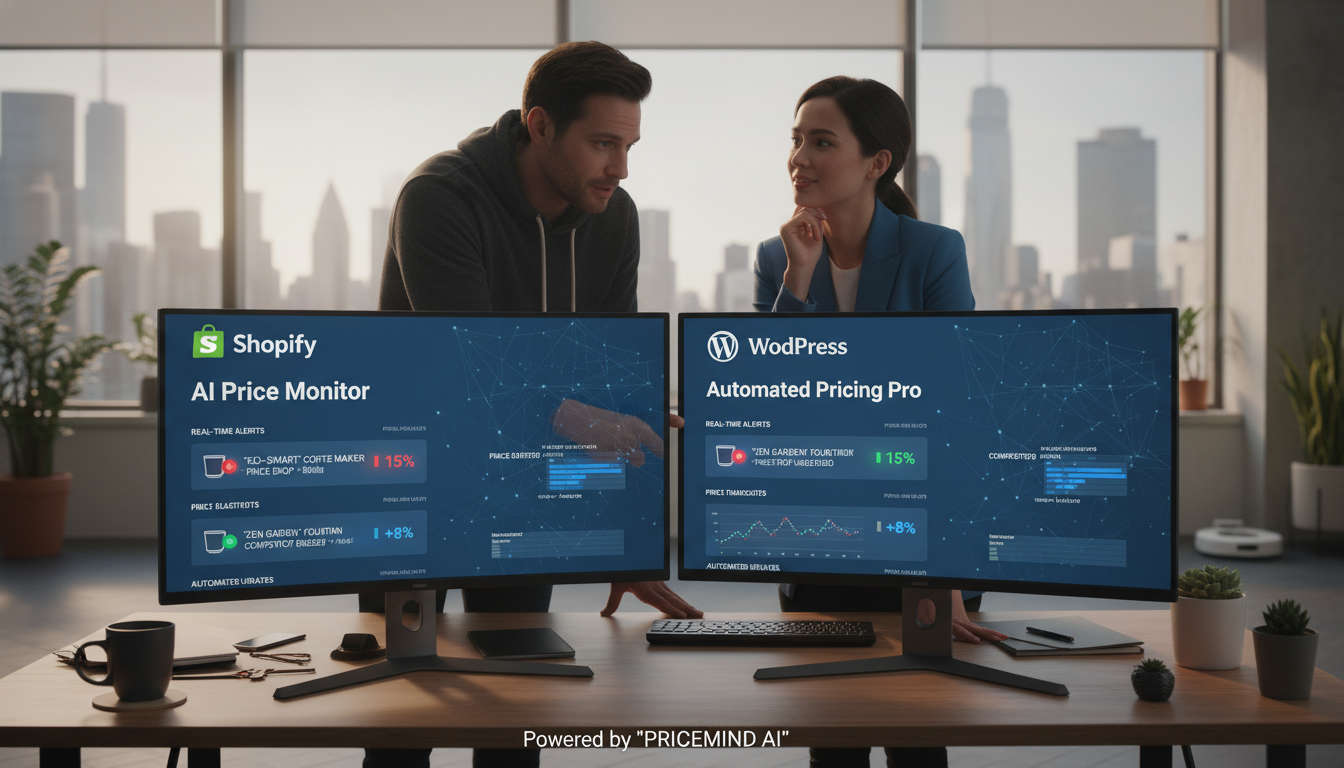
AI-powered autonomous agents monitoring ecommerce competitor pricing on multiple screens in a modern office environment

Setting Up Automated Price Monitoring in Minutes Without Code

SMBs no longer require IT departments or coding expertise to implement sophisticated competitor price monitoring automation. Furthermore, no-code platforms reduce deployment time from weeks to mere minutes, allowing immediate access to competitive insights. Consequently, the initial setup process involves simply selecting competitors to monitor, defining products to track, and configuring alert thresholds through intuitive dashboards designed for non-technical users. However, the real value emerges when SMBs discover they can customise monitoring parameters such as price ranges, competitor product categories, and alert frequency without writing a single line of code. Moreover, integration with Shopify and WordPress stores enables direct price synchronisation from collected data, streamlining the entire workflow. Furthermore, these platforms handle all technical complexity behind the scenes, whether web scraping, data parsing, or API management. Consequently, rapid deployment means competitive advantage can begin immediately, not months away. Additionally, with just £20 monthly investment, even smallest businesses access enterprise-grade pricing automation that powers 100+ autonomous tasks daily.

Real-Time Alerts and Pricing Intelligence for Strategic Decision Making

Real-time alerts transform pricing strategy from reactive scrambling to proactive market leadership. Furthermore, AI agents instantly notify teams when competitors change prices, enabling rapid response before customers notice price differences. Consequently, these intelligent alerts reveal competitor drops triggering margin protection strategies or competitor rises creating opportunity windows for volume increases. However, the deeper value emerges from historical pricing data that reveals patterns invisible to manual observation – seasonal pricing cycles, promotional timing, and competitor strategy shifts become crystal clear. Moreover, this trend data enables predictive pricing decisions rather than reactive price matching. Furthermore, SMBs can identify niches where they differentiate beyond price, such as bundling or value-added services. Consequently, aggregated alerts across multiple competitors provide market context rather than isolated price points. Additionally, this real-time market intelligence supports multiple business functions including inventory management, marketing timing, and promotional planning, making it foundational to overall business strategy rather than simply a pricing tool.

Optimising Profit Margins Through Automated Pricing Strategies

Margin optimisation represents the ultimate business outcome of competitor price monitoring, yet SMBs must balance competitiveness with profitability – a tension that AI-driven monitoring elegantly resolves. Furthermore, real-time monitoring prevents margin erosion by catching unnecessary discounting before it becomes habitual practice. Consequently, sophisticated pricing rules become possible at scale, such as always maintaining 5% above competitor pricing unless inventory exceeds specific thresholds. However, the most advanced implementations use dynamic repricing where prices adjust based on competitor moves and demand signals whilst protecting essential floor margins. Moreover, AI agents enable personalised pricing strategies for different customer segments or product categories based on competitive landscape analysis. Furthermore, value-based pricing strategies emerge when monitoring reveals what customers will pay versus competitor pricing, exposing margin expansion opportunities. Additionally, continuous system testing identifies which pricing approaches optimise the profitability-volume trade-off for each product category. Consequently, margin protection compounds across thousands of products and transactions, with even modest improvements of 1-3% offsetting software costs many times over.

Shopify and WordPress ecommerce store owners using AI tools for automated price monitoring with a user-friendly dashboard showing real-time price alerts and automated pricing updates

Shopify and WordPress Integration for Seamless Price Management

Direct platform integration eliminates manual data transfer and keeps pricing systems synchronised automatically across your entire operation. Furthermore, Shopify store owners benefit from AI agents that monitor competitors and automatically update product prices through Shopify’s API, completely eliminating manual price uploads. Consequently, WordPress WooCommerce stores enjoy similar integration enabling automated price synchronisation without ever touching product pages manually. However, plugin-based solutions streamline this integration process for non-technical store owners, making enterprise functionality accessible to SMBs. Moreover, integration extends beyond pricing to include inventory management, ensuring pricing decisions align with stock availability. For comprehensive guidance on implementation, explore our detailed article on automate competitor price tracking for Shopify and WordPress, which covers the complete setup process. Furthermore, these systems maintain complete audit trails of price changes for compliance and historical analysis. Additionally, centralised monitoring across multiple sales channels provides comprehensive competitive context impossible with isolated tools. Consequently, modern integration handles technical complexity automatically, allowing store owners to focus on strategic pricing rather than system management.

AI Pricing Agents as Cost-Effective Business Investment

The financial case for AI price monitoring agents becomes compelling when examined through SMB budgets and ROI potential. Furthermore, sophisticated pricing automation now costs as little as £20 monthly, making competitive pricing technology accessible to even smallest businesses. Consequently, this investment compares favourably to traditional alternatives such as hiring dedicated staff, purchasing multiple monitoring tools, or suffering opportunity costs of slow pricing decisions. However, the ROI manifests through multiple channels: labour savings from eliminating manual price checks, margin improvements from smarter decisions, and revenue gains from faster competitive responses. Moreover, even modest margin improvements of 1-3% offset software costs many times over for typical ecommerce stores. Furthermore, scalability means that as businesses grow, per-product monitoring costs decrease since platforms handle additional competitors without additional charges. Consequently, these systems return value immediately by catching pricing opportunities on day one, contrasting sharply with traditional software requiring months of data accumulation. For SMBs seeking competitive pricing solutions, our comprehensive guide on AI competitor price monitoring for Shopify demonstrates how even small investments deliver substantial returns.

Managing 100 Plus Daily Tasks While You Focus on Strategy

Agents24x7 platforms execute 100 or more automated tasks daily per store, covering competitor monitoring, price updates, alert generation, and analysis simultaneously without human intervention. Furthermore, this volume of activity would require a team of human employees working shifts to match, yet AI agents accomplish everything without fatigue or errors. Consequently, specific daily tasks include checking 50+ competitors continuously, detecting all price changes instantly, generating pricing recommendations, updating store prices automatically, and producing competitive reports. However, this scale of operation provides business benefits impossible at smaller scales, such as detecting subtle market trends competitors might take weeks to notice. Moreover, automation frees human staff from task execution, allowing focus on higher-value strategic activities and customer experience improvements. Furthermore, this task volume scales without additional manual effort, meaning monitoring 100 competitors requires identical effort as monitoring 10. Consequently, human judgement remains essential for strategy whilst machines handle execution flawlessly, creating a powerful partnership between AI capability and human insight that drives sustainable competitive advantage.

Building Competitive Advantage Through Continuous Market Intelligence

Competitive advantage in modern ecommerce comes from acting faster than competitors on market information – a capability that continuous AI monitoring uniquely provides. Furthermore, 24/7 monitoring ensures SMBs never miss competitive moves, promotions, or market shifts that competitors catch instantly. Consequently, accumulated historical data creates competitive intelligence impossible through manual monitoring, revealing patterns in competitor behaviour that inform long-term strategy. However, accumulated insights enable identification of white space opportunities where competitors lack competitive strength, allowing strategic positioning adjustments. Moreover, continuous intelligence supports multiple strategic initiatives beyond pricing including product selection, inventory focus, and marketing message positioning. Furthermore, this intelligence layer enables predictive strategy where SMBs anticipate competitor moves rather than react to them. Consequently, different market segments reveal which competitive strategies work best for each, and continuous monitoring ensures no insights go undetected. Additionally, this advantage compounds over time as SMBs execute smarter strategies based on superior market information – a competitive moat difficult for rivals to replicate quickly.

Future Proofing Your Pricing Strategy in an Evolving Marketplace

Pricing automation transitions from optional advantage to table stakes as competitors increasingly adopt these tools, making adoption now a competitive necessity rather than future consideration. Furthermore, AI agents continuously improve through machine learning, becoming more intelligent without requiring manual reconfiguration. Consequently, these platforms incorporate emerging technologies such as advanced analytics, predictive pricing, and market forecasting as they develop. However, the broader shift toward AI-driven business operations will accelerate significantly, and early adopters build capabilities becoming foundation for future automation. Moreover, SMBs that master pricing automation early gain competitive moats difficult for competitors to overcome. Furthermore, these systems provide competitive data that informs product development, marketing, and business strategy beyond immediate pricing. Additionally, continuous market monitoring builds organisational capability in competitive intelligence supporting executive decision-making. Consequently, beginning pricing automation today positions SMBs to compete effectively in increasingly automated and data-driven ecommerce landscape. To get started with professional AI automation, explore our Shopify app or our WordPress plugin, both delivering 24/7 autonomous automation for just £20/month with 100+ daily tasks per store.

Conclusion

AI autonomous agents have fundamentally transformed competitor price monitoring from labour-intensive manual processes into efficient, continuous operations delivering real-time market intelligence. Moreover, SMBs now access pricing automation previously available only to large enterprises with substantial budgets. Furthermore, implementing these tools today establishes competitive advantage difficult for rivals to replicate, positioning your business for sustainable growth in competitive ecommerce markets. Consequently, the combination of affordability, ease of use, and powerful automation makes this technology essential infrastructure for modern SMB ecommerce success.

Posted on Leave a comment

Automate Multilingual SEO for SMBs with AI

Modern workspace with global map and digital connections representing multilingual SEO automation for international SMB expansion using AI technology

Understanding the Global Multilingual SEO Challenge

Expanding globally requires more than translation – it demands strategic multilingual SEO automation. Furthermore, whilst 70 percent of global search queries are conducted in non-English languages, most small businesses and startups lack the resources to manage content across multiple languages effectively. Consequently, the opportunity cost is significant, as 64 percent of consumers prefer consuming content in their native language, yet most SMBs remain invisible in these markets.

The challenge extends beyond simple translation. Moreover, resource constraints plague ambitious businesses attempting to break into international markets. Additionally, maintaining SEO consistency across different languages whilst adapting content culturally becomes exponentially more complex. The language services market is accelerating toward USD 75.7 billion by 2025, yet traditional solutions remain expensive and slow. Therefore, SMBs face a critical gap: high demand for international expansion versus limited access to affordable multilingual solutions that don’t drain budgets or stretch teams thin.

This is where AI multilingual SEO automation becomes essential. Furthermore, the competitive advantage goes to businesses that automate rather than those attempting manual processes. Consequently, understanding how AI agents streamline multilingual workflows is crucial for SMBs targeting 2024-2025 global positioning.

How AI Agents Streamline Multilingual Content Workflows

AI agent virtual employees handle the entire multilingual content generation lifecycle autonomously. Furthermore, these agents research target markets, analyse competitor positioning, and identify high-intent keywords in multiple languages simultaneously. Additionally, they generate SEO-optimised blog posts tailored to regional search patterns and audience intent without human intervention. Consequently, SMBs gain access to professional-grade content workflows previously reserved for enterprises with dedicated multilingual teams.

The translation phase represents a critical differentiator. Moreover, Agents24x7 agents don’t simply translate content word-for-word; they adapt it culturally and linguistically for native audience relevance. Furthermore, they automatically generate language-specific metadata including title tags, meta descriptions, hreflang tags, and schema markup. Additionally, the platform handles 100+ tasks daily across content creation, translation, optimisation and publishing without requiring human oversight. Consequently, what would take a traditional team weeks to accomplish now happens continuously, 24/7.

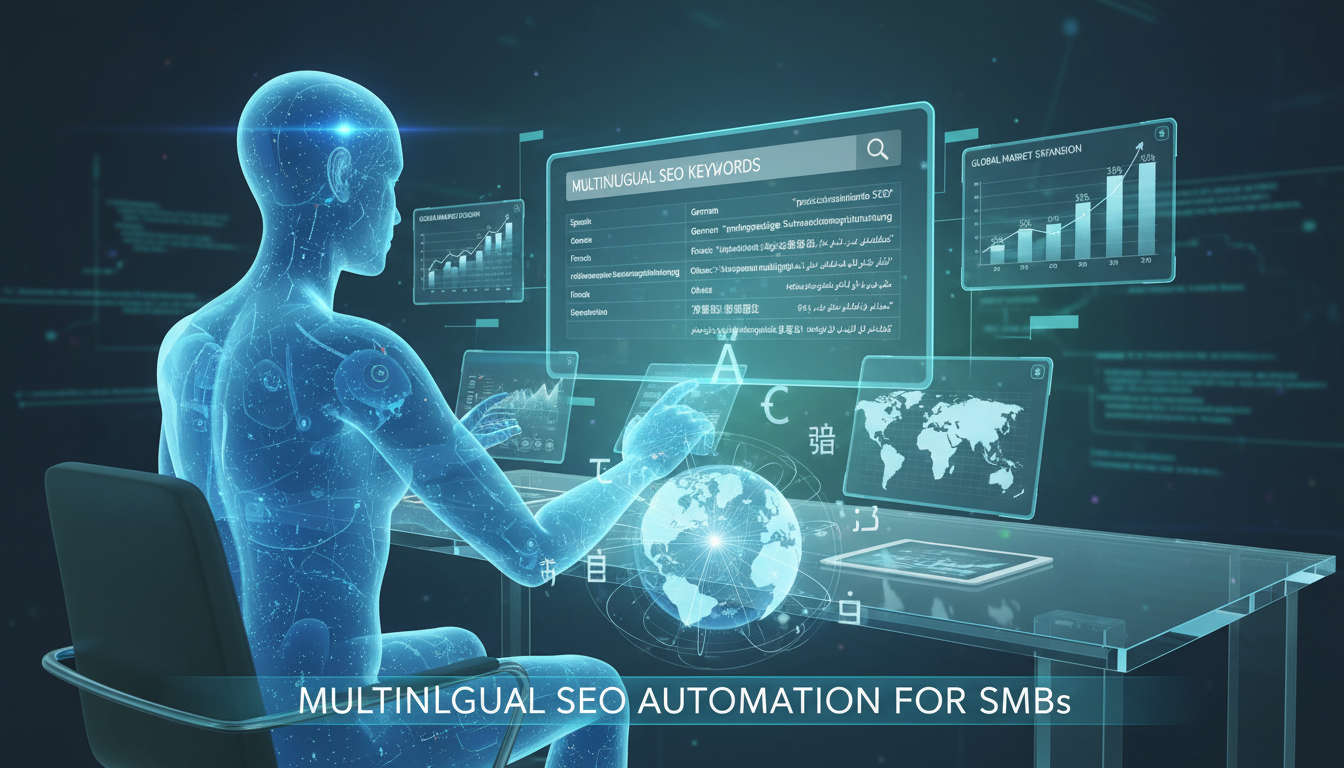
AI virtual employee researching multilingual SEO keywords with global market visuals and diverse language symbols.

The platform’s unique capabilities include language-specific URL structures, localised sitemap generation, and automatic language redirection for enhanced user experience. Moreover, these technical elements directly improve rankings and reduce bounce rates across international markets. Furthermore, Agents24x7’s integration approach means SMBs get strategic automation without requiring technical expertise. Consequently, businesses can focus on strategy whilst the AI handles implementation details across WordPress and Shopify environments simultaneously.

Shopify Multilingual SEO Automation Without Technical Complexity

Shopify multilingual SEO automation transforms how e-commerce businesses reach global customers. Moreover, the Agents24x7 Shopify app automatically translates product descriptions, meta tags, and category pages whilst maintaining SEO best practices specific to each target language. Furthermore, the system identifies and implements region-specific keywords that drive conversions rather than vanity traffic. Consequently, SMBs avoid wasting resources ranking for terms that don’t convert in specific markets.

The automatic hreflang tag implementation represents a crucial technical advantage. Additionally, these tags signal language and regional targeting to Google, which is critical for Shopify stores serving multiple markets. Moreover, the platform manages localised product metadata, ensures URL consistency across language versions, and maintains technical SEO integrity automatically. Furthermore, cultural nuances in product positioning are preserved, preventing the bland translations that damage brand credibility. Consequently, each market experiences content that resonates locally whilst maintaining global brand consistency.

Shopify store dashboard showing multilingual product listings with automatic translations and SEO metadata tags.

SMBs using the Shopify plugin reach new markets without hiring multilingual content teams or translation specialists. Moreover, the affordability advantage is substantial compared to traditional solutions like Weglot or Langify combined with manual SEO work. Furthermore, monitoring and performance tracking for multilingual campaigns happens directly from the Shopify dashboard. Consequently, business owners maintain visibility and control whilst the AI handles execution across dozens of language combinations simultaneously.

WordPress Multilingual Blog Automation at Scale

The Agents24x7 WordPress plugin transforms multilingual blog automation into a scalable, automated process. Moreover, agents autonomously research blog topics, identify high-intent multilingual keywords, and generate original SEO-optimised articles in English, then automatically translate, adapt and publish them across language-specific WordPress sites or subdomains. Furthermore, editorial consistency is maintained across languages whilst respecting cultural nuances in each market. Consequently, SMBs previously unable to afford dedicated multilingual content teams now access professional-grade blog automation at just £20 per month.

The platform handles complex multilingual SEO elements automatically. Additionally, translated category pages, tags, and internal linking structures strengthen SEO across the entire blog network. Moreover, canonical tags, language-specific XML sitemaps, and WordPress plugin compatibility are managed without manual intervention. Furthermore, Yoast SEO integration ensures that both English and translated content meet search engine requirements. Consequently, SMBs achieve proper technical implementation that competitors often overlook.

Daily content publishing capability sets Agents24x7 apart significantly. Moreover, agents publish 10+ blog posts per day across multiple languages, building authority and topical relevance faster than competitor sites. Furthermore, this consistency compounds over months, creating substantial ranking advantages. Additionally, starting with AI agent setup requires just five minutes with no coding, making implementation genuinely accessible. Consequently, businesses begin generating international traffic within 60-90 days rather than months of planning.

Multilingual Keyword Research and Market-Specific Optimisation

AI agents conduct multilingual keyword research that transcends simple translation. Furthermore, translating English keywords directly fails because search intent, user behaviour, and keyword volume vary significantly by language and region. Consequently, proper research requires understanding actual search patterns in Spanish, German, French, Chinese, and Arabic-speaking regions – tasks that demand local market expertise.

Agents24x7 agents research actual search patterns, competitor positioning, and user intent in target markets automatically. Moreover, the platform identifies low-competition, high-intent keywords in each language that SMBs can realistically rank for without established domain authority in that market. Additionally, keyword strategy differs substantially between markets – British English versus American English, Mexican Spanish versus European Spanish – and agents adapt accordingly. Furthermore, content density, keyword placement, and semantic variations are optimised automatically according to language-specific SEO best practices. Consequently, SMBs avoid costly mistakes that undermine international rankings.

Backlink opportunities are also market-specific and identified by the AI research process. Moreover, agents inform content strategy to support natural link acquisition in each language community. Furthermore, this data-driven approach transforms content creation from guesswork into strategic planning. Additionally, calculating ROI demonstrates how proper multilingual keyword strategy delivers 3x to over 8x returns depending on vertical and execution quality. Consequently, the keyword investment yields measurable business outcomes, not vanity metrics.

Measuring ROI of Multilingual SEO Automation

Comprehensive multilingual SEO automation delivers substantial financial returns for SMBs. Moreover, industry statistics show that automated systems accelerate ROI achievement by publishing consistently across languages, reducing time-to-ranking from months to weeks. Furthermore, increased organic traffic reaches up to 70 percent growth within 12 months, whilst improved conversion rates improve 2-3x with localised optimised content. Consequently, customer acquisition costs through organic channels decline significantly.

The financial calculations demonstrate accessibility. Moreover, the £20 per month Agents24x7 subscription costs compare favourably to hiring translators (£15-30 per hour), content writers (£25-50 per hour), and SEO specialists (£50-100 per hour). Furthermore, 100+ daily automated tasks at scale generate thousands of ranking opportunities monthly. Additionally, compound effects emerge quickly: an SMB generating 50 multilingual blog posts monthly sees traffic from new markets within 60-90 days. Consequently, ROI becomes apparent early, enabling SMBs to justify continued investment and expand into additional markets.

Reducing bounce rates by 20 percent through culturally appropriate localised content directly improves conversion metrics. Moreover, this reduces wasted ad spend on international campaigns significantly. Furthermore, extended market reach without proportional cost increases means scaling becomes feasible. Consequently, SMBs compete with enterprises despite limited budgets.

Overcoming Common Multilingual SEO Mistakes with Automation

Manual approaches frequently fail because specific multilingual SEO pitfalls plague businesses lacking automation. Moreover, inconsistent hreflang implementation causes duplicate content issues and indexation problems across language versions. Furthermore, poor URL structure strategies – mixing languages, inconsistent subdomain approaches – undermine technical SEO foundations. Additionally, missing or incorrectly translated metadata, cultural insensitivity in localisation, and keyword cannibalization across language versions compound problems. Consequently, Agents24x7 prevents these mistakes automatically through AI validation before publishing.

Cultural appropriateness remains critical. Moreover, agents ensure that translated content remains contextually relevant, avoiding literal translations that damage brand perception irreversibly. Furthermore, automatic duplicate content prevention through proper canonical tag setup and language-specific XML sitemaps maintains search engine health. Additionally, treating all markets identically – a common SMB mistake – gets avoided through Agents24x7’s market-specific content adaptation. Consequently, each language version reflects local market understanding rather than generic translation.

The statistics underscore the problem: 25 percent of B2B marketers lack clear multilingual content strategy, making costly mistakes that drain resources. Moreover, major brands have faced poor international rankings despite massive budgets due to implementation errors. Furthermore, Agents24x7 provides built-in strategy through intelligent automation, preventing these expensive mistakes. Consequently, SMBs avoid pitfalls that established companies have already learned the hard way.

Getting Started with 24/7 Multilingual SEO Automation

Implementing multilingual SEO automation with Agents24x7 begins with straightforward setup for both Shopify and WordPress environments. Moreover, connecting the platform, selecting target languages and markets, and configuring keyword strategies takes minimal time. Furthermore, prioritising which markets to enter first based on search volume, competition levels, and business focus ensures resources concentrate where they matter most. Consequently, SMBs start strategically rather than attempting simultaneous expansion everywhere.

The onboarding workflow allows agents to learn business models, understand brand voice, analyse existing content, and research competitor positioning before autonomous content generation begins. Moreover, SMBs define content categories, publishing frequency, and language-specific customisations during setup. Furthermore, monitoring initial performance through multilingual SEO metrics – rankings by language, traffic by source language, conversion by market – reveals what works quickly. Additionally, optimisation cycles refine keyword targeting, content style, and market focus based on real performance data. Consequently, continuous improvement emerges from day one rather than months of manual adjustment.

Timeline expectations remain realistic: consistent 24/7 automation produces measurable traffic growth within 60-120 days. Moreover, no existing content requires translation because agents start fresh with market-optimised content. Furthermore, teams need no technical expertise or SEO knowledge beyond basic setup. Additionally, the £20 per month investment is accessible to bootstrap startups, making global market entry genuinely affordable. Consequently, SMBs move from dreaming about international expansion to executing it, watching organic traffic grow as the AI publishes continuously across languages and markets without interruption.

Posted on Leave a comment

Local SEO Automation for Brick-and-Mortar SMBs

A modern small brick-and-mortar business storefront with digital AI automation icons and local SEO symbols, illustrating smart AI-driven local marketing for SMBs.

Why Local SEO Matters for Your Physical Store

Local SEO automation transforms how brick-and-mortar businesses compete in their markets. Furthermore, the data behind local search is compelling – 46% of Google searches have local intent, and 78% of local mobile searches result in offline purchases within 24 hours. This means customers searching nearby are high-intent buyers ready to visit your store, and consequently, ranking in those results directly drives foot traffic and revenue.

Additionally, 76% of people who search for something nearby visit a business within a day, making local search action-driven rather than aspirational. Moreover, 97% of consumers check a company’s online presence before visiting, whilst 86% rely on Google Maps to find local businesses. The competitive advantage? Ranking first in local results captures 24.4% of all clicks. For brick-and-mortar SMBs competing against larger chains, dominating local search becomes the most cost-effective way to attract customers. However, achieving this dominance requires consistent, automated local SEO practices that most businesses handle manually – or not at all.

The Manual Local SEO Challenge SMBs Face

Effective local SEO involves overwhelming manual tasks that drain time and resources. Specifically, maintaining Name-Address-Phone (NAP) data consistency across 50+ citation directories, manually updating Google Business Profile information, responding to reviews and Q&A posts, and monitoring local rankings across multiple locations. Furthermore, building local citations one by one and managing schema markup all require technical expertise or significant time investment.

Consequently, many busy shop owners skip these tasks entirely because they require ongoing maintenance alongside running their stores. Moreover, the compounding problem becomes apparent quickly: inconsistent citations across directories hurt both rankings and customer trust. Customers seeing conflicting business information elsewhere online question your legitimacy. Furthermore, Google’s algorithms penalise inconsistent data, lowering your local search visibility. This creates a vicious cycle where the very businesses most needing local SEO automation – time-starved SMBs – cannot realistically manage all these tasks manually.

How AI Agents Automate Local SEO at Scale

AI agents function as virtual employees working 24/7 on your local SEO. Unlike traditional tools requiring constant user input, AI agents learn your business, understand local SEO best practices, and execute tasks autonomously without human intervention. Consequently, they handle 100+ tasks per day, making real-time updates to Google Business Profile, submitting consistent citations to directories, generating location-specific content, and managing local customer interactions.

Furthermore, these agents operate continuously, even outside business hours, ensuring your local presence stays fresh and competitive. This represents a fundamental shift from manual updating: instead of you managing citations and posts, the AI manages them intelligently based on your business goals. Moreover, platforms like Agents24x7 provide WordPress and Shopify integration at just £20/month, making autonomous local SEO automation accessible to SMBs who previously couldn’t afford agencies. Additionally, this differs from traditional SEO tools that require constant user input – AI agents learn, adapt, and optimise continuously without needing direction for every task.

AI virtual assistant or digital agent autonomously managing Google Business Profile and local SEO tasks, futuristic interface, data flow, business environment background

Google Business Profile Automation for Local Search Dominance

Google Business Profile (GBP) optimisation stands as the cornerstone of local SEO success. Furthermore, claimed GBP listings receive 7x more clicks than unclaimed listings, making optimisation non-negotiable for businesses competing locally. However, maintaining an active, optimised profile requires consistent effort that automation transforms from burden to advantage.

Automation handles keeping business information accurate and updated across all edits, automatically posting updates and offers to maintain freshness, and generating AI-powered responses to customer reviews and Q&A posts without manual work. Moreover, AI agents add high-quality photos and product images whilst tracking performance metrics in real-time. Consequently, they learn your business category, local keywords, and customer interaction patterns to optimise GBP content automatically. Furthermore, an active, optimised GBP directly improves local search rankings because Google signals that your profile is maintained and trustworthy. Additionally, automated posts announcing new products, special offers, and hours updates keep customers informed whilst signalling freshness to Google’s algorithm.

Building Consistent Local Citations Autonomously

Local citations represent business information (NAP and other details) listed on third-party directories, aggregators, and industry-specific platforms. Furthermore, citation consistency matters significantly because Google algorithms rely on consistent data across directories to verify your business legitimacy and improve local search visibility. Consequently, building local citations manually involves identifying relevant directories, submitting information individually to each one, and updating changes across all platforms whenever details change – a tedious, error-prone process.

AI automation transforms this challenge completely. Moreover, AI agents identify the highest-impact citation directories for your industry and location, submit consistent NAP information automatically, monitor for citation errors or inconsistencies, and update citations whenever business information changes. Furthermore, this automation prevents ranking penalties associated with conflicting or outdated citations. Additionally, automated citation building supports both single-location and multi-location SMBs scaling their local presence efficiently. The 5-step onboarding process for Agents24x7 makes implementing local SEO automation straightforward, with no technical knowledge required.

Small brick-and-mortar local business storefront with customers, showing foot traffic and local SEO concept, sunny day, inviting atmosphere, urban setting

Location-Specific Schema Markup Without Code

Schema markup represents structured data telling search engines detailed information about your local business, location, and offerings. Furthermore, LocalBusiness schema, FAQPage schema with local questions, AggregateOffer schema for promotions, and Event schema for local events all improve how search results display and boost local visibility. However, traditional schema markup implementation requires developers and technical expertise, creating barriers for SMBs.

No-code schema automation solves this completely. Consequently, AI agents analyse your business category, location, offerings, and local keywords to generate appropriate schema automatically. Moreover, they deploy the schema to your website without requiring code changes, update schema when business information changes, and monitor schema effectiveness through search visibility improvements. Additionally, proper schema markup helps both traditional search engines and AI-powered search systems surface your business effectively. This becomes increasingly important as AI overviews gain prominence in search results. Furthermore, with Agents24x7 on Shopify or WordPress integration, SMBs gain schema automation without hiring developers.

Setting Up Local SEO Automation in Minutes

Implementing local SEO automation through Agents24x7 via WordPress or Shopify takes minutes rather than days. Furthermore, setup involves connecting your Google Business Profile to the platform (simple authentication), entering your business category and location details so the AI understands your business context, and selecting priority citation directories and local SEO tasks. Consequently, you configure automation rules determining the frequency of GBP posts, citation updates, and review monitoring, then review initial optimisations the AI recommends.

The entire setup remains no-code and transparent. Moreover, the AI begins working immediately after setup, handling Google Business Profile updates, citation submissions, and local schema automatically. Additionally, the flat £20/month pricing covers unlimited tasks and 24/7 operation across WordPress and Shopify sites. This makes autonomous local SEO automation accessible to businesses of any size. Furthermore, security and data accuracy remain paramount, with the platform displaying all automated actions for review. Consequently, SMBs regain control over their local online presence without technical knowledge or expensive agency fees.

Measuring Local SEO Success Through Automation Insights

Proving local SEO automation delivers results requires tracking key metrics: local search rankings for target keywords, Google Business Profile views and actions (clicks to website, direction requests, calls), foot traffic and in-store conversions, citation accuracy and consistency across directories, review volume and sentiment, and local organic traffic to your website. Furthermore, local SEO automation platforms provide automated dashboards displaying these metrics in real-time, eliminating manual tracking and reporting.

Moreover, automation insights reveal valuable patterns – which local keywords drive traffic, which times of day customers engage most, which citations provide the most visibility. Consequently, AI agents use these insights to refine their automation continuously, testing new local keywords, adjusting posting schedules, and prioritising high-performing citation directories. Additionally, improved metrics connect directly to business outcomes: higher foot traffic, more phone calls and direction requests, increased in-store sales, and competitive dominance in local search. AI chatbots boost local SEO and reviews, increasing local enquiries by 30% when combined with local SEO automation. Furthermore, realistic timelines show results within 2-4 weeks for citation consolidation and 4-8 weeks for ranking improvements.

Conclusion

Local SEO automation bridges the gap between SMBs and large enterprises competing for local customers. Furthermore, AI agents handle 100+ tasks daily – from Google Business Profile updates to citation management and schema markup – delivering results at £20/month without code or technical expertise. Consequently, brick-and-mortar businesses gain the automation infrastructure previously available only to large corporations with dedicated SEO teams. Moreover, the combination of autonomous operation, consistent execution, and measurable results makes local SEO automation essential for SMBs wanting to dominate local search and drive consistent foot traffic.

Start automating your local presence today. Explore the Agents24x7 Shopify app for e-commerce brands or the WordPress plugin for content-driven local businesses. Additionally, both platforms integrate seamlessly with your existing setup, launching local SEO automation within minutes. Your local search dominance awaits – let AI agents handle the work whilst you focus on serving customers.

Posted on Leave a comment

AI Product Description Automation for E-Commerce

Abstract digital illustration of AI automation for e-commerce product descriptions with shopping cart, products, and SEO symbols in vibrant colours

Why Product Descriptions Matter for E-Commerce Success

Product descriptions are fundamentally critical to e-commerce success, yet many SMBs underestimate their impact on both search visibility and customer conversions. Furthermore, well-crafted product descriptions directly influence SEO rankings, conversion rates, and customer trust, making them essential assets in your digital storefront. Consequently, automating this process with AI product description automation enables growing businesses to scale SEO-optimised copy across hundreds of products whilst maintaining consistency and quality.

The numbers tell a compelling story. Average e-commerce conversion rates hover around 2-3%, yet businesses with optimised product pages consistently reach 4% or higher, representing substantial revenue uplift. Moreover, AI-generated descriptions paired with smart recommendations can boost average order values by approximately 11% and conversion rates by 26%, according to industry data. Additionally, 91% of consumers prefer personalised shopping experiences – and quality product descriptions are the foundation of that personalisation.

However, most SMBs face a persistent challenge: maintaining consistent, SEO-optimised descriptions across growing product catalogues without hiring expensive copywriters. Furthermore, the ideal product description length of 150-300 words balances SEO effectiveness with user engagement, yet many small businesses fail to implement this standard across their stores. Consequently, the need for automation solutions that deliver both SEO quality and at-scale consistency has never been more urgent.

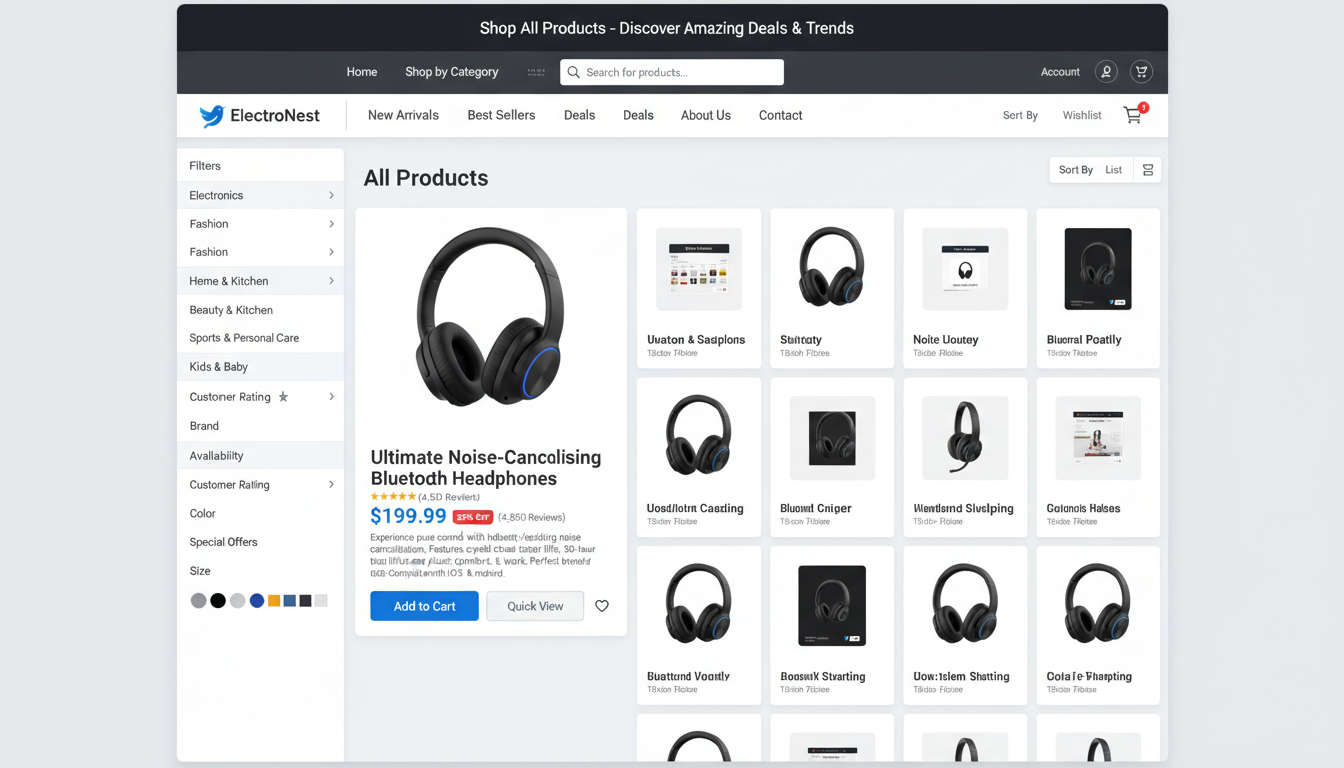
E-commerce product page showing multiple products with compelling SEO optimised descriptions.

Understanding AI-Powered Product Description Automation

Modern AI description automation technology represents a fundamental shift in how e-commerce businesses scale content. Furthermore, large language models analyse product data, competitor descriptions, and keyword research to produce unique, SEO-optimised copy that resonates with target audiences. Additionally, these systems extract product attributes, materials, dimensions, and benefits from raw data sources, transforming them into compelling narratives that drive both search visibility and conversions.

The critical distinction lies between generic AI-generated content and specialised e-commerce AI that genuinely understands conversion psychology, feature-benefit mapping, and customer objection handling. Moreover, sophisticated platforms learn from best-performing descriptions in your industry, creating descriptions specifically tailored to your market segment. Consequently, the scalability advantage becomes immediately apparent: AI can generate hundreds or thousands of product descriptions in hours rather than weeks.

Common concerns about AI-generated content quality and plagiarism risks merit serious consideration. However, modern AI platforms trained specifically on e-commerce data address these concerns through sophisticated safeguards. Furthermore, these systems integrate keyword research, competitor analysis, and SEO best practices directly into the generation process, ensuring output meets professional standards whilst avoiding common pitfalls.

Shopify AI Product Description Automation Setup and Integration

Shopify stores benefit particularly from automated product descriptions given the platform’s focus on ease of use and scalability for SMBs and startups. Additionally, the no-code setup process requires no coding knowledge, making automation accessible to businesses without technical expertise. Furthermore, integrating AI tools into Shopify enables seamless automation that respects your store’s architecture and workflow.

The implementation workflow is straightforward: connect your Shopify product catalogue, define description parameters including length and tone, set keyword targets, and trigger automated generation. Moreover, you can leverage Shopify’s built-in product data fields, collections, and categories to inform intelligent AI generation. Consequently, bulk description updates become feasible, allowing version control and A/B testing of variations to identify what drives the highest conversion rates.

Agents24x7 integrates with Shopify as both a WordPress and Shopify plugin, enabling seamless automation across your store operations. Furthermore, customising generated descriptions to match your brand voice whilst maintaining SEO optimisation is straightforward through intelligent parameter adjustment. Additionally, Shopify merchants can optimise descriptions specifically for the platform’s search functionality and integration with sales channels like Facebook and Instagram, maximising reach across your entire digital presence.

WooCommerce AI Product Description Configuration

WooCommerce’s open-source flexibility appeals particularly to SMBs seeking control combined with powerful SEO capabilities and integration with WordPress. Moreover, installing the Agents24x7 WordPress plugin provides no-code AI automation that works seamlessly with existing WooCommerce themes and extensions. Furthermore, the plugin maps WooCommerce product attributes, taxonomies, and custom fields to intelligent AI generation parameters.

The workflow involves connecting your WooCommerce database, importing product catalogues, configuring description length and tone preferences, and setting SEO keyword targets before executing bulk generation. Additionally, WooCommerce’s deep integration with WordPress SEO plugins like Yoast provides enhanced optimisation opportunities when paired with AI automation. Consequently, descriptions automatically populate product categories, tags, and meta fields whilst maintaining consistency across your entire product range.

WooCommerce-specific considerations including managing product variations, handling multiple product languages, and ensuring descriptions work across diverse WooCommerce themes require attention. However, modern automation tools handle these complexities gracefully. Furthermore, versioning and rollback capabilities ensure you can maintain product description consistency across WooCommerce and any multisite installations, protecting against errors while enabling continuous improvement.

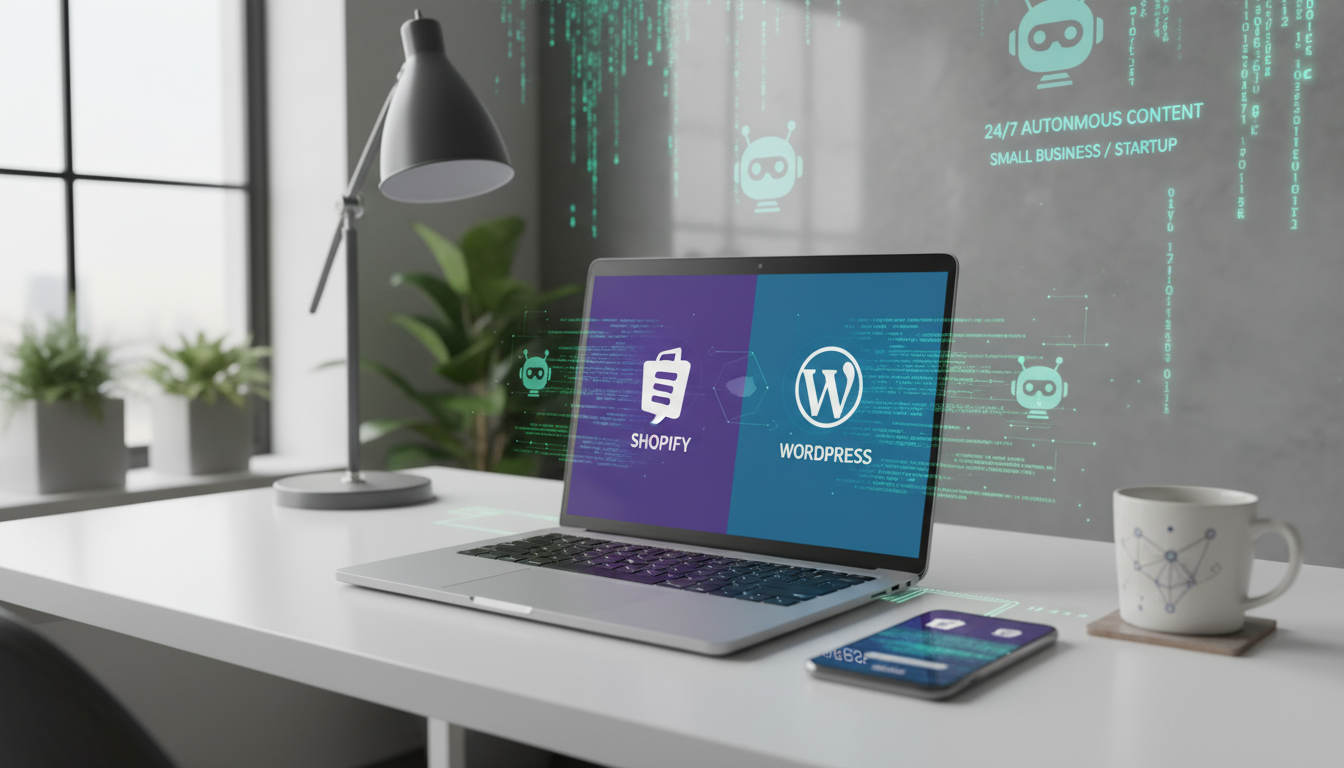
Small business owner using AI-powered automation tools on laptop, analysing Shopify and WooCommerce product descriptions on screen.

Real-World SMB Case Studies and Results

Concrete examples demonstrate the tangible impact of automated product descriptions on real businesses. Furthermore, a Shopify fashion retailer implementing AI-powered descriptions increased product page traffic by 47% within three months whilst boosting conversion rates by 23%. Moreover, this business scaled from manual copywriting of 50 products monthly to 300 automated descriptions, freeing the marketing team to focus on strategic growth initiatives.

A WooCommerce electronics seller faced a different challenge: scaling from 200 to 2000 products without proportional cost increases. However, implementing AI automation at £20/month made this expansion feasible and profitable. Additionally, the business achieved 35% organic search traffic improvement and reduced time-to-market for new products from two weeks to two days, fundamentally transforming their competitive position.

Multi-channel sellers using Agents24x7 across both Shopify and WooCommerce simultaneously experience remarkable efficiency gains. Consequently, these businesses report 40-60% reduction in content creation costs, 55% improvement in average order values, and significantly reduced return rates due to clearer, more comprehensive product information. Furthermore, the £20/month investment delivers ROI measured in weeks rather than months, making it an exceptionally cost-effective growth lever for ambitious SMBs.

SEO Optimisation Strategies Within AI Product Descriptions

Quality AI tools conduct comprehensive keyword research to identify primary and long-tail keywords relevant to each product, ensuring your descriptions capture search demand. Furthermore, AI naturally incorporates keywords without stuffing, maintaining readability whilst improving search visibility across competitive terms. Additionally, optimal description length of 150-300 words balances keyword density with user engagement, preventing both under-optimisation and algorithmic penalties.

Structured data markup and schema implementation represent another critical advantage of modern product description generators. Moreover, AI-generated descriptions integrate seamlessly with product schema that search engines actively reward, improving visibility in rich snippets and knowledge panels. Consequently, unique, descriptive content outperforms templated descriptions in search rankings, giving AI-powered stores substantial competitive advantages in organic visibility.

Mobile optimisation within descriptions ensures AI output performs seamlessly across devices where most shopping now occurs. Furthermore, descriptions targeting featured snippet opportunities through clear feature-benefit formatting and question-answer structures capture high-value search positions. Additionally, monitoring description performance using SEO tools and analytics provides ongoing insights for optimisation, creating a continuous improvement cycle that compounds advantage over time.

Conversion Optimisation Through AI-Enhanced Product Copy

Beyond SEO, AI descriptions drive conversions through sophisticated understanding of persuasive copy psychology and customer decision-making patterns. Moreover, modern AI understands how to address customer objections, highlight benefits over features, and create subtle urgency or trust signals that encourage purchase decisions. Furthermore, AI descriptions incorporate proven copywriting frameworks including AIDA (Attention, Interest, Desire, Action) and PAS (Problem, Agitation, Solution).

AI analyses competitor descriptions and top-performing products within your category to identify conversion patterns worth replicating in your own copy. Additionally, clarity and scanability in descriptions – achieved through bullet points, logical paragraph flow, and strategic formatting – encourage purchases by reducing friction in the decision-making process. Consequently, descriptions answering common customer questions reduce purchase hesitation and cart abandonment, directly impacting your bottom line.

Descriptions incorporating trust markers like certifications, warranties, or customer satisfaction guarantees subtly build confidence in potential buyers. Furthermore, descriptions personalised for different audience segments when data permits create more resonant messaging. Additionally, A/B testing capabilities enabled by AI generating multiple description variations allow scientific validation of what resonates most with your target customers, continuously improving conversion performance.

Scaling to 100+ Tasks Daily and Cost Effectiveness

Agents24x7’s £20/month pricing model represents unprecedented cost-effectiveness compared to traditional copywriting approaches. Furthermore, traditional approaches involving hiring copywriters cost £500-2000+ monthly for quality product description services. However, Agents24x7 operates as a virtual employee agent working autonomously 24/7, generating descriptions continuously without human intervention costs or operational overhead.

The mathematics of scale become immediately apparent: whilst a copywriter produces 5-10 product descriptions daily at £50 per description (totalling £1000-2000 monthly for 50 products), Agents24x7 handles unlimited volumes at flat £20/month. Moreover, SMBs can reinvest these substantial savings into additional marketing channels rather than allocating precious budget to content creation overhead. Consequently, the autonomous nature means descriptions generate overnight, on weekends, and during off-hours without additional resource allocation.

As product catalogues grow, AI-powered automation remains cost-flat whilst human labour costs increase proportionally – a critical competitive advantage for scaling businesses. Furthermore, a Shopify store with 500 products seeing even 2% conversion improvement translates to thousands in additional monthly revenue, far exceeding the £20 investment. Additionally, this cost structure democratises professional product copywriting for startups and SMBs previously unable to afford such services, fundamentally levelling the competitive playing field.

Best Practices and Avoiding Common Pitfalls

Success with AI automation requires attention to fundamental data quality: ensure product data entered into systems is accurate, complete, and properly formatted for AI to generate quality output. Furthermore, setting clear brand voice and tone guidelines before automation ensures generated descriptions reflect your identity. Additionally, reviewing initial batches of AI-generated descriptions before publishing at scale catches errors and inconsistencies early.

The danger of complete hands-off automation without human oversight deserves emphasis: tone mismatches, factual errors, or missed SEO opportunities can undermine results. However, implementing quality control processes – sampling generated descriptions, monitoring customer feedback, and iterating on AI parameters – mitigates these risks effectively. Consequently, the optimal approach balances automation efficiency with strategic human oversight at critical checkpoints.

Common pitfalls include over-reliance on generic AI without e-commerce-specific training and failing to incorporate competitive research into parameters. Moreover, neglecting mobile optimisation in generated copy limits reach across devices where most shopping occurs. Furthermore, regularly updating descriptions as products, seasons, or market conditions change ensures automation remains current and relevant. For comprehensive guidance on implementation strategy, see our related resource on AI Agent Setup: Shopify & WordPress Quick Start, which covers five-minute setup for both platforms.

Integration With Broader E-Commerce Marketing Automation

AI product description automation fits seamlessly into comprehensive e-commerce marketing strategies and broader automation ecosystems. Furthermore, product descriptions support email marketing campaigns, social media content, and paid advertising across Google Shopping, Facebook, and Instagram. Additionally, AI-generated descriptions provide foundational content that repurposes easily across different channels without recreating from scratch each time.

Descriptions enhance SEO benefits across your entire site: improving product page rankings boosts domain authority and internal link structure that benefits category pages and homepage rankings collectively. Moreover, leveraging generated descriptions to create blog posts, buying guides, or category content provides broader SEO value beyond individual product pages. Furthermore, detailed descriptions reduce support inquiries by addressing customer questions proactively.

For businesses seeking comprehensive automation across their entire e-commerce operation, exploring AI Product Descriptions Shopify WooCommerce provides detailed implementation guidance. Additionally, Agents24x7’s integration across WordPress and Shopify ecosystems enables seamless connections to existing marketing stacks. Consequently, consistent, automated description updates support omnichannel retail strategies where product information appears consistently across multiple customer touchpoints, creating unified brand experiences.

Start Automating Today

AI product description automation represents a transformative opportunity for SMBs operating on Shopify and WooCommerce. Furthermore, by combining SEO optimisation with conversion psychology, autonomous generation, and affordable £20/month pricing, AI automation democratises professional product copywriting at unprecedented scale. Additionally, implementing Agents24x7 enables rapid growth without proportional cost increases, delivering both ranking improvements and revenue uplift whilst freeing teams to focus on strategic initiatives rather than repetitive copywriting tasks. Begin your automation journey today and discover how your e-commerce business can scale efficiently at the pace your ambitions demand.

Posted on Leave a comment

Calculate AI Agent ROI: SMB Savings Guide

A modern small business team collaborating with AI technology overlays showcasing productivity, automation, and cost savings in a professional workspace

Why SMBs Struggle to Justify AI Investments

Small business founders face a fundamental challenge: they cannot see concrete ROI data before committing to AI agent investments. Most SMB decision-makers lack frameworks for calculating returns on artificial intelligence, consequently leading to hesitation despite substantial potential savings. Furthermore, the gap between enterprise AI solutions with per-seat pricing and affordable, all-inclusive platforms has created confusion about what’s actually achievable. Research consistently demonstrates that SMBs achieve 15-20% operational cost savings with AI implementation, yet many struggle to quantify this benefit before purchase. However, with Agents24x7 priced at just £20/month, the barrier to proving ROI is now minimal, allowing businesses to start small and scale confidently. The broader pain point remains unchanged: SMBs need a simple, data-driven approach to measure success, track time savings, and justify technology investments to stakeholders.

Understanding the Core ROI Formula

The fundamental ROI calculation for AI agent investments follows this formula: ROI (%) = (Total Benefits – Total Costs) / Total Costs × 100. Each component requires clear definition and careful measurement. Total Benefits encompass labour cost reductions, revenue gains, and improved operational efficiency; meanwhile, Total Costs include implementation fees, monthly subscriptions, and often-overlooked expenses like training and setup time. Furthermore, using the £20/month Agents24x7 pricing as a baseline dramatically improves ROI outcomes compared to traditional enterprise solutions costing hundreds monthly. Consider this worked example: a business investing £20/month whilst saving £500 monthly in labour costs through AI-driven content automation would calculate ROI as (£500 – £20) / £20 × 100 = 2,300%. Consequently, SMBs achieving even modest automation can see 200-500% ROI within just 3-6 months. However, the mathematics becomes even more compelling when you factor in that Agents24x7 automates 100+ daily tasks including blog writing, research, and customer support. Break down each calculation component in accessible language to help your team understand why affordable AI agents deliver such compelling financial returns.

A small business owner analysing financial charts and data on a laptop, showing ROI calculations on AI investments

Measuring Time Savings and Labour Cost Reductions

Quantifying time savings generated by AI agents requires understanding which tasks consume the most resources in your business. Common high-impact processes include scheduling and calendar management, email processing, customer support responses, bookkeeping tasks, marketing automation, and autonomous blog post creation. Realistic time-saving metrics demonstrate that standard automation delivers 20+ hours monthly savings, whilst content creation automation alone provides 57+ hours monthly in labour recovery. Furthermore, SMBs must calculate their internal hourly labour cost by dividing total payroll plus overheads by annual working hours, then multiplying this figure by hours saved monthly. For example, if an SMB saves 20 hours monthly at an effective hourly cost of £25 (accounting for fully-loaded employee expenses), that represents £500 monthly in labour cost reductions. Consequently, this recurring monthly saving directly translates to annual labour recovery of £6,000. However, Agents24x7’s capacity for producing 100+ tasks daily and autonomous content writing for WordPress and Shopify sites multiplies time savings significantly, creating compounding ROI benefits that accelerate over time. Track these metrics religiously to build credible business cases for stakeholder approval.

Calculating Payback Period and Break-Even Analysis

The payback period formula is straightforward: Total Implementation Cost ÷ Monthly Net Benefit (monthly savings minus ongoing costs). Understanding payback period matters crucially to SMBs because it demonstrates how quickly an investment pays for itself before generating profit. With Agents24x7, implementation cost is typically minimal (often £0 with onboarding support) whilst monthly cost remains just £20. For a business saving £400 monthly from time savings and content automation, the payback is practically immediate – the investment essentially pays for itself within days. Furthermore, break-even analysis differs from payback period by identifying when cumulative benefits exceed cumulative costs over longer timeframes. Consequently, even businesses saving modest 4-5 hours weekly achieve positive ROI within the first month. However, consider this comparison: traditional software solutions might charge £500+ upfront plus £100/month subscription, whereas Agents24x7 costs nothing upfront and £20/month flat-rate. For a typical SMB saving £500 monthly through AI-driven process automation, annual ROI would be (£6,000 – £240) / £240 × 100 = 2,400%. This demonstrates why affordable AI agents fundamentally transform SMB business economics and decision-making timelines.

Real SMB Examples and Case Study ROI Calculations

Examining realistic SMB scenarios across different business models reveals how substantially different organisations benefit from AI agent deployment. Consider a content marketing agency with 2 staff members using Agents24x7 to autonomously research competitors, identify target keywords, and publish 100+ SEO blog posts monthly. This agency previously required 40 hours weekly of staff time for content research, writing, and publishing. Furthermore, with AI agents handling these processes, they now save 40 hours weekly – approximately £2,000 monthly in labour costs (at £25/hour fully-loaded cost). Consequently, their annual ROI calculation becomes (£24,000 – £240) / £240 × 100 = 9,900%. However, different business models achieve equally impressive but distinct outcomes.

A diverse small business team collaborating happily around a table with laptops, discussing effectiveness of AI agents automating tasks

An e-commerce Shopify store automating customer support responses, inventory alerts, and product description creation might save 15 hours weekly and £1,200 monthly – yielding 480% annual ROI. Furthermore, a service-based business with WordPress sites automating blog scheduling, social media posting, and lead nurturing saves 25 hours weekly and £1,500 monthly, producing 600% annual ROI. Consequently, these examples demonstrate that SMB readers likely see their own business situation reflected in these calculations. Moreover, different business types achieve substantial but varied outcomes, proving that AI agent ROI is achievable across diverse industries and operational models.

Beyond Time Savings: Quantifying Secondary Benefits

ROI analysis extending beyond direct labour cost reductions must include secondary benefits that compound financial returns significantly. Quality improvements emerge immediately: reduced human error, consistent output standards, and improved customer satisfaction translate to higher retention rates – typically 10-15% improvement in customer lifetime value. Furthermore, revenue impact should not be overlooked, as faster response times often improve conversion rates by 5-10%, better content and marketing strategy enable profitable upsells, and 24/7 operational capacity opens new customer acquisition opportunities. Research demonstrates that SMBs report 15-20% revenue growth from AI deployment, showing that total ROI extends far beyond simple cost savings. Consequently, when secondary benefits are included alongside time savings, ROI calculations for AI agents often exceed 300-500% annually – making them among the highest-return business investments available.

For content-focused businesses specifically, consistent autonomous blog publishing (100+ posts monthly via Agents24x7) drives organic traffic growth, improving long-term SEO value and reducing customer acquisition costs significantly. Consider a business with average customer lifetime value of £5,000 that retains 5% more customers through improved support: for a business with 100 active customers, this represents £25,000 in additional annual revenue. However, calculating these secondary benefits conservatively prevents overpromising results, so use 50% of projected benefits in your ROI calculations initially, then update as actual performance data accumulates over 2-3 months of deployment.

Building Your Custom AI Agent ROI Calculator

Providing SMBs with a step-by-step framework enables independent ROI calculation using spreadsheets or simple templates. Furthermore, the calculator structure should include three sections: Input (current team size, average hourly fully-loaded cost, monthly tasks volume, specific processes to automate, expected time savings percentage), Calculation (current monthly labour cost for target processes, projected time savings hours, labour cost savings, AI agent subscription cost, net monthly benefit, annual ROI percentage, payback period in months), and Output (visual representation, sensitivity analysis showing ROI under conservative and optimistic scenarios). Building this in Excel or Google Sheets takes minimal time. Consequently, the importance of conservative estimates cannot be overstated – they prevent overoptimistic projections that damage credibility.

Key variables SMBs should adjust include their own hourly labour costs, realistic time-saving percentages (starting with 30-50% for first-year implementation), and Agents24x7 pricing at £20/month. Furthermore, use the calculator for scenario planning: “What if we automate social media posting?” “What if we enable autonomous blog writing?” The calculator becomes a living document that improves with actual usage data. Encourage SMBs to update projections with real performance metrics after 2-3 months of AI agent deployment, creating a feedback loop that validates and refines ROI projections continuously. For related guidance on measuring AI content benefits, see our detailed article on how to calculate AI agent ROI for your content strategy.

Common Mistakes in AI ROI Calculations and How to Avoid Them

SMBs frequently make seven critical errors when calculating AI agent ROI that undermine credibility. Mistake 1: Underestimating implementation and training time – many businesses fail accounting for onboarding, staff training, and initial setup, which can add weeks of indirect costs. Account for these realistically, typically 2-4 weeks for most deployments. Mistake 2: Overestimating time savings percentages – businesses sometimes project 80-90% automation, but realistic first-year savings are typically 30-50% as systems mature. Conservative estimates prove preferable and more defensible to stakeholders. Furthermore, Mistake 3: Ignoring ongoing costs like system maintenance, staff training updates, and platform upgrades accumulate significantly. However, with Agents24x7’s all-inclusive £20/month model, these hidden costs are largely eliminated.

Mistake 4: Failing to measure baseline accurately – without clear baseline metrics of current time and cost, proving ROI becomes impossible. Mistake 5: Not accounting for quality improvements and secondary benefits – focusing only on time savings misses 50%+ of actual ROI. Include customer satisfaction improvements, error reduction, and revenue uplift in calculations. Furthermore, Mistake 6: Short timeframe evaluation – assessing ROI over only 1-2 months misses compounding benefits; recommend 3-6 month measurement periods. Consequently, Mistake 7: Silo thinking – calculating ROI for one process instead of viewing AI agents holistically across 100+ daily tasks they handle together. Create a validation checklist before presenting ROI figures to stakeholders, helping your business arrive at credible, defensible calculations. For Shopify-specific ROI guidance, explore our comprehensive guide on calculating AI agent ROI for your Shopify store.

The Financial Advantage of All-Inclusive AI Agent Platforms

Comparing all-inclusive AI agent platforms like Agents24x7 (£20/month, 100+ tasks daily, WordPress and Shopify integration, no per-seat pricing) against fragmented alternatives reveals decisive financial advantages for SMBs. Traditional solutions add complexity and cost: Salesforce Agentforce plus per-user licensing, point solutions requiring custom integration work, or hiring virtual assistants at £1,500-£3,000 monthly. Furthermore, a business using 5-10 different point AI tools could pay £200-£500 monthly plus significant integration overhead, whereas Agents24x7 costs £20/month all-inclusive. Consequently, per-seat pricing destroys ROI for SMBs scaling from 2 to 5 employees, whilst Agents24x7’s flat-rate model maintains ROI as your business grows without cost explosion.

Hidden ROI advantages emerge from integrated WordPress and Shopify plugins: no custom development required, instant deployment, and faster time-to-value compared to point solutions. However, the comparative mathematics proves decisive: Agents24x7 shows 2,400% annual ROI for a typical SMB (£240 annual cost versus £6,000+ annual labour savings), whilst traditional solutions with per-seat costs show only 150-300% ROI at identical usage levels. Moreover, SMBs choosing all-inclusive platforms prove ROI faster, scale without cost explosion, and reinvest savings into growth rather than supporting complex AI toolstacks. To explore WordPress-specific automation benefits, visit our guide on automating SEO product descriptions with AI agents.

Throughout your AI agent adoption journey, remember that calculating ROI is now accessible to every SMB. With clear formulas, realistic data showing 15-20% cost savings and 20+ hours monthly time gains, and affordable platforms like Agents24x7 at £20/month, small businesses can confidently project 200-500% annual returns within months. Furthermore, you can start measuring today using your custom calculator to unlock your competitive advantage. Finally, whether you’re using our Shopify app for AI automation or our WordPress plugin for autonomous content creation, the ROI framework remains consistent and powerful.

Posted on Leave a comment

AI Agent Setup: Shopify & WordPress Quick Start

Modern digital workspace with laptop and smartphone displaying Shopify and WordPress logos, symbolising AI content automation and 24/7 autonomous content creation for small businesses and startups

Why AI Content Agents Matter for Your Online Store

Small business owners and startups face an inescapable challenge: creating consistent, high-quality content whilst managing limited budgets and team capacity. Consequently, many abandon content marketing altogether, missing significant SEO and customer engagement opportunities. However, AI content agents fundamentally transform this equation by functioning as virtual employees that work 24/7 without salary, breaks, or burnout. These intelligent systems autonomously produce 100+ tasks daily, handling everything from keyword research to complete blog publication – all for just £20 monthly.

Consider the traditional cost structure: hiring a full-time content creator typically costs £25,000–£40,000 annually, plus benefits and management overhead. Furthermore, the AI agent approach compresses these costs dramatically whilst dramatically increasing output. Moreover, AI agents operate without human limitations, generating consistent daily content that compounds your SEO visibility month after month. Your competitors gain competitive advantage through this velocity of publishing, whilst you maintain proportional headcount. Significantly, these autonomous agents research competitors, identify content gaps, and discover high-intent keywords without your manual intervention.

The integration with WordPress and Shopify removes technical barriers entirely, meaning any business owner – regardless of technical expertise – can deploy this capability immediately. Additionally, the AI learns your business, understands your products or services, and creates content that genuinely resonates with your target audience. Consequently, you’re not just publishing content; you’re publishing strategically optimised, relevant content at scale.

Prerequisites and Platform Preparation Before Installation

Before installing your AI content agent, you’ll need minimal preparation, yet having everything organised ensures smooth setup. First, ensure you have active admin access to either your Shopify store or WordPress site. Secondly, familiarise yourself with your platform’s app or plugin installation location – this foundational knowledge makes the process seamless. Furthermore, review your store credentials and understand your platform’s permission structure.

For Shopify users, verify you can access your admin dashboard and navigate to the Apps section. Additionally, confirm you have authority to install third-party applications. For WordPress users, confirm you can access your admin dashboard and the Plugins section. Moreover, check whether your hosting provider supports plugin installation – most modern hosts do without additional configuration.

Create a simple checklist before proceeding: active admin account access, familiarity with your app/plugin directory, five uninterrupted minutes, and a clear understanding of your main business keywords or product categories. Consequently, when you begin installation, you’ll move through each step confidently without hesitation.

Installing Your AI Content Agent on Shopify in Under Five Minutes

Setting up your no-code AI agent onboarding on Shopify is remarkably straightforward, requiring only admin access and basic navigation skills. First, log into your Shopify admin dashboard using your credentials. Next, locate the “Apps and sales channels” section in the left sidebar and click it. Furthermore, select “App and sales channels store” to access the marketplace.

In the search bar, type “Agents24x7” or search for AI content agent solutions. Review the app details, including ratings, reviews, and required permissions – transparency here builds confidence. Additionally, examine the pricing structure and feature list to confirm alignment with your needs. Once satisfied, click the “Add app” button and authorise the necessary permissions. Consequently, the app dashboard appears directly in your Shopify admin, ready for configuration.

The entire process typically takes between three and five minutes from start to finish. Moreover, no coding knowledge is required whatsoever; you’re simply clicking buttons and reviewing information. After installation, the AI agent automatically connects to your Shopify store data, accessing product information, inventory details, and business context. Significantly, this integration means the AI understands your offerings intimately and creates relevant, targeted content from day one. Visit the Shopify App Store to install Agents24x7 and begin immediately.

Setting Up Your AI Agent on WordPress in Under Five Minutes

WordPress users benefit from equally simple setup, with no coding required whatsoever. Firstly, log into your WordPress admin dashboard using your credentials. Subsequently, navigate to “Plugins” in the left sidebar and click “Add New.” Furthermore, in the search bar, search for “Agents24x7” or look for the official AI agent plugin.

Review the plugin details, ratings, and compatibility information to ensure it aligns with your WordPress version and hosting environment. Additionally, read the description thoroughly to understand what features are included. Once confirmed, click “Install Now,” followed by the “Activate” button. Consequently, the plugin appears in your WordPress dashboard immediately, ready for initial setup and configuration.

Similar to Shopify installation, this process takes approximately three to five minutes and requires zero technical expertise. Moreover, WordPress handles all backend processes automatically; you’re simply authorising installation and activation. After activation, the AI agent automatically analyses your WordPress site structure, existing content, and post history. Significantly, this analysis helps the agent understand your content style, audience voice, and niche focus, enabling more personalised content creation. Access the WordPress plugin directory to install Agents24x7 today.

Conducting Your First Keyword Research and Store Connection

Dashboard view of AI content agent showing keyword research and blog post publishing, modern UI, clean design, business analytics

With installation complete, your next step involves AI agent configuration and keyword research automation. Access the agent’s dashboard from your Shopify or WordPress admin and navigate to the “Keyword Research” or “Content Strategy” section. Furthermore, input your primary business keywords, product categories, or industry focus areas. Consequently, the AI begins analysing search volume, competition levels, and user intent for thousands of related keywords.

The agent then connects to your store’s product data or inventory system, developing a comprehensive understanding of your offerings. Moreover, it researches competitor websites, identifies content gaps in your niche, and prioritises keywords with high commercial intent. Additionally, the AI clusters related keywords together, creating topical hierarchies that inform content creation strategy. This keyword research automation eliminates the tedious manual work previously requiring hours of research tools and spreadsheet management.

For example, if you sell eco-friendly home products, the AI might discover keyword clusters around “sustainable household items,” “eco-friendly cleaning products,” and “zero-waste home living.” Furthermore, it identifies secondary keywords like “plastic-free kitchenware,” “biodegradable trash bags,” and “sustainable home office solutions.” Significantly, this foundational research typically takes just a few minutes and sets your AI agent up for success in creating genuinely relevant, high-converting content that attracts qualified traffic.

Publishing Your First SEO-Optimised Blog Post Automatically

With keyword research complete, your AI agent is ready to create and publish its first SEO-optimised blog post entirely autonomously. Access your agent’s dashboard and locate the “Generate” or “Publish” button, or configure an automatic daily publishing schedule. Consequently, the AI springs into action, synthesising your keyword research, competitor analysis, and store data to craft a complete, publication-ready blog post.

Behind the scenes, the AI intelligently optimises content for primary and secondary keywords without keyword stuffing or awkward phrasing. Furthermore, it creates compelling headlines that capture search intent whilst intriguing potential readers. Additionally, the agent structures content with proper heading hierarchies (H2s, H3s, and so forth), ensuring both search engines and humans find content easy to navigate. The AI includes strategic internal linking opportunities, relevant meta descriptions, alt text for images, and mobile-friendly formatting – all the technical SEO elements that boost rankings.

After content generation, the AI automatically publishes your post to your blog, where it appears live immediately. Moreover, you can monitor its performance through your platform’s built-in analytics and track metrics like impressions, clicks, and reader engagement. For deeper insights into SEO strategy, review how to use AI for SEO to boost your traffic, which explains comprehensive approaches to maximising search visibility through AI-powered content strategies. Significantly, once published, this first post becomes the foundation for your AI agent’s ongoing 100+ daily task capability, with subsequent posts building upon this initial success continuously.

Configuring Your Agent for Maximum Performance and Customisation

Small business owner using AI virtual employee on laptop with Shopify and WordPress logos visible, digital marketing concept, friendly workspace

Optimising your AI agent configuration ensures maximum performance aligned with your business goals. Access your agent’s settings dashboard and explore brand voice customisation options, which allow you to define the tone, style, and personality of generated content. Furthermore, set your preferred publishing schedule – whether daily, multiple times weekly, or custom frequencies that match your content strategy. Consequently, the AI agent aligns its output rhythm with your marketing calendar and audience expectations.

Additionally, configure content categories and topic prioritisation so the agent focuses on business areas most relevant to your growth objectives. For instance, if you operate an ecommerce store selling athletic wear, prioritise keywords around “running shoes,” “fitness apparel,” and “athletic performance” rather than general lifestyle topics. Moreover, connect the agent to your analytics platforms for performance tracking and continuous improvement insights. Furthermore, specify target audience demographics, preferred content length, keyword density targets, and SEO parameters that align with your technical requirements.

Importantly, all AI agent configuration happens through intuitive dashboard toggles and input fields requiring absolutely no coding or technical expertise whatsoever. Additionally, test your configured agent with a single post before enabling full automation – this verification ensures everything aligns with your expectations. Learn more about optimising your content approach by exploring how to automate SEO content calendar planning, which demonstrates how consistent scheduling compounds your content marketing results over time. Significantly, customisation is entirely optional; the agent works effectively with default settings for users preferring simplicity.

Monitoring Results and Scaling Your Content Operations

After your AI agent publishes consistently for several weeks, monitoring performance becomes essential for optimisation and scaling. Access your performance dashboard to review publication dates, content topics, keyword targeting, and engagement metrics. Furthermore, track key performance indicators including organic blog traffic, search engine rankings, click-through rates, user session duration, and conversion rates. Consequently, you develop concrete data about which content resonates most with your audience and drives measurable business results.

The AI learns from this performance data continuously, improving content quality and strategic direction month after month. Moreover, gradually expand the agent’s responsibilities by adding new product categories, business areas, or content verticals. Additionally, experiment with different content strategies and let the AI test variations autonomously, identifying winning approaches through data-driven iteration. For enhanced internal linking strategy, discover how to automate internal linking with AI for SEO, which amplifies your site authority and improves search rankings significantly.

Understand content velocity: consistent daily posting compounds SEO benefits exponentially over weeks and months, not linearly. Consequently, expect meaningful search engine visibility improvements typically appearing after 8–12 weeks of consistent publishing. Furthermore, the 100+ daily tasks capability means simultaneous automation of blog creation, email content, social media posts, and additional marketing tasks. Significantly, your £20 monthly investment compounds into substantial long-term ROI as traffic and revenue grow, fundamentally transforming your content marketing economics and competitive positioning within your industry.

Posted on Leave a comment

Automate Schema Markup for Shopify & WordPress

Dynamic digital concept of AI automation in ecommerce with Shopify and WordPress icons and JSON-LD schema data flow

Understanding Schema Markup and Its Impact on Search Visibility

Schema markup is the invisible language that tells search engines exactly what your products, services, and content are about. Furthermore, it unlocks rich snippets that can boost your click-through rates by up to 40%. JSON-LD, Google’s recommended format for schema markup automation, is structured data that sits silently in your website’s code, transforming raw product data into search engine gold.

Currently, 72.6% of first-page Google results use schema markup, yet only around 30% of websites implement it today. This represents a significant competitive advantage for businesses willing to take action. Unlike traditional meta tags that provide limited context, structured data automation gives search engines comprehensive understanding of your content’s meaning. Consequently, businesses that automate schema deployment can now compete with larger brands without expensive development costs. At just £20 per month, AI-powered solutions have democratised what was previously accessible only to enterprise organisations.

A business owner looking at a laptop screen displaying structured data, JSON-LD code blocks glowing on screen, representing automated SEO schema markup process for ecommerce website optimisation

The difference between schema markup and traditional meta tags is profound. Traditional SEO relied on keywords in titles and descriptions, but search engines couldn’t determine product prices, availability, or customer ratings without schema. Moreover, AI automation overcomes the traditional barrier of complex manual schema implementation, enabling SMBs and startups to deploy enterprise-level structured data infrastructure effortlessly.

The Performance Advantage Rich Snippets Deliver

Rich snippets transform how your listings appear on search results pages. FAQ rich snippets achieve 87% average click-through rate compared to standard results at 41% CTR – more than double the engagement. Additionally, pages with schema markup see 40% higher CTR overall, whilst aggregate rating schema increases product page traffic by 20%. Review schema boosts organic visibility by up to 30%, meaning more qualified users discover your products before clicking.

However, the real power lies in user psychology. Rich snippets displaying star ratings, prices, and availability build trust before users even click your link. They answer critical questions upfront: “Does this product have good reviews?” “How much does it cost?” “Is it in stock?” Consequently, users are significantly more confident clicking results with rich snippets, leading to higher engagement rates. This improved CTR becomes a ranking signal – Google interprets higher click-through rates as indicators of relevance, causing schema-optimised pages to gradually climb search rankings over time.

A modern ecommerce storefront with products, star ratings, prices, and availability information displayed as rich snippets on search engine results page, visually highlighting enhanced search visibility and customer trust through schema markup

Schema Markup Types Essential for Ecommerce Platforms

Different schema types serve specific purposes in your SEO strategy. Product schema includes name, image, price, availability, SKU, and brand information – essential for any ecommerce store. Review and AggregateRating schema display customer ratings and review counts directly in search results. Additionally, LocalBusiness schema helps brick-and-mortar or location-based ecommerce enterprises capture local search traffic.

Organization schema builds trust signals for brand credibility, whilst Article schema powers your content marketing strategy. BreadcrumbList schema improves site navigation presentation in search results, and FAQ schema displays frequently asked questions as rich snippets. Category and Collection schema help search engines understand your product groupings. Furthermore, each schema type influences different metrics – Product schema drives ecommerce CTR, Article schema boosts blog traffic, and FAQ schema captures voice search queries.

Shopify themes include some product schema automatically in JSON-LD format, yet often lack comprehensive coverage for reviews, ratings, and complex nested schemas. Similarly, WordPress requires plugins or manual implementation for most schema types. This is where AI schema markup solutions fill critical gaps by dynamically pulling product data, prices, inventory, and reviews from your store database, keeping schema current without manual updates. Automated deployment ensures your schema markup reflects real-time changes instantly across hundreds or thousands of pages.

Manual Implementation Challenges and Why Automation Matters

Traditional schema implementation creates three barriers for small businesses. First, you can hand-code JSON-LD for every page – an expensive, time-consuming process. Second, you hire a developer to manage it – increasing operational costs significantly. Third, you purchase enterprise tools – often beyond SMB budgets. Most critically, schema markup requires strict JSON formatting, correct schema.org types, and validation to avoid errors that nullify the entire markup.

Maintenance compounds these challenges exponentially. When product prices change, stock updates, or new reviews arrive, your schema must update simultaneously or it becomes outdated and unreliable. With hundreds or thousands of products, manual maintenance becomes impossible to sustain. Consequently, most small businesses never implement schema at all, accepting lower search visibility by default. However, AI automation eliminates these barriers entirely, making schema implementation accessible and sustainable for businesses without dedicated technical teams.

How AI Automation Generates and Maintains Schema at Scale

AI virtual employees generate JSON-LD markup without requiring any coding knowledge. The process begins with onboarding, where the AI learns your business, product catalogue, brand voice, and specific requirements. Subsequently, the system analyzes each page – product listings, blog posts, categories – and generates appropriate, complete JSON-LD markup using real-time data from your CMS database. Furthermore, the AI continuously monitors your store, automatically updating schema whenever product prices, descriptions, images, reviews, or availability change.

Deployment happens seamlessly through plugins and APIs requiring no manual intervention after initial setup. Moreover, the AI learns which schema types are appropriate for each content type, applying them consistently across thousands of pages. Machine learning ensures data accuracy by cross-referencing page content with structured data fields. Consequently, the entire system operates 24/7 autonomously, handling 100+ tasks daily – including schema generation, updates, and optimisation – even outside business hours. This transforms schema markup from a technical burden into a “virtual SEO employee” that removes maintenance responsibilities entirely from your team.

Shopify Integration for Automated Product Schema

Automated schema markup Shopify solutions integrate seamlessly with your store’s existing infrastructure. Many Shopify themes include basic Product schema in JSON-LD format, but lack comprehensive coverage for reviews, ratings, detailed pricing rules, and nested objects like aggregateRating and seller information. AI automation fills these gaps by generating complete Product schema with all essential fields. Furthermore, the system accesses Shopify’s product database via API or plugin to extract real-time data and automatically inject enhanced schema into product pages, collection pages, and homepage elements.

The technical flow works like this: AI fetches product metadata and review data from Shopify, generates valid JSON-LD markup, and deploys it into the page’s head section or through a plugin. Consequently, whenever products update, new reviews arrive, or prices change, the automation triggers instantly, ensuring schema remains current. Additionally, this approach reduces app load time compared to heavy third-party schema apps, maintains native integration with Shopify’s development APIs, and works compatibly with all Shopify themes. The Agents24x7 Shopify plugin combines AI automation with seamless deployment at just £20/month, enabling every store owner to implement enterprise-level schema infrastructure.

WordPress Implementation for Autonomous Schema Markup

WordPress traditionally suffers from lower schema adoption compared to Shopify because the platform doesn’t include comprehensive schema by default. WordPress schema automation solves this by deploying a plugin that hooks directly into your content publishing workflow. When you publish a blog post, product listing, or page, the AI automatically generates appropriate schema markup based on content type and metadata.

The system extracts key data – post title, content, author, featured image, publication date, categories, tags, custom fields – and structures it into valid JSON-LD for Article, BlogPosting, Product, LocalBusiness, or other relevant types. Moreover, WordPress’s flexibility allows schema customisation per content type, enabling different rules for blogs versus products versus service pages. Furthermore, the plugin stores generated schema within WordPress post metadata or custom fields, making it version-controlled and auditable. Compatibility with page builders like Elementor, Divi, and Gutenberg ensures your schema works with existing workflows. The Agents24x7 WordPress plugin provides autonomous schema generation integrated directly into your publishing process at £20/month.

No-Code Schema Customisation and Advanced Features

Modern AI schema automation platforms offer no-code interfaces where non-technical teams customise markup without touching code. Consequently, you can select which schema types to generate, set default values for missing fields, prioritise data sources, and establish rules for when schema applies to specific pages. Additionally, advanced features enable conditional schema generation – different markup based on page type or category – nested objects like Reviews within Products, multi-language support for global ecommerce, and dynamic pricing rules with sale information and expiration dates.

Natural language instructions guide AI schema generation: instruct the system to prioritise 5-star reviews or include competitor price comparisons. Furthermore, you monitor and adjust customisations through a user-friendly dashboard with real-time validation against Google’s schema guidelines. No-code customisation democratises schema markup, allowing SMBs to compete with enterprise implementations without hiring developers. Most importantly, AI learning capabilities mean the system improves automatically, suggesting new schema types and fields based on industry best practices.

Measuring ROI and Tracking Schema Performance

Track schema markup impact using Google Search Console and analytics tools. Primary metrics include CTR improvement (expecting 25-40% gains for rich snippets), impression increases (schema-eligible pages appear in more varied queries), position improvements (schema pages tend to rank higher), and organic traffic growth. Consequently, you establish a baseline by measuring metrics for 2-4 weeks before deployment, then compare against the same period after implementation, accounting for seasonal variations.

Use Google Search Console to identify pages gaining rich results, monitor impressions by search type, and filter performance data to schema-enabled pages. Additionally, set up specific goals in Google Analytics for tracking rich snippet impressions via UTM parameters or event tracking. FAQ and review schema typically show faster CTR improvements, whilst Product schema benefits compound over time. However, remember that schema doesn’t guarantee rankings but creates conditions for higher CTR, which Google factors into rankings. Quarterly reviews of schema performance help you adjust schema types based on search data insights.

Building Long-Term Competitive Advantage Through Consistent Schema Deployment

Consistent schema markup across your digital presence creates sustained competitive advantage. Since only 30% of websites use schema, consistent implementation immediately differentiates your store in search results. Competitors neglecting schema accept lower CTR on equal-ranking pages; consequently, your schema-optimised pages see 25-87% CTR improvement on the same positions, gradually winning organic traffic over time. Furthermore, as automation ensures every new product and blog post automatically receives proper markup, your advantage compounds with each publication.

This addresses the SMB challenge perfectly: where enterprises deploy schema through expensive manual processes or costly agencies, you achieve at-scale coverage through £20/month automation, levelling the competitive playing field. Moreover, as search engines increasingly rely on AI and semantic understanding for AI overviews and generative results, schema markup becomes more valuable for helping AI systems understand and prioritise your content. Consequently, businesses establishing schema automation now build institutional knowledge and data quality habits that compound for years.

Explore complementary resources like our guide to AI on-page SEO automation, which covers meta tags and schema markup together, or learn about automating FAQ generation and schema for Shopify. Both articles provide strategic insights for building comprehensive SEO automation. Ultimately, consistent schema markup combined with other on-page SEO tactics creates the foundation for sustained organic growth aligned with modern search engine algorithms and user expectations.

Conclusion

Automating schema markup transforms SEO from a manual, technical burden into a scalable, autonomous process delivering measurable results. With 25-87% CTR improvements, higher search visibility, and sustained competitive advantage, schema automation justifies its implementation for any ecommerce business. At just £20 per month through Agents24x7’s Shopify app or WordPress plugin, you can deploy enterprise-level structured data infrastructure previously accessible only to large corporations. Start automating your schema markup today and capture the organic growth your competitors are leaving on the table.

Posted on Leave a comment

Automate Internal Linking with AI for SEO

A modern digital workspace showing AI-powered automation connecting internal links across WordPress and Shopify sites with SEO optimisation elements and technology workflow visualisation.

Internal linking is critical for SEO success, yet most businesses handle it manually, wasting hours on repetitive work. Discover how AI-powered automation can identify, create, and optimise internal links across your Shopify and WordPress sites in minutes, boosting crawlability, distributing authority efficiently, and improving search rankings whilst saving you significant time and resources.

Why Internal Linking Matters More Than You Think

Internal linking remains one of the most underutilised yet powerful SEO levers available to modern businesses. Furthermore, this strategic practice distributes link equity and PageRank throughout your website, strengthening weaker pages and creating a hierarchical content structure that search engines can easily navigate. Consequently, pages that receive multiple internal links from authoritative sources gain significantly more ranking potential than isolated content pieces.

Beyond link equity, internal linking dramatically improves search engine crawlability by reducing click depth and ensuring comprehensive indexation of all content. However, many SMBs and startups overlook this critical aspect, allowing content to remain buried under layers of navigation. Additionally, descriptive anchor text and strategic linking patterns help search engines understand content context and build topical authority signals that reinforce your expertise in specific niches.

User engagement benefits are equally compelling. Internal links reduce bounce rates by guiding visitors toward relevant related content, whilst increasing session duration and steering users toward conversion pages. Moreover, well-structured internal linking supports both algorithmic rankings and real user behaviour, creating a virtuous cycle where improved rankings drive traffic, and engaged users signal content quality to search engines. Statistics show that internal linking can boost organic traffic by up to 25% within three months, making it an essential component of any comprehensive SEO strategy.

The Hidden Cost of Manual Internal Linking

SMBs and startups face significant challenges when managing internal linking manually, particularly the time-intensive nature of reviewing hundreds or thousands of pages to identify linking opportunities. Furthermore, understanding semantic relationships between content pieces requires substantial cognitive load and domain expertise that most teams lack. Consequently, this process becomes exponentially more difficult as content grows, creating bottlenecks that prevent scaling.

Human error and inconsistency plague manual linking efforts. However, inconsistent anchor text, poor link placement decisions, and relevance judgements that miss the mark can harm SEO performance and create navigation friction for users. Additionally, dedicated team members spending weeks on linking tasks represents lost opportunity cost – time that could be invested in strategic SEO work, content creation, or business development.

The scalability problem becomes particularly acute for ecommerce stores, tech blogs, and content-heavy sites. Moreover, content gaps in internal linking strategies emerge when relying solely on manual efforts, and missed linking opportunities represent lost ranking potential. Research indicates that manual internal linking can consume weeks to cover large content inventories, reducing agility and preventing businesses from responding quickly to content updates or market changes.

How AI-Powered Internal Linking Automation Works

AI-powered internal linking automation represents a fundamental shift in how modern SEO teams approach this critical task. Furthermore, natural language processing and machine learning algorithms analyse semantic relationships between content pieces far beyond simple keyword matching, understanding context, intent, and topical relevance. Consequently, these systems can identify non-obvious linking opportunities that human reviewers consistently miss.

A dynamic AI-powered system analysing content and generating internal links across website pages, showing semantic connections and digital network

The automation workflow operates systematically across five core stages: content analysis, opportunity identification, link suggestion generation, anchor text optimisation, and performance tracking. However, the real intelligence lies in how AI systems maintain contextual relevance, understanding the intent of both source and target pages to ensure links add genuine value rather than being forced or manipulative. Additionally, machine learning continuously learns from linking patterns, user engagement data, and ranking changes to refine suggestions over time.

Dynamic content environments present particular challenges for traditional approaches. Moreover, AI handles new pages published regularly by automatically discovering new linking opportunities without manual intervention, maintaining optimal internal link density and topical alignment. This semantic internal linking capability ensures that as your content inventory grows, your linking strategy grows with it, maintaining consistency and strategic alignment across hundreds or thousands of pages simultaneously.

Agents24x7 Internal Linking AI for WordPress and Shopify

Agents24x7 operates as an AI virtual employee specifically designed for SEO automation on WordPress and Shopify platforms, priced affordably at just £20 per month. Furthermore, the platform autonomously identifies internal linking opportunities by scanning your entire site structure, understanding content themes, and recognising semantic relationships between pages that would require hours of human analysis. Consequently, what might take your team days to accomplish manually now happens in minutes.

A user-friendly dashboard interface for SEO automation tools on WordPress and Shopify with graphs, linking metrics, and AI performance tracking visuals

The platform automatically creates contextually relevant internal links with optimised anchor text, integrating seamlessly with WordPress and Shopify infrastructures without requiring technical coding knowledge. However, the true innovation lies in its no-code approach, making sophisticated internal linking automation accessible to SMBs and startups without developer resources. Additionally, Agents24x7’s capability to execute 100+ tasks daily enables rapid automatic internal linking implementation across large content inventories.

The platform learns your business context, competitor strategies, and SEO goals to refine linking decisions continuously. Moreover, its 24/7 autonomous operation ensures new linking opportunities are discovered and implemented automatically, even outside business hours. You can also access the Shopify app and WordPress plugin to streamline setup and integration. Furthermore, AI internal link building for Shopify and WordPress has never been more straightforward, with performance tracking that monitors which links drive engagement and ranking improvements.

Step-by-Step Setup Guide for Your Site

Implementing AI internal linking automation requires careful planning to ensure alignment with your business goals. Furthermore, review your site structure thoroughly, identifying key landing pages, pillar content, and priority areas for linking emphasis. Consequently, this foundational work ensures the AI system understands your content hierarchy and linking priorities from day one.

Installation begins with accessing either the WordPress plugin or Shopify app, followed by authentication and permission configuration. However, most SMBs complete this process within minutes, receiving clear guidance throughout the setup workflow. Additionally, configure Agents24x7 for your specific industry and content type, whether ecommerce product linking, blog content clustering, or service page hierarchies.

Set linking preferences carefully, including anchor text styles, maximum links per page, and priority areas for emphasis. Moreover, establish baseline metrics before automation begins, documenting current internal link count and existing linking patterns for comparison. Furthermore, monitor your dashboard features to review linking suggestions before implementation or enable fully autonomous operation as confidence builds. Start with high-authority pages first, gradually expanding automation as validation proves the system’s accuracy and alignment with your strategy.

Monitoring Performance and Refining Your Strategy

Effective monitoring transforms raw automation into strategic advantage. Furthermore, track key performance indicators including organic traffic growth, average session duration, pages per session, bounce rate changes, and keyword ranking improvements. Consequently, you’ll identify which internal linking strategy approaches generate the highest engagement and ranking gains.

Analytics integration reveals the correlation between linking changes and traffic improvements. However, Agents24x7 provides automated reporting on linking activity, including links created, anchor text distribution, and link effectiveness metrics. Additionally, conduct regular audits of generated links to ensure quality and relevance remain high, catching any suggestions that may not align perfectly with your strategy.

Use performance data to refine linking rules and priorities, teaching the AI system which patterns produce best results for your specific business. Moreover, gradually increase automation confidence as performance data validates the system’s decision-making quality. Furthermore, address seasonal variations and content updates that may require linking strategy adjustments, maintaining responsiveness to your business environment.

Common Pitfalls and How to Avoid Them

Over-linking represents the most common pitfall where excessive internal links dilute value and frustrate users. Furthermore, set appropriate density thresholds ensuring each link serves genuine user value rather than artificial inflation. Consequently, quality always trumps quantity in internal linking strategy.

Contextual misalignment occurs when AI systems suggest links between thematically unrelated content. However, prevent this through careful strategy configuration and regular audits of generated suggestions. Additionally, anchor text pitfalls emerge when repetitive or irrelevant patterns trigger spam signals, making natural, varied anchor text generation essential.

Orphaned content chains can develop where linking creates loops that don’t ultimately serve users or rankings effectively. Moreover, avoid focusing all internal links on commercial pages whilst neglecting informational content that builds authority and topical depth. Furthermore, maintain link freshness by regularly auditing old links and updating them as content changes, preventing broken internal links from damaging user experience.

Real Results from Automated Internal Linking

Compelling case studies demonstrate the real-world impact of AI-powered internal linking automation on SMB and startup performance. Furthermore, ecommerce brands report organic traffic improvements of 24% after implementing automated internal linking strategies. Consequently, these measurable gains validate the investment in automation technology.

Workflow efficiency gains are equally impressive. However, companies report 70% reductions in time spent on internal linking tasks when using AI automation, freeing teams for strategic work. Additionally, businesses discover 100% more keyword opportunities through rapid, systematic internal link deployment to previously unlinked content, revealing gaps that human teams had consistently missed.

WordPress and Shopify stores leveraging AI automation have scaled their linking strategies across hundreds or thousands of products and blog posts, achieving results previously impossible with manual linking. Moreover, SMBs with limited SEO teams used automation to punch above their weight, competing with larger competitors despite resource constraints. Furthermore, the reported +150K annual visits gains from enhanced internal link optimisation strategies demonstrate that automation doesn’t just save time – it delivers measurable business growth.

Transform Your SEO Strategy Today

AI-powered internal linking automation transforms SEO strategy from a time-consuming manual process into a scalable, continuously optimised system. Furthermore, Agents24x7 delivers this automation at just £20 monthly, enabling SMBs and startups to implement sophisticated strategies that rival enterprise-level efforts. Consequently, by automating link discovery, creation, and optimisation, you free your team to focus on strategy whilst driving measurable improvements in rankings, traffic, and user engagement.

Ready to revolutionise your internal linking strategy? Moreover, explore how automate internal linking capabilities can transform your site architecture and SEO performance. Get started today with Agents24x7 and discover why forward-thinking businesses trust AI automation to handle repetitive, high-impact SEO tasks.