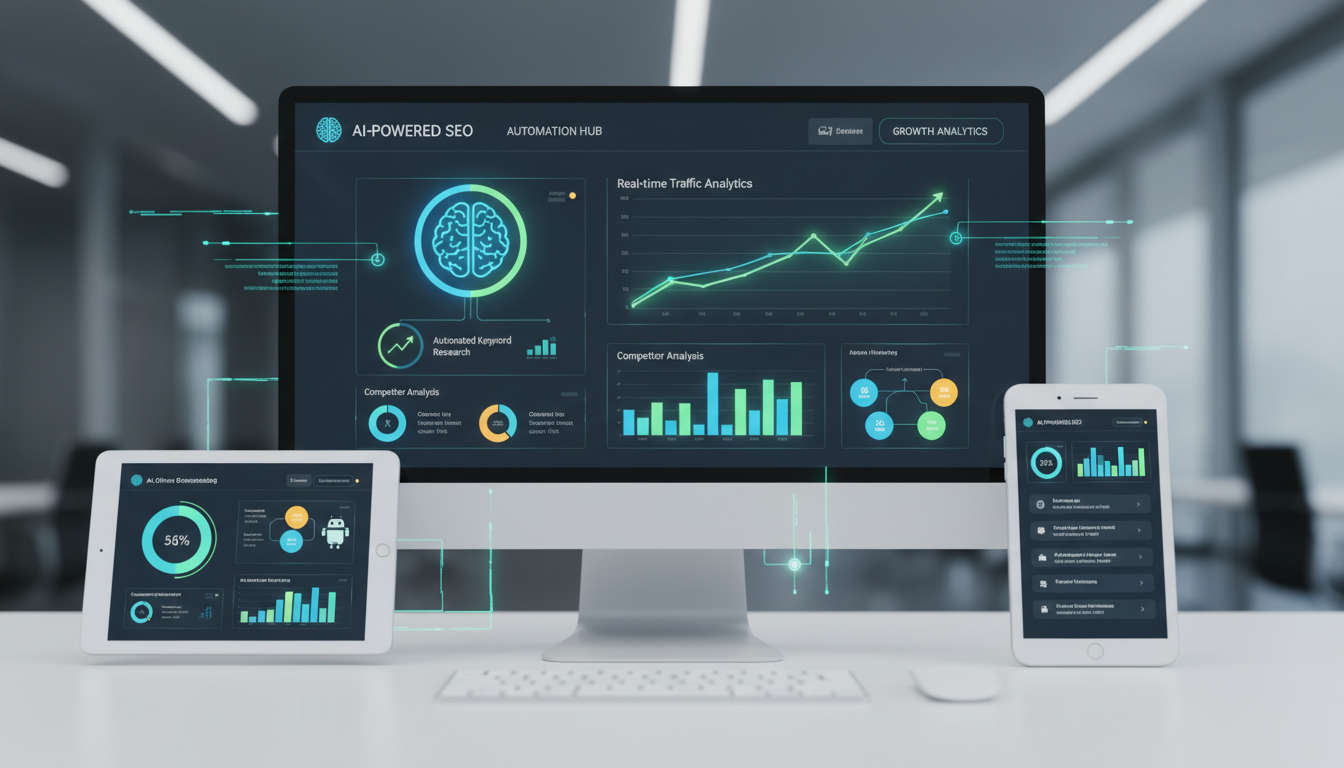
Why Manual SEO Reporting Is Costing Your Business Time and Money
Manual SEO reporting drains resources from strategic growth initiatives. Consequently, most SMBs and startups struggle with the time investment required to compile data from Google Analytics, Google Search Console, rank tracking tools, and backlink platforms weekly. Furthermore, 70% of marketers prioritise SEO yet spend 8-10 hours monthly on manual dashboards, spreadsheet updates, and PDF exports. Additionally, this fragmented approach leads to delayed insights and missed optimisation opportunities.
The opportunity cost is substantial. Time spent generating reports means less time available for content creation, strategy refinement, and actual business growth initiatives. Moreover, delayed insights prevent rapid response to ranking changes or traffic fluctuations. Consequently, stakeholders struggle to understand SEO ROI without automated reporting demonstrating value. Furthermore, this inefficiency becomes increasingly problematic as businesses scale across multiple websites or manage portfolios for clients. Therefore, automated reporting solutions become essential investments rather than nice-to-have luxuries.
Understanding AI-Powered SEO Dashboards and Real-Time Performance Tracking
AI-powered SEO dashboards fundamentally transform how organisations monitor organic performance. Unlike traditional reporting methods requiring manual data compilation, these dashboards automatically integrate data from multiple sources including Google Analytics 4, Google Search Console, rank tracking systems, and competitor monitoring tools into unified interfaces. Moreover, real-time capabilities enable instant visibility into organic traffic fluctuations, ranking changes, and emerging opportunities. Consequently, marketing teams respond faster to algorithm changes and performance shifts.

Machine learning algorithms identify performance patterns, predict future trends, and recommend optimisations based on historical data. Additionally, AI-driven anomaly detection alerts marketers to sudden performance shifts before they become critical issues. These dashboards provide customizable widgets, mobile-responsive layouts, and white-label capabilities particularly useful for agencies. Furthermore, they integrate natively with WordPress and Shopify ecosystems, connecting seamlessly with platform-specific SEO plugins and ecommerce metrics. Consequently, organic traffic growth trajectories, keyword ranking movements, backlink acquisition rates, and conversion contributions from organic search become instantly visible.
Key Metrics Every Dashboard Should Track for Measuring SEO Success
Automated SEO dashboards must monitor essential KPIs that demonstrate organic performance. Organic traffic volume serves as the foundation metric, with consistent month-over-month growth targets around 15% indicating successful strategies. Moreover, keyword rankings for both competitive terms and long-tail keywords require tracking, as long-tail keywords drive approximately 70% of search traffic. Additionally, click-through rates from search results matter significantly – first-position pages average 22% CTR versus 3-5% for lower positions.
Bounce rate monitoring identifies pages where visitors exit prematurely, indicating content or user experience issues requiring attention. Furthermore, conversion rate tracking connects organic visitors to actual business outcomes – essential for demonstrating SEO ROI to stakeholders. Consequently, businesses discover that small companies under £1M revenue see 2.6x ROI at 12 months, whilst the £1-10M band achieves strongest 3.3x ROI, making metric tracking business-critical. Additionally, backlink metrics including new links acquired, referring domain quality, and link velocity indicate authority growth. Core Web Vitals monitoring ensures loading speed remains under 2.5 seconds, interactivity under 200ms, and visual stability under 0.1.
How AI Agents Automate Weekly SEO Report Generation for WordPress and Shopify
AI agents work behind scenes automating SEO report generation specifically for WordPress and Shopify platforms. The workflow process involves AI agents automatically extracting data from integrated sources every 24 hours, calculating metric changes since the previous period, analysing performance against established benchmarks, and generating narrative summaries interpreting results. Moreover, these agents configure to focus on WordPress-specific metrics like blog post performance, page indexation, and internal linking structure. Additionally, Shopify-specific configuration addresses product page rankings, collection page optimisation, and ecommerce conversion attribution concerns.
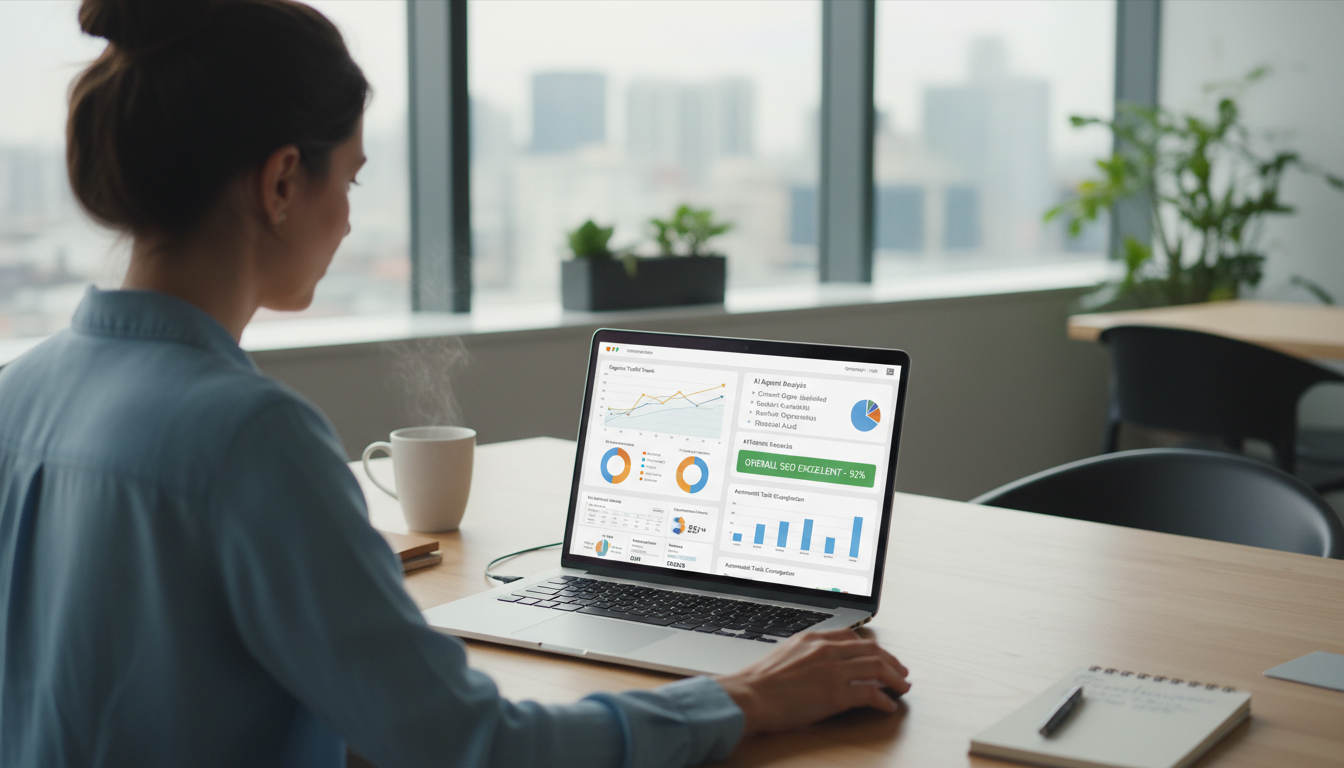
Scheduling functionality generates reports on defined cadences – weekly, bi-weekly, or monthly – automatically distributing to stakeholders via email or dashboard access. Consequently, teams receive insights without manual compilation requests. Furthermore, AI agents learn business objectives over time, adapting report focus to strategic priorities rather than creating generic reports. Additionally, platforms like Agents24x7 available on Shopify handle 100+ autonomous tasks daily, enabling real-time report generation and continuous performance monitoring. Moreover, these agents handle WordPress custom post types, Shopify variants, and dynamic pricing changes when analysing performance. Furthermore, security and data privacy remain paramount when integrating AI agents with business data sources.
Converting SEO Metrics into ROI and Revenue Attribution Models
Automated dashboards translate SEO metrics into quantifiable ROI resonating with business stakeholders. SEO delivers average 22:1 ROI ratio – £1 invested generates approximately £22 in return, yielding average 748% campaign ROI. Consequently, establishing baseline metrics before implementing SEO improvements enables tracking typical 6-12 month positive ROI timelines for SMBs. Moreover, attribution models connecting organic traffic to revenue generation consider multi-touch scenarios where organic visits contribute alongside other channels. Additionally, customer lifetime value from organic channels represents critical metrics for demonstrating long-term SEO value.
Segmentation by traffic source, product category, or service type isolates organic contribution precisely. Furthermore, incremental revenue contribution – additional revenue above baseline levels since SEO implementation – demonstrates tangible value. Industry-specific ROI benchmarks show SaaS achieving 702% ROI with 7-month breakeven, real estate reaching 1,389% ROI with 13-month breakeven, and ecommerce sites attaining 317% ROI with 16-month payback periods. Consequently, forecasting capabilities where AI predicts future revenue based on current SEO performance trajectories enable strategic planning. Additionally, presenting findings to non-technical stakeholders using clear visualisations and actionable recommendations tied directly to business growth objectives ensures organisational buy-in. If you’re measuring ROI from broader automation efforts, explore our comprehensive guide to measuring ROI from AI automation for SMBs.
Setting Up Your First AI-Powered SEO Dashboard in 60 Minutes
SMBs and startups can establish their first AI-powered SEO dashboard rapidly through systematic setup. Begin with platform selection – whether choosing dedicated AI SEO platforms like Agents24x7 WordPress plugin priced at £20/month with 100+ daily tasks capability, or building custom solutions through Looker Studio, Power BI, or Tableau integrated with existing tools. Moreover, WordPress-specific setup requires plugin installation, Google Search Console connection via Rank Math or Yoast SEO integrations, and Google Analytics 4 account linking. Additionally, Shopify configuration includes app installation, Shopify admin account linking, and ecommerce-specific metric enablement.
Data source connections pull organic impressions and clicks from Google Search Console, organic traffic metrics from Google Analytics, daily or weekly ranking updates from rank tracking tools, and backlink data. Furthermore, dashboard customisation focuses on business priorities – prioritising conversion metrics for lead-generation sites versus ranking and traffic metrics for content-focused properties. Consequently, widget placement becomes critical for at-a-glance insights, historical trend analysis, and actionable alerts. Additionally, quality setup requires 30-60 minutes for standard implementations, with ongoing maintenance minimal once automated agents handle continuous data collection and analysis. User access configuration ensures team members, stakeholders, and clients view appropriate data segmented by role and responsibility.
Advanced Dashboard Features That Drive Strategic Decision Making
Sophisticated dashboard capabilities transform raw data into strategic intelligence. Predictive analytics features forecast traffic trends, ranking movements, and revenue contribution based on historical patterns and algorithm updates. Moreover, scenario modelling visualises potential outcomes – for instance, simulating expected organic growth from targeting 50 new keyword opportunities. Additionally, competitor benchmarking dashboards compare your performance against industry rivals, showing where you’re winning, losing ground, or missing opportunities. Consequently, strategic positioning becomes data-informed rather than assumption-based.
Segmentation capabilities enable drill-down analysis by traffic source, keyword category, geographic location, device type, and user demographics. Furthermore, custom alerts notify teams of opportunities like “20 keywords moved into top-10 positions this week” and threats like “organic traffic dropped 15% – investigate algorithm updates”. Additionally, multi-channel attribution shows how organic traffic contributes within broader customer journey sequences alongside email, paid, referral, and direct traffic. Moreover, API connections enable automated action triggers – automatically creating content briefs for underperforming target keywords or flagging indexation issues for developer attention. Consequently, reporting shifts from passive observation to active, insights-driven management.
Integrating SEO Reporting with Content Strategy and Campaign Management
Automated dashboards connect reporting insights directly to content creation and campaign planning workflows. Dashboard alerts identifying high-potential keyword opportunities automatically trigger content briefs feeding into editorial calendars. Moreover, underperforming content receives optimisation flagging while top-performing content informs strategy for future topic clusters and content gaps. Additionally, conversion attribution from specific content pieces guides editorial priorities – focusing resources on topics generating both traffic and revenue. Consequently, content investments become data-driven rather than speculative.
Dashboard insights influence WordPress category structure, internal linking strategies, and featured content placement. Furthermore, Shopify implementations use product page performance data for merchandising decisions, collection optimisation, and keyword-targeted category naming. Additionally, campaign-specific dashboards isolate performance for seasonal promotions and product launches, enabling comparison between periods. For more on comprehensive SEO optimisation strategies, consult our guide to SEO audit automation for Shopify and WordPress sites. Moreover, multichannel dashboards connect SEO to broader marketing campaigns – showing whether SEO supports paid advertising goals, social media campaigns, and email initiatives. Consequently, historical performance data builds organisational knowledge about what content types and optimisation strategies work best for specific audiences.
Scaling Automated Reporting Across Multiple Sites, Teams, and Clients
Agencies and multi-site operators scale automated reporting efficiently through centralised dashboard architecture. This approach aggregates performance from multiple WordPress installations, Shopify stores, or mixed platforms into unified views maintaining site-specific drilldown capability. Moreover, user role management and permission structures enable executives viewing high-level KPIs whilst content teams see content-specific metrics and technical teams access crawl data. Additionally, white-label customisation enables agencies presenting client reporting under their own branding whilst maintaining centralised data collection.
Batch reporting automation generates client-specific reports covering multiple properties with customised insights relevant to each business’s objectives. Furthermore, consistent KPI definitions across multiple sites enable meaningful comparative analysis. Consequently, data consolidation challenges – including synchronisation latency and maintaining consistency – require systematic solutions. Additionally, team collaboration workflows automatically route reporting insights to relevant stakeholders. Platforms supporting 100+ daily tasks like Agents24x7 enable scaling without proportional cost increases, making distributed reporting practical for resource-constrained teams. Moreover, archive and compliance capabilities ensure reporting data retention meets audit requirements. Consequently, competitive intelligence and operational efficiency scale with organisational growth.
Conclusion
Automated SEO reporting powered by AI transforms how SMBs and startups measure, understand, and optimise organic performance. By eliminating manual reporting drudgery, organisations gain real-time visibility into traffic, rankings, and ROI – enabling data-driven strategy and faster decision-making. AI-powered dashboards deliver the competitive intelligence and operational efficiency necessary for scaling sustainable organic growth whilst keeping costs manageable and maintaining competitive advantage.